How can wild-collected rhododendron stumps safely get through the summer? Only by understanding the false-growth phenomenon can you grow them well
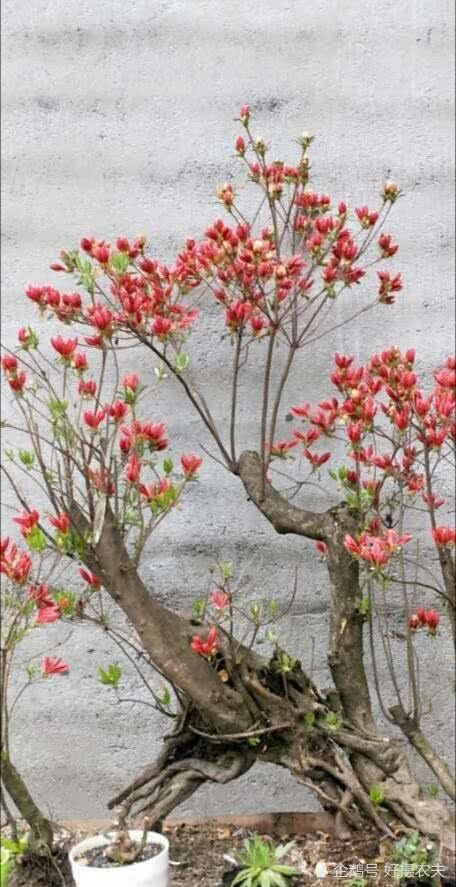
Yingshanhong, also known as rhododendron, is a tree-form bonsai with very high ornamental value. Nowadays in rural areas, many farmers grow yingshanhong in their spare time from farming; of course, yingshanhong is now a protected plant and may not be dug up at will.
Yingshanhong does not have many fine feeder roots, so many flower enthusiasts often end up failing when they try to grow it. Today I will share my own growing experience with everyone; no copying and pasting from the internet, all of it is practical knowledge gained from my own experience.
For yingshanhong, we choose to collect it in spring, at the earliest during the first lunar month. If it is collected in winter of the previous year, the survival rate is not high and it is prone to cold damage; of course, if you have insulation measures it may be a bit better. Also, if you choose in spring, you can select the colors you like, and there is no need to waste wild resources.
According to my general survey, yingshanhong in the mountains mostly likes to grow in acidic soil areas, especially on mountains with red clay soil, so when planting we can imitate its wild conditions and add some red clay soil to the pot.
Generally, in the first year after collection I suggest planting it in the ground, and only potting it up the next year after it has new roots, as this makes survival easier. Newly collected yingshanhong needs pruning to reduce leaf transpiration; wrapping the cut surfaces of thick branches with plastic wrap works better.
Water more. Yingshanhong is not the same as orchids; because it is a tree-form plant, it is not afraid of watering, so absolutely do not use orchid-growing experience to grow yingshanhong.
In the summer of the first year, shade must be provided, otherwise yingshanhong will show the false-growth phenomenon: the leaves appear to keep growing, but by the time of the Start of Autumn solar term, they all die, which is too much of a pity. I myself have been badly burned by yingshanhong with false growth.
After it has survived, you can apply fertilizer once in September, mainly phosphorus and potassium fertilizer, to increase the plant's resistance, so that it will not be afraid of overwintering, and it will also bloom more the next year.
Growing yingshanhong is not difficult as long as you are careful enough. The yingshanhong in this article are all old collected stumps, and several of the pots have been grown for more than 5 years.