What to Do When You Recognize a Flower but Don't Know the Plant's Name
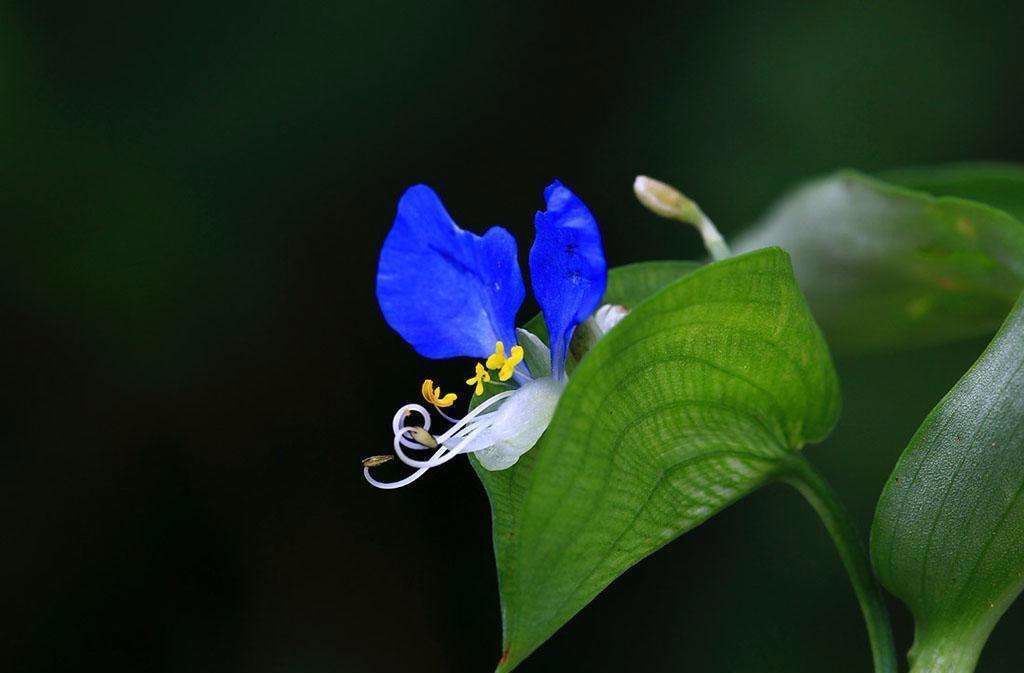
Speaking of a dainty little flower, this plant can be seen by roadsides or in flowerbeds, but you may not recognize it. That's Asiatic dayflower! It also has other names such as green bamboo, emerald butterfly, and pale bamboo leaf. It is an annual sprawling herb in the Commelinaceae family, genus Commelina, and is distributed across most regions of our country.
Asiatic dayflower is monoecious, with a butterfly-like shape. The upper two blue petals look like slightly folded wings, while the lower petal is white. The bud is spathe-shaped, and with the bright yellow stamens and long white filaments curling like a butterfly's antennae, from a distance it truly looks like a butterfly resting on green leaves about to take flight, endearing and lovely. Its flower language, like the butterfly waiting to fly, is hope and ideals.
Although it does not look particularly showy, the whole plant of Asiatic dayflower can be used as medicine and has great effects, with properties of clearing heat and detoxifying, cooling the blood, reducing swelling, and promoting urination. It mainly treats colds, edema, mumps, sore and swollen throat, erysipelas, jaundice hepatitis, heat dysentery, malaria, difficult urination, blood in urine, metrorrhagia, leukorrhea, carbuncles and furuncles, athlete's foot, and other conditions. In addition, it also has good therapeutic effects on pharyngitis, styes, tonsillitis, cervical erosion, pit viper bites, and more.