You might only find this plant familiar once you see a picture of it.
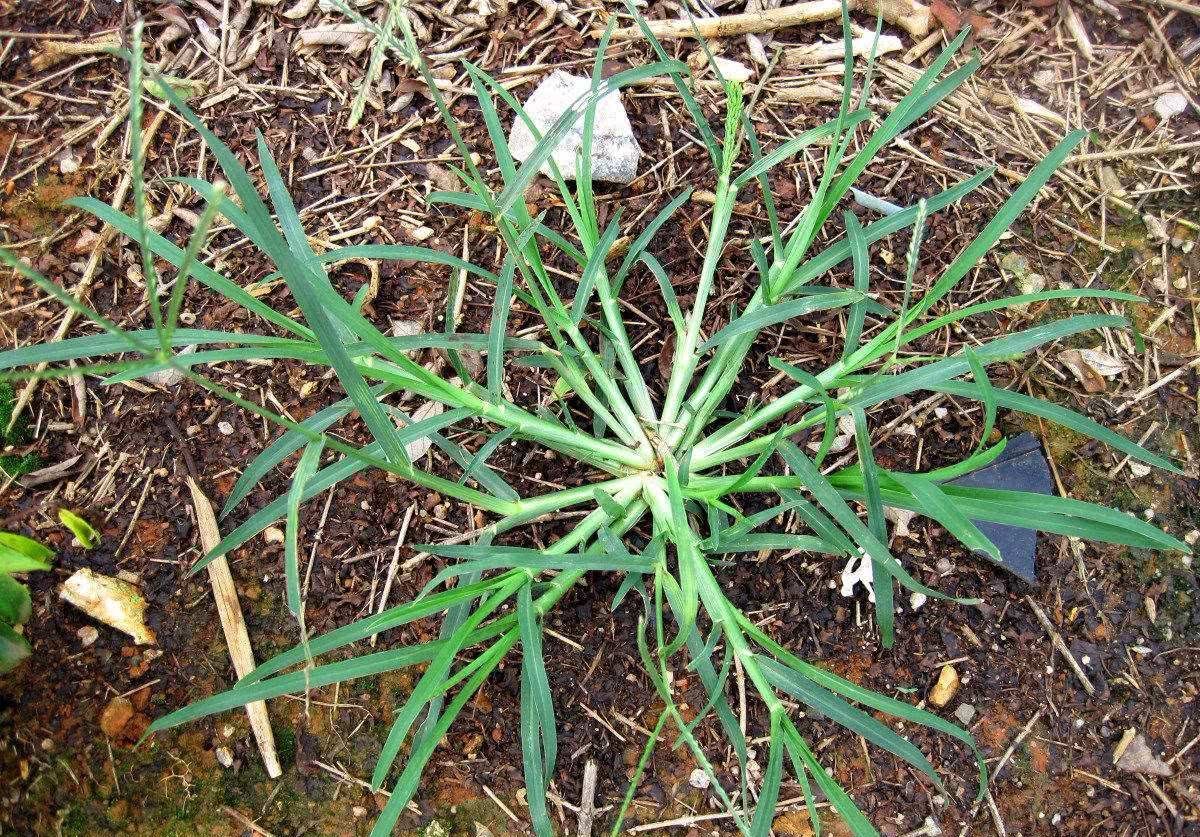
Let's talk about a very common plant that nobody would ever grow on purpose, yet it can be seen by village edges, in open fields, at field margins and along roadsides, and surely most people do not know what it is. That is because the plant in question is a weed - goosegrass (Eleusine indica), known in some places as qianqian-ta, cricket grass, Newton grass, niuxin-zong, tianzai grass, suzi-yue, wild chicken claw, and suniuqie grass.
Because its root system is extremely well developed, clinging firmly to the ground and hard to dig out or hoe away, and because it is very strong at absorbing water and nutrients from the soil and has low demands on soil quality, it often competes with crops for water, nutrients and light, and interferes with and limits the growth of other crops. It also increases management labor and production costs, making it a truly detestable weed.
But as I have said before, if something exists, there is a reason for it. Although goosegrass looks unremarkable and seems like a useless weed, in traditional Chinese medicine even the most useless plant can have medicinal value, and goosegrass is no exception. It has the effects of clearing heat and detoxifying, dispelling wind and draining dampness, and dispersing blood stasis and stopping bleeding.
It can also help prevent and treat Japanese encephalitis, and since ancient times it has been passed down that drinking goosegrass decoction, taken regularly in large amounts, has remarkable effects in preventing epidemics and resisting pestilential seasonal toxins. However, it is mainly used to treat summerheat stroke with fever, acute infantile convulsions, jaundice, dysentery, gonorrhea, difficult urination and other conditions. Used externally, it can also treat traumatic injuries, external bleeding and dog bites.
Goosegrass is not only medicinal; its other uses are quite good as well. For example, it is an excellent soil-retaining plant because its root system is extremely well developed; its stems and leaves are tough, and the whole plant can be made into feed. It is also said that in the past, when cattle were still used for farming in rural areas, if an ox was injured from being worked too hard, only goosegrass could treat it (whether this is true or not, I do not know).