Pair roses with this kind of peach, and they become as beautiful as if standing beside a beauty
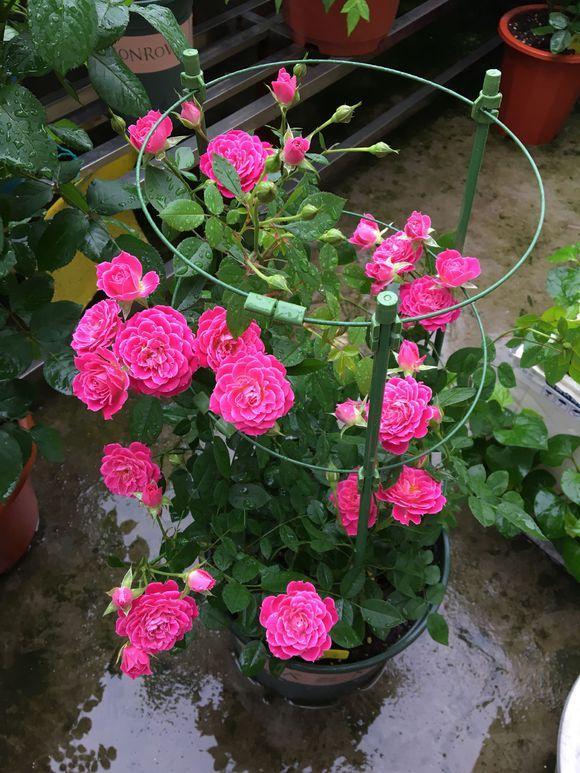
Humid springs and rainy summers are a disaster for roses, because dampness and rain mean bacteria and pests multiply, spots appear on rose leaves, black spots or yellow halos develop, and then large areas of the leaves turn yellow and drop, which not only affects the growth of the roses but also spreads to other plants; the only treatment is to spray chemicals, and then move the roses to a different environment.
Today Huahua introduces a kind of peach blossom called oleander (Nerium oleander), which can cure black spot disease in roses. This method was discovered by accident, because oleander itself is also a very beautiful flower, so they were planted in the yard next to the roses, and unexpectedly these roses showed no pests or bacterial diseases every day, with glossy leaves and spirited blooms, while the roses on the other half of the yard were different: every pest and every disease they should have, they had.
So with the idea of giving it a try, the roses on the other side of the yard were moved next to the oleander, and unexpectedly the black spot disease was much reduced. Then oleander branches and leaves were cut off, placed in clean water to soak for a day, taken out and crushed with a stone, and the branches and leaves were mixed with water and sprinkled onto the rose leaves, repeated 3 times in one week.
Later it was found that the black spot disease had actually disappeared. This shows that oleander is indeed effective for treating black spot in roses. It seems it is truly right that standing beside someone else makes you beautiful too.
Later in summer I experimented again with the same method, and unexpectedly it still produced a very good effect, and the roses have since been free of black spot disease.
Later, checking information, I learned that the branches, leaves and flowers of oleander all have a certain toxicity, and if people or livestock eat them by mistake they will have symptoms of nausea and vomiting; if a larger amount is eaten, it may cause serious harm, so households with children or pets should also keep away from it.