Mix 2 kinds of fertilizer for roses, and the roots will be strong and the flowers abundant, blooming all over the garden
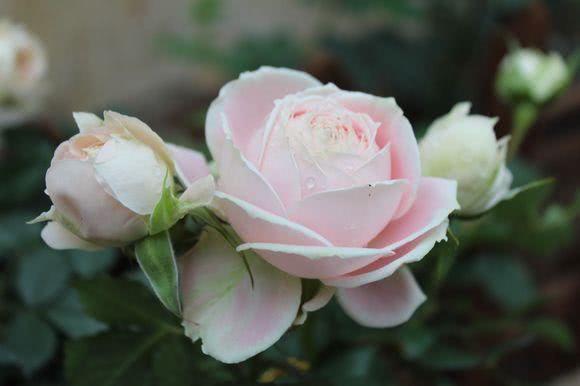
Fellow flower growers, there are many substrates you can use for potted roses at home, and the key is whether you mix them well. Today, the two things the editor is going to talk about have excellent results when used for roses; the roses planted with them have strong plants and many roots, and bloom abundantly. These two things make up a rose mixed material; when the two are blended, their advantages complement each other, and they truly are a good "partner" pair for growing roses!
1. The advantages of a good "partner" for growing roses
This good "partner" pair is rice hulls and coal cinders. Rice hulls are easy to obtain, allow air and water to pass through, are lightweight, and do not cause root rot. Coal cinders are permeable to water and air, retain water and fertilizer, are lightweight, and do not compact; because they are fired at high temperature, roses planted with them are less prone to pests and diseases, and they contain various elements needed by roses, as well as minerals.
Mixing rice hulls with coal cinders can form relatively large gaps, which helps improve the air and water permeability in the rose pot, and can keep the potting soil loose, tolerant of moisture and drought, and can also improve the soil's ability to retain fertilizer. Rice hulls ferment and decompose slowly in the rose pot, and during the fermentation process they can continuously supply the nutrients needed by roses. When roses are planted with a mixed material made of rice hulls and coal cinders, even if little or no fertilizer is applied, the roses still grow very well.
2. The ratio of rice hulls mixed with coal cinders
For growing roses with rice hulls mixed with coal cinders, the editor summarizes the proportions of the two as follows: at the initial planting stage, it is best for rice hulls to account for 60% and coal cinders 40%. This is because fresh rice hulls drain water relatively quickly, so their proportion should not be too high. Rice hulls take about one year to fully decompose in the potting soil.
After a period of time, it is best for rice hulls to account for 70% and coal cinders 30%. This is because after decomposition the water-draining capacity of rice hulls has already declined somewhat, so the proportion of fresh rice hulls should be increased. In short, fellow flower growers can decide the respective proportions of rice hulls and coal cinders according to their own situation.