Why is the apricot blossom regarded as a symbol of exuberance and freedom?
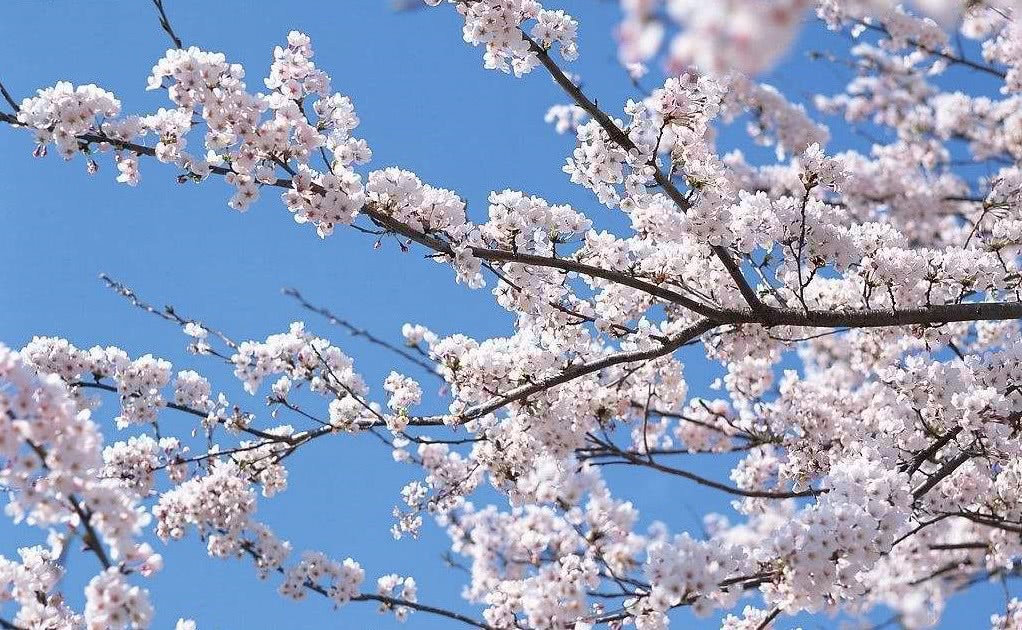
Apricot blossom, also known as apricot, is a plant of the genus Prunus in the subfamily Prunoideae; both its flesh and its kernel are edible. The apricot blossom is solitary, opening before the leaves, with white petals or petals tinged with a slight red blush, and it is a famous ornamental tree in China. Apricots can be planted in front of courtyards, in wall corners, beside roads, and by water, and can also be planted in groups or in broad stands on hillsides and watersides; it is a major ornamental tree species of spring. The scientific name of the apricot indicates that Westerners' knowledge of the apricot originated from Armenia; in fact, the apricot is widely distributed across East Asia and Central Asia. It can be propagated by sowing or grafting and other planting methods. The apricot generally used in medicine is the apricot kernel, which has the effects of promoting fluid production, detoxifying, and clearing heat. It ripens in early summer. The apricot tree originated in China and is very widely distributed. The tree has a long lifespan and can live more than one hundred years; it can both bear fruit and be appreciated for its flowers, and it holds an important place in fruit production and urban landscaping. Every year in March and April, apricot blossom festivals are held in various places, providing good destinations for visitors to enjoy the spring, go on outings, and take photographs. The apricot blossom is an ancient flowering tree; it is recorded in the Guanzi, which appeared several hundred years before the Common Era, so it has at least two to three thousand years of cultivation history in our country. It can both bear fruit and be appreciated for its flowers, and it holds an important place in fruit production and urban landscaping.
Apricot blossom
The apricot tree has a long lifespan; in North China and Northwest China, large trees over one hundred years old are common and still produce very high yields. Its economic lifespan is also very long, lasting 40 to 50 years. The apricot has strong adaptability to soil and terrain, and is mostly planted on hillside terraces and hilly land; it can also grow normally on high mountains at 800 to 1000 m. It can grow in loam, clay, slightly acidic soil, and alkaline soil, and even in rock crevices. The apricot tree has fairly strong cold resistance and can withstand temperatures of -30°C or lower; it is heat-tolerant, and in places such as Kashgar in Xinjiang, it can still grow and bear fruit normally with good quality even when the summer maximum temperature reaches 43.4°C.
Apricot blossom
Ornamental value:
The apricot is a famous ornamental tree in China; its flowers are both red and white, with countless touches of rouge, abundant blooms and delicate beauty, commanding all the spring breeze. Apricots can be planted in front of courtyards, in wall corners, beside roads, and by water, and can also be planted in groups or in broad stands on hillsides and watersides. At the same time, the apricot is also a tree species for afforestation of deserts and barren hills. The fruit can be eaten raw or processed into preserved fruit, and the kernel can be used for food and medicine. The apricot is a famous fruit tree; besides being eaten raw, the fruit can also be made into dried apricots, preserved apricots, and so on. The apricot kernel can be used for food, oil pressing, and medicine. The tree has a relatively long lifespan and can live more than one hundred years; it is a major ornamental tree species of spring.
Apricot blossom
Dietary therapy value:
"Cut and trimmed from ice silk, lightly folded in several layers, evenly tinted with pale rouge. In new-style lovely attire, its radiance overflows and its fragrance blends, putting the palace maids of the Ruizhu Palace to shame." This is Emperor Huizong of Song's vivid masterpiece describing apricot blossom. Apricot blossom has the effects of tonifying the middle and boosting qi, and dispelling wind and dredging collaterals; it can nourish the skin and remove facial blemishes. In the Taiping Shenghui Fang of the Song Dynasty, there is a record of using apricot blossom and peach blossom to wash the face and treat spots. In the ancient book Lu Fu Jin Fang, there is a beauty secret formula called "Yang Taizhen Red Jade Ointment," which was used exclusively by Consort Yang for beauty care. To make it, peel the apricot kernels, take equal parts of talc and calomel, grind them together into powder, steam it, add a little borneol and musk, mix evenly with egg white, and apply it after washing the face in the morning and evening; it has the effect of "making the face rosy, smooth, and radiant, with the complexion becoming like red jade after ten days." The beauty effect of apricot blossom is related to its containing components that inhibit the activity of skin cell esterase. Boiling apricot blossom into congee and taking it can use the rice grain to assist its medicinal power, allowing the stomach and intestines to fully absorb its active components that inhibit the activity of skin cell tyrosinase, so as to prevent the formation of acne and dark spots.