The story of Fuding white tea, as told by Chen Xinghua
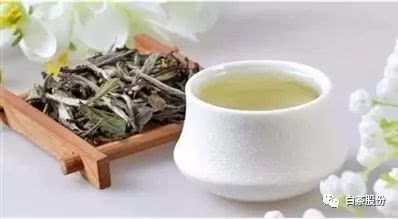
Whether on a business trip or a journey, always packing a bag of white tea in one's luggage has become a natural habit for many people of Fuding. Once settled, first boil a kettle of water, brew a cup of tea, sit down and sip it slowly, and the dust of the road and the fatigue of travel are washed away completely. Then the mind quietens, calmly thinking about matters related or unrelated to this journey.
Toil is the norm of life. For the people of Fuding, the first choice for restoring ease and brightness to body and mind is drinking tea. Friends who have lived in the countryside will surely have this impression: when farmers return from the fields, as soon as they set down their tools they rush to the kitchen, lift the big teapot from the corner of the stove, pour a big bowl of tea, tip back their heads and gulp it down to the last drop, then let out a great breath. That thoroughly satisfied expression makes one believe it is not merely to quench thirst; the true enjoyment is that the hardship of half a day or a whole day of continuous farming vanishes in that one drink and one breath. Work and life, because of this bowl of tea, gain a rhythm of tension and relaxation.
In the past, tea in rural farmhouses was mainly this big-pot tea. Farmers were plain and frugal; the fine-quality buds and leaves were sent to the tea market to be sold for money, processed by tea factories into the refined and noble Silver Needle and White Peony, while the leftover coarse leaves and tea stems were too precious to discard. They were spread out in a round bamboo winnowing basket to dry, and once the moisture was gone, stored away for the family to brew and drink. Even this coarsely made large-leaf tea possessed extraordinary quality. The big bowl of tea, with its clear and crisp taste, quenched thirst and relieved fatigue, and beyond that came a comfortable ease throughout the whole body.
A more particular way of drinking tea is tasting, in which the meaning of quenching thirst has faded to nothing, and what matters is enjoying the tranquility and leisure of the tasting process and the pleasure of thoughts drifting free during the savoring. At least in the Ming and Qing dynasties, there were many teahouses and tea establishments within Fuding's borders. Even villages with large populations had quite a few shops dealing in tea, and these set aside one or two elegant rooms where, with tea as the medium, one could renew friendships, speak of refined matters and discuss business with good friends and business partners.
The tea room was certainly carefully arranged, elegant and bright, giving off a faint tea fragrance, so that upon entering one felt the mind clear and calm; the tea utensils were certainly exquisite and classical, whether ceramic, celadon, or made of bamboo or wood, all possessing a special power, as if they could make time stand still; the tea leaves were certainly fine and superior, whether Silver Needle, White Peony, or Shoumei and Gongmei, steeping, opening and gently rising in pure hot water. What a serene and beautiful process! All the displeasures of life, all the disturbances among people, have been cast beyond the ninth cloud. The friendship between friends seems all the more lasting and meaningful, while the calculations of the business world have become insignificant; what is gained is a long, lingering flavor that nourishes body and mind yet is hard to put into words, like a poem, or like a song, softly sung and hummed, wandering through the heart.
This beautiful tradition has been passed down to the present day; the abundance of life has given people the conditions to taste tea, and the pursuit of quality of life has given people the sensibility to taste tea.
When the people of Fuding speak of white tea, pride is written all over their faces. Yes, white tea and Fuding, through a thousand years of love, have long been fused as one. In Fuding and along the border region of Fujian and Zhejiang, the beautiful legend of Lady Taimu planting and making tea, and using tea as medicine to heal and save people, has been passed down across vast reaches of time. Some believe that Lady Taimu was the ancestress of the Minyue region, traceable back to the distant era of matrilineal society. Another legend says that Lady Taimu was the mother of Emperor Yao, who, reluctant to leave the beautiful scenery of Taimu Mountain, built a hut in the mountain and cultivated herself into immortality. The legends perhaps only hint at the remoteness of time, but it is certain that as early as the Tang dynasty, tea was already being planted and produced in the Taimu Mountain area. Thereafter, records of tea production in Fuding never ceased in the histories, and by the Ming and Qing dynasties it reached its height, veritably becoming a famous tea-producing district; and the famous fine teas represented by such treasures of Fuding white tea as Baihao Yinzhen (Silver Needle) and White Peony not only became renowned throughout the land of China, but also crossed the seas and traversed mountains and ridges, traveling along the Belt and Road from south and north to Asia and Africa, Europe and America.
It is precisely this thousand years of mutual attachment that has made the people of Fuding's understanding of white tea far transcend the concepts of a crop and a local specialty. White tea, in the life of the people of Fuding, has undoubtedly long been elevated into a cultural symbol, and has even been endowed with a collective spiritual sustenance. When the origin of white tea was raised to the level of myth, it had already become a sacred object in the eyes of the people of one land and one place; yet it never seats itself upon an altar, nor wraps itself in layer upon layer of mysterious veils, but instead merges into and nourishes people's lives, becoming a "sky bridge" for people to savor life's insights and elevate life's quality.
And when you drink a cup of white tea whose liquor is pure and apricot-yellow, the mind becomes clear and transparent, as if one had just read a poem of profound meaning, its far-reaching poetic flavor still lingering in the heart.
END