How do you grow rosemary the right way? A detailed guide to proper care
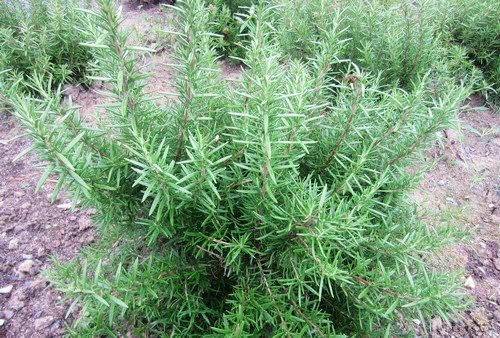
Rosemary (Latin botanical name: Rosmarinus officinalis) is a shrub in the mint family (Lamiaceae). It prefers a warm climate and originated in Europe and along the northern Mediterranean coast of Africa. It was introduced to China as far back as the Cao Wei period. Today it is occasionally used in landscaping.
From the flowers and leaves of rosemary, antioxidants with excellent antioxidant properties and rosemary essential oil can be extracted. Rosemary antioxidants are widely used in medicine, fried foods, oil-rich foods and various oils and fats to preserve freshness and extend shelf life; rosemary essence, meanwhile, is used in the daily chemical industry for fragrances, air fresheners, ant repellents, as well as sterilization and insecticide products.
Morphological characteristics
Rosemary is a shrub that can reach 2 m in height. The stem and old branches are cylindrical, with dark gray bark that splits irregularly lengthwise and peels off in chunks; the young branches are four-angled and densely covered with fine white stellate hairs.
The leaves often grow in clusters on the branches, with very short stalks or no stalks. The leaf blades are linear, 1-2.5 cm long and 1-2 mm wide, with a blunt tip and a gradually narrowed base, entire margins, curling toward the underside, leathery, slightly glossy and nearly hairless on the upper surface, and densely covered with white stellate hairs on the underside.
The flowers are nearly stalkless and opposite, with a few clustered at the tips of short branches to form racemes; the bracts are small and stalked. The calyx is egg-shaped and bell-shaped, about 4 mm long, densely covered on the outside with white stellate hairs and glands, hairless on the inside, with 11 veins and two lips; the upper lip is nearly round and entire or has very short 3 teeth, and the lower lip has 2 teeth that are egg-shaped and triangular. The corolla is blue-purple, less than 1 cm long, sparsely covered with short soft hairs on the outside and hairless on the inside; the corolla tube extends slightly outward, and the corolla limb is two-lipped; the upper lip is straight and 2-lobed, with egg-shaped lobes, and the lower lip is broad and 3-lobed, with the middle lobe largest, concave, tilted downward, with toothed edges and a base constricted into a stalk, and the side lobes oblong. Two stamens are developed, inserted below the lower lip of the corolla; the filament has 1 small downward tooth in the middle, the anther cells are parallel, and only 1 cell is fertile. The style is slender and far exceeds the stamens, with an unequally 2-lobed tip, the lobes awl-shaped, and the posterior lobe short. The disc is flat-topped with equal lobes. The ovary lobes alternate with the disc lobes. The flowering period is November.
Main value
Industrial value
Rosemary is a precious natural fragrant plant. During the growing season it gives off a fresh scent and has the effect of calming the mind and refreshing the spirit. Its stems, leaves and flowers have a pleasant fragrance. The aromatic oil extracted from the flowers and tender branches can be used to blend cosmetic ingredients such as air cleaners, perfumes and soaps. The most famous toner is made with rosemary, and it can also be used in beverages, skincare oils, hair growth products and laundry paste.
Medicinal value
Rosemary has calming and mind-refreshing effects, and has a certain therapeutic effect on indigestion and stomach pain. It is often crushed and soaked in boiling water for drinking, 2-3 times a day, which can produce calming and diuretic effects. It can also be used to treat insomnia, palpitations, headaches, indigestion and many other conditions. External use can treat external injuries and arthritis. It also has effects such as strengthening the heart, promoting metabolism and promoting blood circulation in peripheral blood vessels.
It also improves impairments in speech, vision and hearing, enhances attention, treats rheumatic pain, strengthens liver function, lowers blood sugar, helps in the treatment of arteriosclerosis, and helps paralyzed limbs regain mobility.
Edible value
It has a strong astringent effect, regulates oily skin, promotes blood circulation and stimulates hair regrowth. It improves hair loss (pregnant women should not consume it).
In Western cuisine, rosemary is a commonly used spice, especially in dishes such as steak and potatoes and in baked goods. It has a clear, sweet scent and flavor with a pine-like aroma, a rich fragrance, and a bittersweet taste.
Rosemary is a common herb, and rosemary is usually not difficult to grow. Once established, it can thrive for many years. In this article we look at how to grow rosemary. Rosemary is a very good potted plant, and potting can solve the problem of very cold climates, as the pot can be brought indoors in winter.
Rosemary, this fragrant herb, likes a mild climate. In the south it can be grown outdoors year-round, while in the north it must be moved indoors in winter or other heat-preservation measures must be taken. Its growth rate is not considered fast, far slower than mint and basil. Rosemary requires at least 8 hours of direct sunlight per day, with moderate watering (it should be watered somewhat sparingly); a mature plant can be watered thoroughly once every 4 to 7 days.
Rosemary likes slightly alkaline soil. If the soil is rather acidic, quicklime can be slaked and the lime slurry poured directly on the flowers; rosemary can tolerate this. If you are worried, you can mix it into the soil and let it sit for several days before using it for repotting. If you do not have quicklime, the desiccant in foods such as Wangwang Senbei is lime. Reference dosage: one packet mixed into a 1-gallon pot.
Rosemary grows quickly in spring and autumn and slightly slowly in severe cold and extreme heat. Sufficient light must be ensured, but in summer attention should be paid to shading. Rosemary is relatively drought-tolerant; simply water once the soil has dried out. Water less in winter and pay attention to frost protection; in summer, generally water once every two days.
If planting in a garden, please choose soil with good drainage. Waterlogged soil will cause rosemary to suffer from root rot. The more alkaline the soil, the more fragrant the rosemary. If the soil is too acidic, some lime can be buried in the soil.