What causes the stems and leaves of Asparagus cochinchinensis to turn yellow easily?
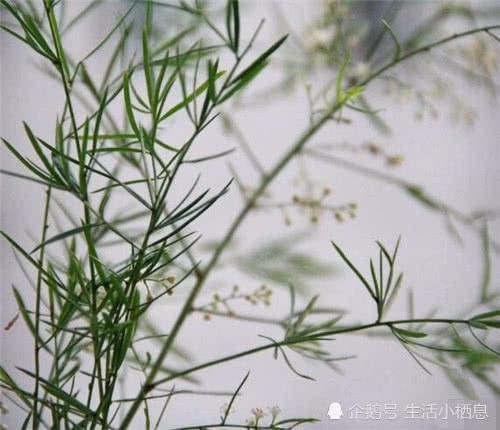
Asparagus cochinchinensis (Latin scientific name: Asparagus cochinchinensis (Lour) Merr), also known as Sanbaibang, Wuzhu, Sidong, Laohuweibagen, Tiandongcao, Mingtiandong. The roots of Asparagus cochinchinensis are spindle-shaped, and the leaf-like branches usually grow in clusters of 3, with pale green axillary flowers and berries that turn red when ripe. It is a perennial herbaceous plant of the Liliaceae family and the genus Asparagus.
It is distributed in China's East China, Central South, Hebei, Henan, Shaanxi, Shanxi, Gansu, Sichuan, Taiwan, China, Guizhou and other provinces and regions. It mostly grows in shady and damp places at the edges of mountain forests, in thickets on hilly land, or in hillside grass. It is generally dug up in autumn and winter, washed clean, the fibrous roots removed, boiled or steamed in boiling water until thoroughly cooked, the outer skin removed while hot, washed clean, and dried in the sun for later use. In addition, the tuberous roots of Asparagus cochinchinensis are a commonly used traditional Chinese medicine, so it also has high medicinal value.
Morphological characteristics
Asparagus cochinchinensis is a climbing plant. The roots become spindle-shaped and swollen in the middle or near the ends, with the swollen part 3-5 cm long and 1-2 cm thick. The stem is smooth, often curved or twisted, up to 1-2 m long, and the branches are ridged or narrowly winged.
The leaf-like branches are usually in clusters of 3, flat or slightly sharply triangular because the midrib is keeled, somewhat sickle-shaped, 0.5-8 cm long and about 1-2 mm wide; the scale-like leaves on the stem extend at the base into hard spines 2.5-3.5 mm long, while the spines on the branches are shorter or inconspicuous.
The flowers are usually axillary in pairs, pale green; the pedicel is 2-6 mm long, with the joint generally located in the middle, sometimes variable in position; male flowers: perianth 2.5-3 mm long; filaments not adnate to the perianth segments; female flowers similar in size to male flowers. The berry is 6-7 mm in diameter, red when ripe, and contains 1 seed. Flowering period is May-June, fruiting period is August-October.
Asparagus cochinchinensis is a plant of the Liliaceae family. Also known as Tiandong. It is cold in nature and sweet and slightly bitter in taste. It has the effects of nourishing yin and clearing heat, moistening the lungs and nourishing the kidneys. It is used to treat conditions such as yin deficiency with fever, cough with blood-streaked sputum, lung abscess, sore and swollen throat, excessive thirst, and constipation. The reasons for the yellowing of the stems and leaves of Asparagus cochinchinensis are roughly the following 4 situations:
1. Lack of nutrients. The root system of Asparagus cochinchinensis grows quickly and is well developed. If the pot and soil are not changed for a long time, the tuberous roots in the pot will become tangled and crowded, lacking nutrients available for absorption and use, causing the leaves to turn yellow.
2. Improper fertilization. If undecomposed organic fertilizer is applied during the growth period, it is easy to burn the roots and cause scorched leaves. For this reason, fully decomposed liquid fertilizer should be applied, and it is best to apply thin fertilizer, in small amounts, and frequently.
3. Too much light. In summer, if it is placed under direct sunlight, it is very easy to cause the stems and leaves to become scorched and yellow.
4. Insufficient light. If it is placed indoors in a place with insufficient light or outdoors in a shady place for a long time, it is also easy to cause the stems and leaves to become withered and yellow. In order to make it grow robustly, in addition to placing it in a shaded place in summer, appropriate light should be given in the other seasons.