There are techniques for fertilizing succulents; pay attention to the dosage, and even shriveled leaves can plump up again
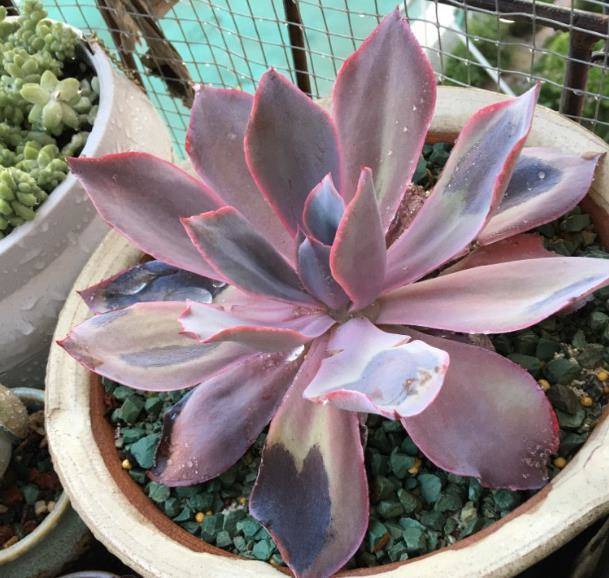
If you want your succulents to grow fast and grow big, first you also need to confirm that this variety does grow fast and grow big, then you can consider fertilizing. You can consider some organic fertilizers, such as worm castings, cow manure, etc., or inorganic fertilizers skewed toward phosphorus and potassium, such as monopotassium phosphate, especially around the flowering period. If you only want to meet basic needs, you can also use some slow-release fertilizer.
Pay attention to the fertilizing season; generally spring and autumn are suitable, and fertilizer should be used sparingly rather than generously. Most succulents do not need fertilizing, because succulents originally grow in relatively poor soil. Generally speaking, the soil mix used for home cultivation already contains enough nutrients to support the growth needs of succulents. Never think that your succulents are growing poorly or are slow to recover after repotting because they were not fertilized. The basic growth needs of succulents do not require fertilizing, and using less fertilizer makes it easier to achieve a good appearance than using fertilizer.
You can add some organic fertilizer to the planting soil. When fertilizing, if it is a nutrient solution, the amount should also be small. If you spray water, do not spray it onto the leaves; pour it directly onto the soil. Also, when using fertilizer, try to make it fine and mix it into the succulent's potting soil without damaging the roots. Generally, the best time to fertilize is spring and autumn, because this is exactly the growing season for succulents, so they need fertilizer. Summer is the dormant period, and growth is also slow in winter, so fertilizing has little effect and may even harm the succulents.
Slow-release fertilizer is easy to use, has a long fertilizer effect, and basically does not cause fertilizer burn, so many people like to use slow-release fertilizer. But what kind of slow-release fertilizer is most suitable for succulents? Just remember one point: choose the slow-release fertilizer with the lowest nitrogen content. Nitrogen fertilizer is often called leaf fertilizer, and its characteristic is making leaves grow larger and greener. It is very important for vegetables, since they need to grow leaves for people to eat, but it has little value for succulents. It affects the coloring effect, and too much can also lead to leggy growth, powdery mildew, scale insects, and so on. So choosing the slow-release fertilizer with the lowest nitrogen content is the right choice.
Do succulent seedlings need fertilizing? No, they do not. Succulent seedlings need to be watered more frequently. Generally, fertilizing is chosen during the growing season and flowering period, once every half month, applied together with watering. Generally, it should be done as much as possible in the morning or evening of a sunny day. In addition, the flowering period also needs to be controlled; for individuals whose flowering time needs to be coordinated, less or no fertilizer can be applied.
When watering succulents normally, you should also pay attention: too much watering, air that is too humid, and failure to repel insects can all cause succulents to rot. Rotten succulents appear faded and soft. If you find a rotting succulent, you need to cut it off as soon as possible. In summer, succulents may be troubled by red spider mites, scale insects, and whiteflies, so you need to check frequently and catch the insects.
This is a gathering place for succulent lovers, sharing succulent care tips. You are welcome to follow and exchange ideas.