Nanpu Community fallowed all its fields for a year to repair the irrigation canals, and the team of elderly farmers went on to win the Rural Gold Award
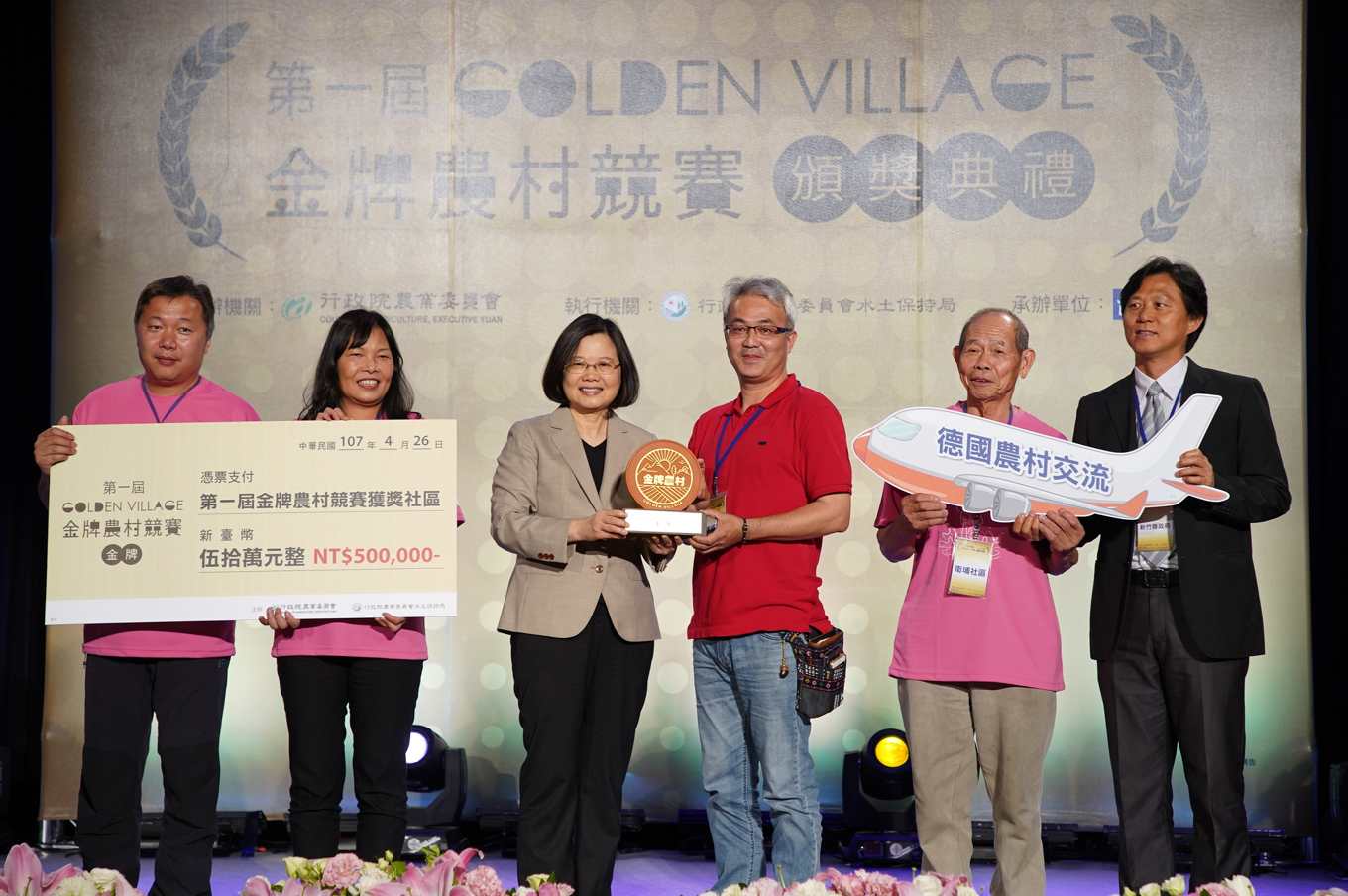
In early rural society, memories of life around the irrigation canals ran deep; they were not only a source of irrigation water, but even a playground for catching fish and shrimp as children. Yet Nanpu Community's important Nanpu irrigation canal had silted up badly, and its water volume gradually dwindled. The warmth and vitality of the village also faded away bit by bit. Seeing the village slowly decline, Nanpu Village chief Zhuang Mingzeng stepped in and began a series of reforms. "Communication is the hardest part. You visit every household, listen to the elders tell old stories, and only after building a foundation of mutual trust can you take the next step." This not only made Nanpu Community the first community to pass the Rural Regeneration Plan, but also earned it the Gold Award in the Council of Agriculture's Gold Rural Community Awards.
"What we're doing now is actually different from what I first had in mind," Zhuang Mingzeng recalled. When he first came back, he wanted to develop a leisure and tourism industry for all of Nanpu, but after really coming into contact with the residents, he realized this direction was not quite right. "Leisure tourism is not what the residents want. After the village aged, all that remained were elderly farmers. If they wanted to develop a leisure industry, they would first have to invest their life savings, and externally they had no way to do marketing or make contacts. What they really wanted was just an improved living environment and to be able to sell what they produced," so the development direction was adjusted toward being friendly to the land and friendly to the environment.
Creating local vitality and building deep cohesion
Beyond this, Nanpu Community also kept creating local vitality. For example, in the year the fields were fallowed, the Pickled Mustard Tub Percussion Band was founded; local residents picked up pickled mustard tubs and started playing music, and even performed the story of repairing the irrigation canals at that time. Every October the area also holds the Pickled Mustard Festival, which represents Hakka characteristics. A member surnamed Chen said, "We have been looking for what other industries this village has that can be developed into this kind of activity, as a display of the local image and vitality, so that Nanpu has both agricultural products and art, creating food-and-farming experiences and environmental education."
Along the way in Nanpu Community, the local residents also developed deep cohesion. A member surnamed Bao said, "For example, there was once a noodle-making factory built in the village that polluted Nanpu's water source, and the farmers protested together and drove it out." Farmers value life greatly, and they pay attention to people and things in life that are not what they expected. A member surnamed Chen also said, "It may be the whole Hakka disposition; the history of land reclamation requires solidarity." Yet the indispensable soul behind it all is Zhuang Mingzeng. A member surnamed Bao pointed out, "Before he became village chief, this village was just an ordinary rural village. It was later that everyone's recognition of their leader, seeing that he was truly doing the work, made people willing to step forward and help together."
Nanpu Community not only improved its living environment, but also in terms of labor, such as cleaning and weeding, a member surnamed Bao said, "Give a call and everyone comes to help. And take the communal meal activities: in the past no one was willing to come and sort the vegetables, but now everyone volunteers to help on their own. This is the biggest change."