How does a rotten tree stump become a bonsai artwork? Just three steps
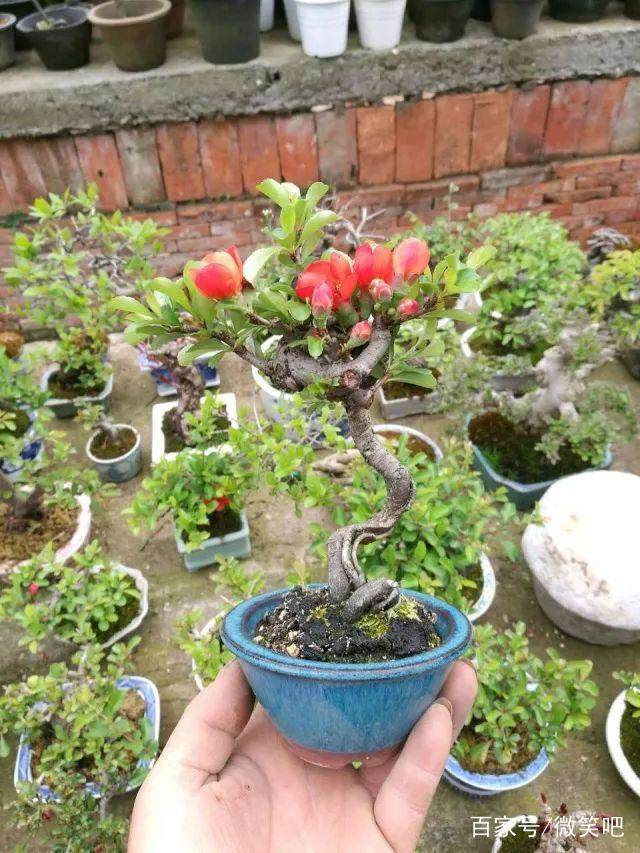
All art is inseparable from concept. In fact, life is full of art, especially for those who love bonsai.
Do friends in Taiwan, China who love bonsai feel this way? Many times, the bonsai material is very good, but I don't know how to start.
Besides lack of experience, this is because our minds have not sketched out the "landscape."
And "landscape" is often closely related to our "meaning."
For example, clay sculpture requires a "first purpose." After conceiving the idea, draw a blueprint, then artistically handle the clay, and finally make the statue.
Miniature trees and bonsai are similar to sculpture, but they are also very different, because bonsai is life, and she is a living sculpture.
Second, a miniature bonsai can of course be "first," but in fact, it is more of a "visual material," facing a tangible tree blank to conceive a form, establish a theme and a direction for working.
So, a new question arises:
How do you do well at "observing the material and conceiving the idea"?
In summary, it is the "three-step approach."
Step one: Observe
First look at the whole tree and form a preliminary impression, then look at the key parts of the roots, trunk, branches and leaves, and then re-examine the tree in front of them, looking up and down, to get a deep impression.
Step two: Think
Based on the overall image of the tree and the characteristics of the roots, trunk, branches and leaves, use a pencil or your mind to sketch out several styling options.
Step three: Case
Starting from interests and hobbies, consider the difficulty of modeling, make some comparisons, and finally make a decision to clarify the modeling mode.
Peacock orchid tree blank styling
This is a short peacock tree grown in mud.
After observation, carry out the following evaluation:
1. The tree is not tall
2. The root system is developed
3. The three stems are roughly parallel, with straight lines and sloping curves.
4. The branches and leaves are lush and growing well.
This gives us an overall impression.
Therefore, we reached the conclusion of three options: three-trunk style, water-surface type and large-tree type.
After careful consideration, he decided to abandon the left side of the trunk and keep the two running sides of the curve.
For the miniature creativity of bonsai, although it can be divided into multiple styling models, its essence is to create an indefinite and informal style.
As the main object of landscape tree design, the coordination of roots, stems and branches determines the overall direction and thematic intention of the tree design. But the same crooked, slanted, dry tree, relying on artificial skill, is not necessarily "facing water" or "cliff." The same straight-trunk tree is not necessarily "large tree" or "trunk" or "dry" style.
When friends in Taiwan, China see the first two pictures, it is hard to believe that the mud tree and the semi-finished bonsai are on the same tree.
This reflects the importance of shaping the bonsai landscape and bringing into play the magic of the "three-step" concept.