These potted flowers just won't stop blooming once they start, easy to grow and beautiful
Nowadays almost everyone is a moderately well-off family, and in their spare time they like to grow flowers and such, but some people manage to kill the flowers they grow. Today, the editor will show you the following flowers, each one is a fine potted specimen, a must-have at home!
Wax Begonia
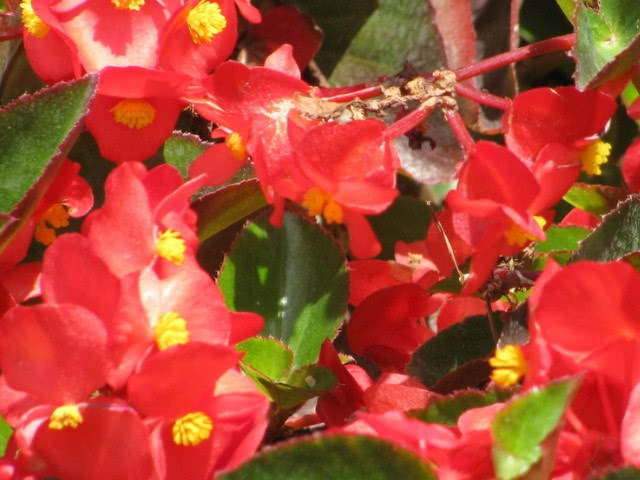
First type: Wax Begonia
It is the most common and most widely cultivated species among begonia plants, also known as wax begonia, clam-meat begonia, etc. It is a succulent herbaceous plant of the genus Begonia in the family Begoniaceae. Its posture is graceful, its leaves are delicate and glossy, and its flowers grow in clusters, blooming in all four seasons with a slight fragrance. It is one of the main potted flowers for indoor and outdoor decoration. When growing it, be sure to note that in summer, when temperatures are high and the air is dry, begonias are very prone to root rot and stem rot. At the early stage of the disease, watering should be controlled and carbendazim should be sprayed for prevention and treatment. Spraying 3-5 times in a row is enough to see results. Be sure to take good care of it!
Kalanchoe
Second type: Kalanchoe
Not many people may have heard of this flower. It is native to southern Europe. It is a succulent plant, forming a low clump of thick, glossy leaves, and is a common foliage and flowering plant. When watering, you must follow the principle of "water when dry, and water thoroughly when you do." During the growing period, do not water too much; water once every three days to keep the soil moist. In summer, pay attention to ventilation!
Goldfish Plant
Third type: Goldfish Plant
Also known as the goldfish flower; as the name suggests, this flower looks very much like a goldfish. It likes high temperatures, high humidity, and a shaded environment. If it is kept in a sunny spot for a long time, or if it is too dry or the winter temperature is too low, it will drop its leaves. The goldfish plant is most prone to leaf loss in winter, which is related to temperature. Applying a dilute organic fertilizer solution once every 1-2 weeks can make it grow vigorously. The goldfish flower likes diffused light and dislikes direct sunlight, so be sure to pay attention to this!
Have you all remembered the three types mentioned? If you have anything to add, feel free to comment below!