13 Growing Tips for Potted Tomatoes That Keep Producing Fruit
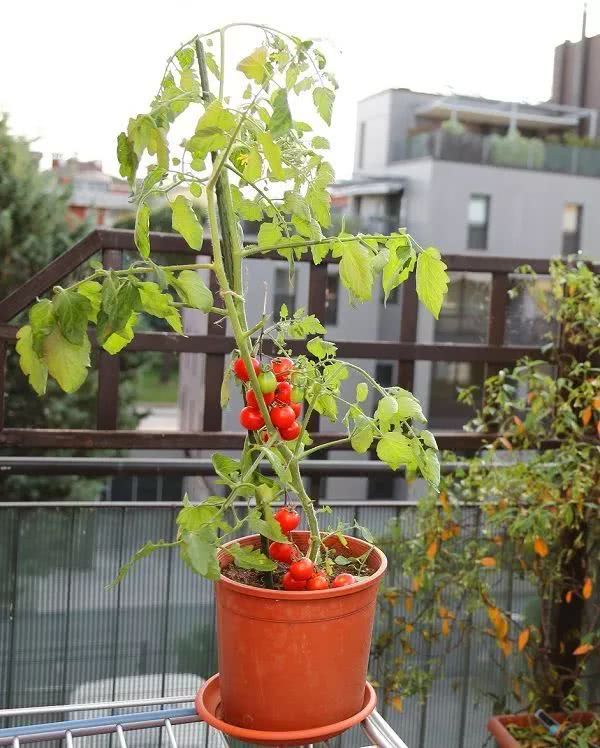
Master these 13 tips for growing tomatoes, and you can easily grow potted tomatoes on your balcony and keep harvesting red, juicy tomatoes. Let's take a look at what needs attention.
1. Choose a suitable location
You can place your potted tomato in any spot with plenty of sunlight; ideally it should get at least 6 hours of direct light per day. Also, plant only one tomato per pot, keep the environment well ventilated to avoid fungal infections, and make sure the leaves and branches have good airflow and light penetration.
2. Choose the type of pot
Choose a pot of at least about 12 liters; the exact size also depends on the tomato variety. Generally you need a larger, deeper container. A support frame needs to be set up on the pot, so containers that are too small are not very suitable. You can choose a dark-colored pot, which has some heat-absorbing effect, and the bottom of the pot should have large drainage holes.
3. Choose quality potting soil
If you want your tomatoes to grow better, choose loose, fertile, well-draining humus soil. The soil should be rich in organic matter; it is best to mix compost soil with peat soil and add some perlite or river sand. This ensures fertility and good drainage, and keeping it loose and airy helps prevent fungal infections.
4. Choose a suitable tomato variety
Trying to sow potted tomatoes yourself is great. You can choose different types of varieties, select varieties with different plant sizes according to your home environment, and you can even choose smaller cherry tomatoes.
5. Growing space
The growing environment for tomatoes should stay warm and humid year-round. Avoid dry or stagnant air, maintain a certain level of air humidity, avoid the soil staying dry for long periods, and also avoid soil that is too alkaline.
6. Use the correct planting technique
When planting tomatoes, be sure to plant them deep enough. This promotes strong root growth and supports healthy development. When planting, you can bury about 2/3 of the seedling in the soil, and you can also add soil gradually during planting.
7. Replenish fertility with organic fertilizer
To promote better tomato growth, it is best to replenish fertility with multiple organic fertilizers or various organic liquid fertilizers. This fills the soil with organic matter, such as common bean cake fertilizer or bone meal. Keep the nitrogen, phosphorus, and potassium in the soil balanced: in the early stage, always focus on a balanced fertilizer, and in the later stage, appropriately increase phosphorus and potassium fertilizer.
8. Water in the correct way
When caring for tomatoes, water regularly to keep the soil moist, but do not let the soil become too wet, and never let water accumulate. Before watering, you can insert your finger into the soil; when the soil 3 cm below the surface is dry, you can replenish water. Do not pour water on the leaves and flowers, otherwise fungal infections are likely.
9. Tomato support
When growing tomatoes, you must have a support so the tomato can climb and grow. This promotes better flowering and fruiting, increases airflow between the leaves and branches, and greatly reduces fungal infections and infestations by various pests. A cage-shaped frame is best.
10. Pruning
Tomatoes do not need excessive pruning, unless the leaves and branches are growing too densely; in that case, prune the tangled leaves and branches to maintain airflow and light penetration. Also be careful to cut off some lateral branches that do not flower or fruit, so more nutrients are appropriately retained.
11. Check carefully every week
When caring for tomatoes, frequently inspect the leaves, branches, and leaf axils; the undersides of leaves should also be a key check. Look for pests and diseases. Tomatoes are prone to aphids, and if not dealt with in time, this can cause great harm.
12. Harvest tomatoes
Master the tips above, and your tomatoes can keep producing a continuous harvest. Once the tomato fruits turn fully red, you can pick them directly and eat them. Being able to eat tomatoes you grew yourself is wonderful.
13. Clean up
Do not use containers that have grown tomatoes to grow other plants. After use, wash them thoroughly, soak them once in carbendazim, and expose them to the sun for a few days before using them again, otherwise fungal infections are likely.