There are actually so many varieties of geraniums, not just the smelly one
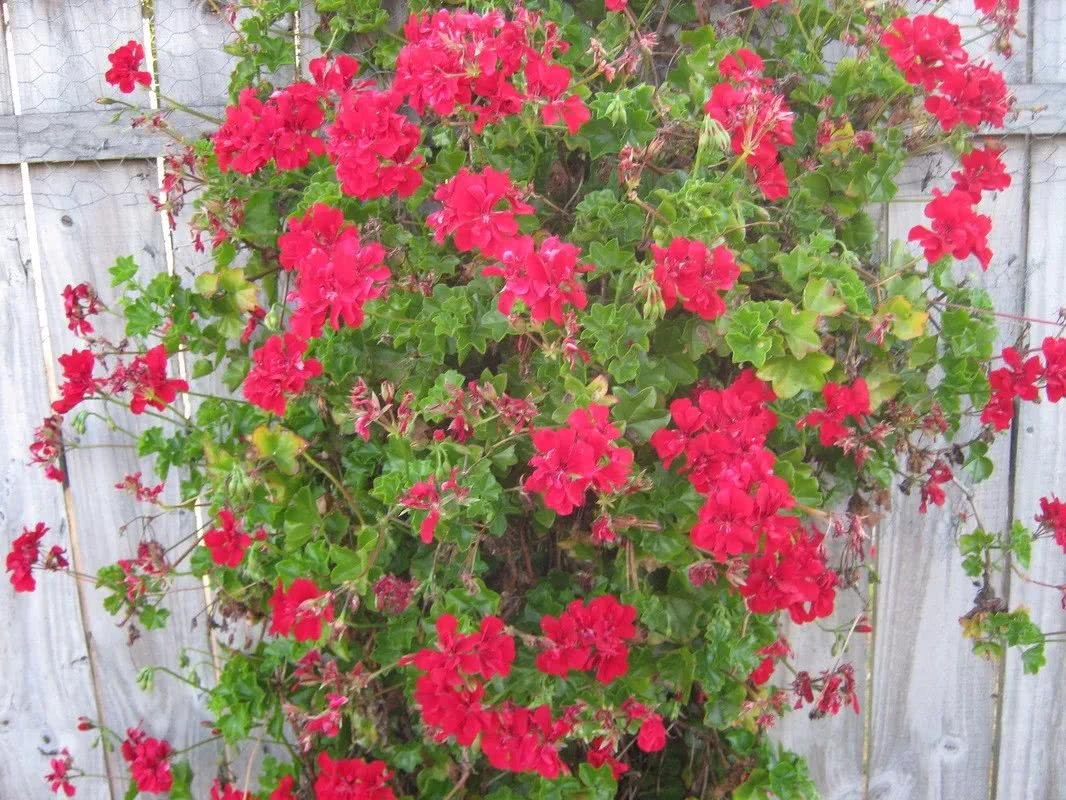
Geraniums are a very common potted plant, with common varieties bearing red, pink and white flowers, suitable for growing in pots, kept on a windowsill with proper light and a warm, humid environment year-round, and they will bloom all year. Geraniums are also one of the most popular potted flowers, but did you know they have many varieties?
A geranium like the one above can actually grow as a climbing vine, and many friends find this strange, but it is really just due to differences between varieties. Some friends say the flowers of all geraniums have a foul smell, which is also due to differences between varieties.
In tropical and subtropical regions, geraniums are generally grown as perennial plants, while in the north they may become annual plants.
Below are three common geranium varieties.
The first, the ivy geranium
The ivy geranium, also called the trailing geranium, is a plant that can grow trailing over the edge of a pot. Its leaves look a bit like ivy, and its flowers are relatively smaller than those of other geranium varieties, but the flower colors are more vivid, making it very suitable for growing on a balcony or windowsill.
The second, the scented geranium
The scented geranium is the common mosquito-repellent plant in daily life. Its leaves contain an oil with a fresh fragrance that smells like a mix of various fruits, including lemon and mint. The flowers are usually very small and look quite inconspicuous, and the leaves have some fine hairs. Besides its fragrant scent, it is also edible and has a certain mosquito-repellent effect.
The third, the regal geranium
People generally call it the butterfly geranium, also known as the Regal Pelargonium, and it is a very dense-growing potted plant. Its flowers also look quite unusual, with dark red markings on the petals, and it is also a very good ornamental variety, with rich flower colors, easy care, and good adaptability to the environment.
Caring for geraniums mainly means paying attention to providing proper shade in summer to avoid excessive exposure to the sun, and in winter paying attention to cold protection to avoid the growing temperature being too low, with the best minimum growing temperature kept above five degrees.
Geraniums are a common tropical perennial plant, and in winter you must do a good job of keeping them warm. Friends in the north can move them indoors, and the best spot is a south-facing or east-facing windowsill. Geraniums can grow well in full sun, but when summer temperatures are too high they need shade, otherwise the leaves and flowers are easily sunburned.
The size of a geranium plant varies with the variety. Some small geraniums are only a little over ten centimeters tall, while larger geranium varieties can grow to one or two meters tall, and most varieties are only 20 to 60 centimeters tall.
Geraniums can bloom after spring warms up and continue until frost arrives, and in tropical regions they can keep blooming all year round. If you want to encourage geraniums to bloom for longer, after the flowers wither you can simply pick off the spent flowers, which avoids excessive nutrient consumption.
To care for geraniums, use slightly acidic, loose and fertile soil. They are not too fussy about soil pH, but it is best to use slightly acidic soil, and drainage must be good.
Propagating geraniums is also very simple. Just cut off a section of stem, remove the lower leaves, leave it in a shaded spot for a few minutes, and then it can be directly stuck in as a cutting in warm, moist soil, keeping a temperature of around 20 degrees, higher ambient humidity, and giving proper scattered light.
Geraniums have a certain drought tolerance. It is fine to water thoroughly after the soil has been dry for a day or two, and as long as the soil is not left dry for too long, there is no problem, otherwise it easily causes leaves to drop or wither.
Geraniums grown outdoors generally do not suffer from pests or diseases, but indoors they are prone to whiteflies and aphids. In care, avoid watering too frequently and soil waterlogging, which easily causes root rot and gray mold, and leaf spots easily appear on the leaves, especially in a hot, stuffy and humid environment.