Follow these 3 steps for growing camellias, and they will bloom better and better
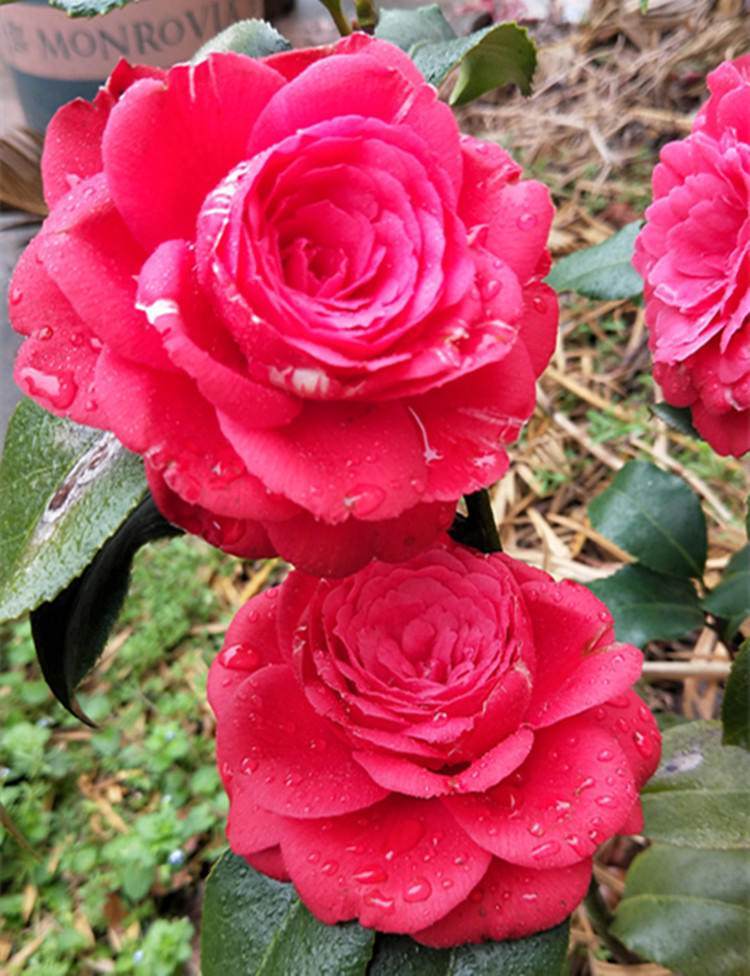
Camellia has large flowers and brilliant colors. A single camellia, if grown well, can cover the whole tree in blooms, which is especially spectacular. However, during care, gardening friends often overlook these 3 steps. Now I am sharing them with everyone. Do them well, and your camellia will bloom abundantly.
Step 1: Pruning
Most camellia branches have the ability to form buds and bloom, so gardening friends often overlook pruning camellias. Actually, for camellias, heavy pruning is not recommended, but overly dense, overly tall, and weak branches should be thinned out in time. This not only helps maintain a beautiful and well-proportioned plant shape, but also improves air circulation and light penetration and reduces nutrient consumption, so the camellia will bloom more.
In addition, after pruning, the camellia needs to consume a certain amount of nutrients, and gardening friends at this time need to replenish nutrients for the camellia in time. Generally, use a general-purpose organic nutrient solution for flowers, with balanced nitrogen, phosphorus, and potassium and comprehensive nutrition. Dilute with water 500 times and water the camellia with it, and it can meet the camellia's growth needs.
Step 2: Bud thinning
Because potted camellias are limited by many conditions such as water, fertilizer, light, and temperature, their growth capacity is limited. In order to concentrate nutrients, bud thinning should be done appropriately. Otherwise, if too many flowers are kept, the quality and color of the flowers will be affected. Moreover, if too many flowers bloom that year, the tree vigor will weaken, directly affecting bud formation and blooming the next year.
The specific method of bud thinning is: 1. Thin out the weak-growing ones and keep the strong-growing ones; 2. Thin out overly dense buds and keep evenly distributed buds; 3. While the flower buds are growing, small branches may grow, and they can be allowed to grow. However, small branches that sprout around the Beginning of Autumn are best removed completely.
Step 3: Do not move it often
The camellia has poor adaptability. Potted camellias should not be moved frequently, especially during the bud sprouting and bud formation period from April to September, when their position and direction should not be changed, so as to avoid scorching the leaves of leaves that have already adapted to the light because they suddenly change direction and are exposed to strong light. Even if the leaves are not scorched, they will not grow well.
Camellia is a shade-tolerant flowering shrub, suitable for a semi-shaded and humid environment, and not suitable for exposure to strong sunlight. Its optimum growth temperature is 18-25°C, and its optimum flowering temperature is 10-20°C. Therefore, in summer there should be semi-shade or diffused light, and in winter it can be placed in a place facing south with its back to the north, so that it gets shade in summer and sunlight in winter. During usual care of camellias, pay attention to timely watering them with organic nutrient solution to promote flower bud formation, so that they will bloom more.