What to do about root rot after fertilizing succulents? Simple steps to make the roots strong
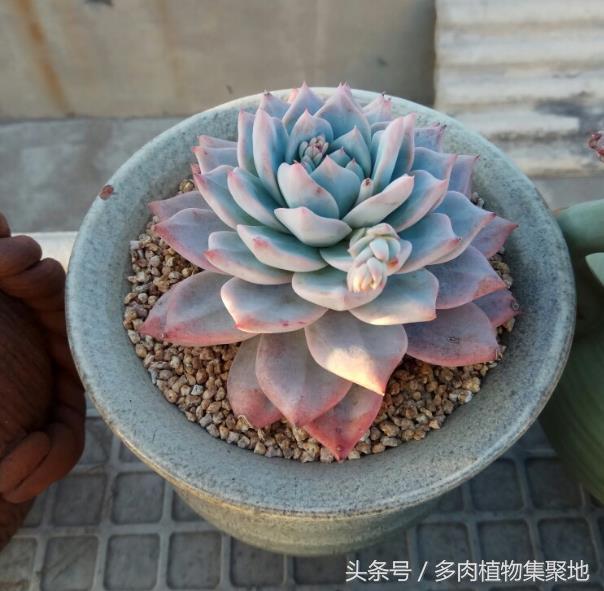
Fertilizing succulents in the wrong season, or fertilizing too much, can cause root rot. Why should succulents be fed with light fertilizer frequently? This comes down to the growth cycle of succulents: the greater the daily temperature difference, the faster they grow. Waiting until the potting soil dries out completely before watering also makes them grow quickly. If at this point you add some organic fertilizer solution to the watering can, stir it, and pour it into the dried-out pot, it helps the succulents absorb it.
Every plant needs fertilizer; it is just that succulents and cacti need relatively little, so much so that we even overlook their needs, to the point that some people think succulents do not need fertilizer at all. In fact, excessive fertilizer is certainly bad, but a moderate, tiny amount of fertilizer is always good for succulents.
Spring and autumn are generally the growing season for succulents, so you can fertilize then, but never fertilize succulents that go dormant in summer; conversely, succulents that grow in summer, such as Euphorbiaceae, need more fertilizer, while winter-growing succulents such as Saussurea should not be fertilized. Never fertilize plants in a wilted state; pull them out, trim the roots, and replace the potting soil. Fertilizing generally means preferring a weak solution over a strong one, and applying it several times when needed. For succulents, the amount of fertilizer per application can be roughly equal in volume to the amount of water used per watering. Before fertilizing, the potting soil should be basically dry; loosening the soil first and then fertilizing gives better results.
Generally, during the seedling stage, nitrogen fertilizer is the main type, while during flower bud differentiation and the flowering and fruiting stage, phosphorus and potassium fertilizers are the main type. In spring, you can use a bit more nitrogen fertilizer, and before overwintering, apply less nitrogen fertilizer. Leafy succulents can take slightly more nitrogen fertilizer, while stem-like succulents and spherical cacti should mainly use phosphorus and potassium fertilizers. Flowering fertilizer is mainly phosphorus and potassium fertilizers, with other elements as supplements, and it is best applied in liquid form for quick effect. You can choose professional flower fertilizers such as Huayou or Huaduoduo, or you can directly apply monopotassium phosphate.
What are the fertilizing methods for succulents? There is the method of fertilizing after the soil dries: first apply fertilizer water, and after the fertilizer water has fully seeped into the soil, it is better to pour an appropriate amount of clear water. Mixing fertilizer water with clear water and pouring them down together is also fine. For succulents, fertilize Lithops before flowering, that is, in mid-October, and for Conophytum, late September is best. If it is a newly potted plant, or one that is growing poorly, has damaged roots, has wounds on stems or leaves, or is a self-rooted cultivated plant that has turned entirely rust-colored after being harmed by red spider mites, none of these should be fertilized.
When growing succulents at home, bury some slow-release flower fertilizer or organic fertilizer at the bottom of the pot, and along with regular repotting and soil changing, slow-growing succulents need almost no additional fertilizer supplementation. Unlike herbaceous flowers, the trait of succulents growing only a few leaves a year means they consume very little. Consuming little naturally means eating little, and moreover, there are several months of dormancy during the year. So, as for nutrient needs, what is already in the soil is entirely sufficient.
This is a gathering place for succulent lovers, sharing succulent care tips; you are welcome to follow and join the discussion.