Snake Plant Grows to 1 m Tall, Blooms and Fruits - Why Won't Yours Grow?
Common Problems with Snake Plants and Their Solutions
Root rot:
1. If you water too much and the potting soil stays too wet, moisture builds up and causes root rot in snake plants.
2. In this case, first take the snake plant out of its pot and rinse the roots clean with water.
3. Use sterilized scissors to cut off the rotten parts of the roots. Be sure to clean them out thoroughly, otherwise re-infection can occur.
4. Soak the roots of the treated snake plant in carbendazim or a 0.1% potassium permanganate solution for half an hour to disinfect them.
5. After disinfecting, put the snake plant in a cool, ventilated place to let the wounds dry. Once dry, place it in clean water to encourage root growth.
6. Once the snake plant has grown new roots, transplant it into a pot.
Rotten leaves:
1. Rotten leaves on snake plants are also caused by problems with the watering method. What should you do if this happens?
2. Cut off the entire leaf section containing the rotten part directly - don't feel bad about it, otherwise the rot will keep spreading.
3. After cutting, apply some carbendazim to the wound on the remaining healthy snake plant leaf to disinfect it.
4. When watering in the future, be careful not to pour water on the leaves; try to water the soil surface instead.
Dry, yellow, soft leaves:
1. Too much light or too little water can cause the leaves of snake plants to turn dry and yellow.
2. Snake plants don't need overly strong light, otherwise the leaves will turn dry and whitish. Be sure to place them somewhere indoors that gets scattered light.
3. Soft snake plant leaves are usually caused by too little water. Watering about once every 15 days is enough.
The Complete Snake Plant Care Guide
Light:
1. Snake plants are fairly shade-tolerant and don't need much light; scattered light is enough to meet their needs.
2. Normally we can just keep snake plants in the living room. In summer, be careful to avoid direct sun exposure and provide shade.
Watering:
1. Snake plants like moisture, but you shouldn't water too much either, otherwise the leaves will become too stiff.
2. In spring and autumn, water about once every 10 days; in summer, once every 7-10 days is enough; in winter, you don't need to water at all.
3. If you really can't tell whether it needs water, dig 2-3 cm down from the soil surface. If that layer of soil is dry, it's time to water.
Fertilizing:
1. Snake plants don't have high fertilizer requirements either. When the temperature reaches above 20 °C, snake plants grow faster, and that's when we can fertilize to promote growth.
2. Usually, just mix fermented rice water with clean water at 1:30 and water it with that.
3. You can also buy compound fertilizer and apply it once a month. Dig a small hole near the edge of the pot and bury 2-3 granules each time.
4. If you want the leaves to be greener, you can spray a 0.1% potassium dihydrogen phosphate solution on the snake plant's leaves, once every 2-3 weeks.
Soil:
1. The soil for growing snake plants should be loose, breathable and have good drainage.
2. A mix of leaf mold and river sand at 1:1 is enough.
How to Propagate Snake Plants
Cuttings:
1. Cut the snipped snake plant leaves into small sections 5-10 cm long and let them dry in a cool, ventilated place.
2. Insert the dried snake plant leaf sections into sandy soil that has been watered thoroughly, so they can take root.
3. Once they have rooted, transplant them into pots.
Division:
1. Stop watering one week before preparing to divide. Then take the plant out of its pot, clear the soil from the roots and separate each snake plant.
2. Apply carbendazim to the cleaned snake plant roots to disinfect them, then leave them in a cool, ventilated place to dry.
3. Prepare new soil (leaf mold : river sand = 1:1) and plant each snake plant into its own pot.
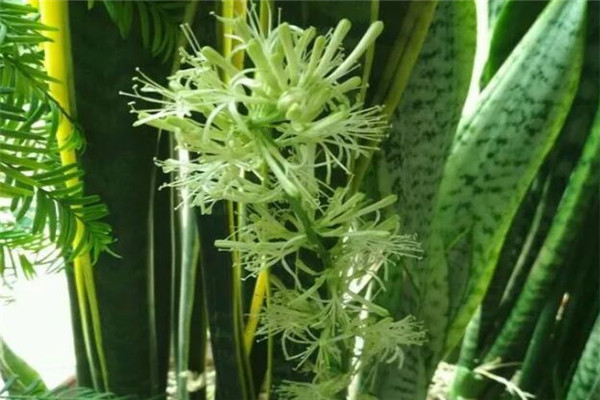
With careful care, snake plants won't just bloom - they'll even bear fruit!
I wonder if everyone has learned these snake plant care tips.
If you have any other questions,
Feel free to leave a comment below, and Huahua will answer them for you~