What is the difference between Chinese toon and tree of heaven? A quick guide to telling them apart
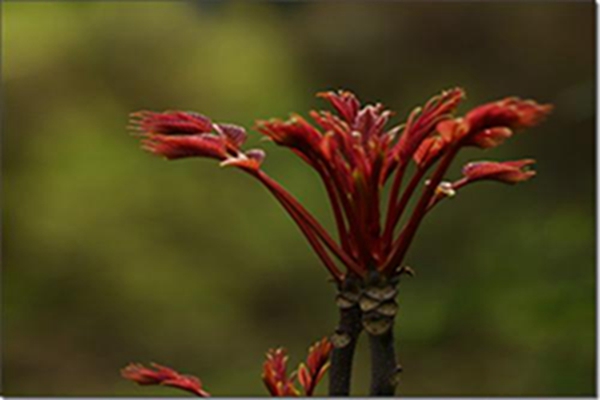
I. Chinese toon
This tree originated in the Yangtze River area of China. It belongs to the Meliaceae family and is not an evergreen tree. Its leaves are even-pinnate, its fruit is oval, and its seeds can be used for propagation. The tree is relatively tall, its young shoots are edible, and it can also be used as a landscaping tree. Its young shoots are very beneficial and can be used in food therapy; they can treat wind-cold and stomach pain, among other things.
II. Tree of heaven
1. It originated in the northeastern region of China and prefers a mild climate. It grows very quickly and can reach 15 m in more than 20 years, but its lifespan is relatively short, and it generally cannot live more than 50 years. It can also be used as a landscaping tree species. Its fruit, roots, and bark can all be used medicinally and can stop diarrhea and bleeding.
2. It can reproduce on its own in some areas of North America. In ancient China, some people who lacked food would also eat it. It is a fairly good traditional Chinese medicine.
III. Differences
Although these two trees belong to different families and genera, their shapes are very similar, so many people mistake one for the other.
1. Differences in leaves
The leaves of the former are usually even-pinnate and rarely odd-pinnate, and they are pinnately compound leaves. The leaves of the latter are usually odd-pinnate and are also pinnately compound leaves. The leaves of the former have 5 vascular bundles, while the latter has 9.
2. Differences in smell
The leaves of the former have a relatively strong fragrance, while the leaves of the latter have a strange bad smell.
3. Differences in trunk
The trunk of the former can generally be peeled off in strips, while the trunk of the latter is relatively smooth and has no cracks.
4. Differences in fruit
The fruit of the former is a capsule, while the fruit of the latter is a samara.