Store eggs like this in the fridge and they easily turn into toxic eggs; store them wrong and the whole family suffers
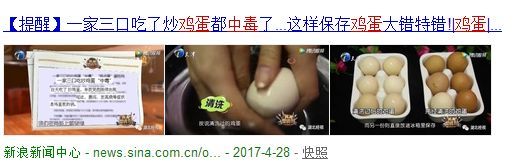
When it comes to eating eggs, I believe many people know their stuff - boiled eggs, tea eggs, steamed eggs, scrambled eggs... everyone can make them.
But when it comes to storing eggs, I'd bet 5 mao that many people are probably getting it wrong.
And sure enough, someone has fallen victim to it~
So don't think storing eggs is a trivial matter~ Store them improperly, and nutritious eggs can turn into life-threatening toxic eggs in no time~
Store eggs like this in the fridge and they turn into toxic eggs in no time
First, a question for everyone: after you bring eggs home, do you wash them clean before putting them in the fridge?
If you're in the habit of washing them before refrigerating, you may have meant well but done harm!
Doing this actually makes it harder to keep the eggs fresh.
In other words, washed eggs are more susceptible to bacteria and viruses, and thus spoil.
An institution ran a relevant experiment: washed eggs and unwashed eggs were placed in the fridge at the same time, stored for 5 days, then taken out.
The result: after cracking open the washed eggs, the yolks all broke apart, with a fishy, foul smell; the unwashed eggs had yolks intact as before, all still fresh.
But logically speaking, washed eggs should be cleaner - so why do they spoil more easily instead?
Because you washed off its protective film
ah!
The eggshell has thousands of tiny pores on it
, and the surface of the shell has an invisibleprotective film that "seals" those pores.
Eggshell structure
This way, outside bacteria have a hard time getting inside the egg; and the nutrients inside the egg are less likely to be lost.
If the protective film is destroyed
, outside bacteria and viruses can very easily enter the egg through the pores
, causing the egg to spoil, and people who eat it will show symptoms of poisoning.You might worry:
Eggshells easily pick up bacteria (such as Salmonella) and viruses (such as avian influenza virus), so it feels unsafe not to wash them~
Actually, it's not that scary.
First, we don't eat the eggshells; second, whether it's avian influenza virus or Salmonella, both fear heat, so as long as you eat thoroughly cooked eggs, there won't be a problem. As for raw eggs and soft-boiled eggs, I'd advise you not to eat them.
Even stored in the fridge, it still has a shelf life
Don't think that putting eggs in the fridge means all is well - the sooner you eat the eggs you bought, the better.
Eggs refrigerated at a fridge temperature of 2°C~5°C
can be kept for half a month or even a month without much problem
。But if it's summer and they're kept at room temperature indoors, they can only be kept for about 10 days.
Past the shelf life, its freshness and nutritional content will be affected.
Therefore,
don't buy too many eggs at once; it's best to make sure you can finish them within 1~2 weeks.
Also, when storing them in the fridge, it's best to put them in packaging, so that contaminants on the surface don't contaminate other foods.
There's a proper way to position them:
Big end up? Small end up? Or laid horizontally?
Besides storage, there's actually quite a bit of know-how in how you position eggs.
Different positioning methods can determine the quality of egg storage~
Among the 3 positioning methods,
big end up is the best!
Eggs stored with the big end up lose less mass and stay more tender and fresh.Because
the egg's pores are mainly concentrated at the big end of the shell
, pointing the big end up can avoid the egg white affecting respiration, which would make the egg less fresh.
And
laying them horizontally makes it easy for the yolk to stick to the shell
, so when boiling the eggs, the yolk very easily breaks apart.Therefore,
when positioning eggs, the big end should be up and the pointed end down
. This way the eggs keep longer, preventing the yolk from sticking to the shell or breaking apart.
Of course, eggs spoiling isn't entirely a matter of our storage - sometimes it may be because the eggs we bought were already bad.
At times like this, you need to sharpen your keen eye and pick your eggs carefully.
One look, two listens, three observations,
3 steps to teach you how to pick good eggs
Hold it up to the light
Good eggs and bad eggs look different under light.
A good egg held to the light appears semi-transparent, slightly reddish
, and you can clearly see the outline of the yolk.
Poorer eggs, even under strong light, still
let no light through and look very dim
。Shake it and listen for sound
Gently shake the egg near your ear,
and see if there's a shaking sound and sensation.
If there's no sound, it means the air cell and yolk of the whole egg are intact; whereas a bad egg makes a water sound when shaken.
Observe the eggshell carefully
A good egg's shell has a vivid color, and its sur
face is rough, feeling gritty to the touch
; a bad egg's shellis blackened in color and feels smooth,
and some bad eggs even have red or black mold spots.No like, no egg for you