What are the common spring seedling pests and diseases? A summary of common species
Spring is the season when all things revive, and it is also a season with a high incidence of pests and diseases. Today, the editor has summarized for all nursery growers several of the most common pest and disease control methods in spring, hoping to be helpful for everyone's spring seedling pest and disease control.
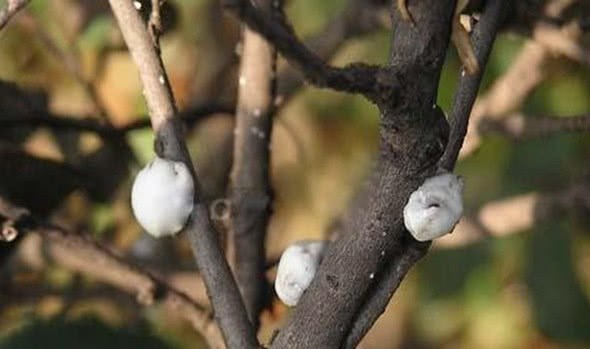
Pest section - Scale insects
Main damage: Scale insects mainly harm seedlings such as oleander, boxwood, holly, and camphor.
Control methods:
1. Improve ventilation and light transmission conditions. Combined with pruning, cut off diseased and pest-infested branches and leaves, and dispose of them centrally to reduce the source of insects.
2. Chemical control: Use 28% Jiebao emulsifiable concentrate at 1200 times or 40% Lesiben emulsifiable concentrate at 800 times plus 10% imidacloprid at 1000 times for spraying.
Pest section - Boxwood leafroller
Main damage: Seedlings such as Chinese boxwood and boxwood.
Control methods:
1. Control should be carried out as soon as damage is first seen. In early March, inspect the larval nests of overwintering boxwood leafroller larvae on the seedlings. If larvae are found leaving the nests, use pesticides promptly for control.
2. Chemical control: The pesticide can be 40% Dusiben emulsifiable concentrate at 800 times or 25% cypermethrin emulsifiable concentrate at 2500 times for spraying.
Pest section - Aphids
Main damage: Seedlings such as large-leaf boxwood, red-leaf plum, peach, crabapple, firethorn, crape myrtle, rose, and oleander.
Control methods:
Chemical control: 10% imidacloprid or 10% Jinshiji 1500 times solution.
Pest section - Longhorn beetles
Main damage: Seedlings such as red-leaf plum, plum blossom, and peach blossom.
Control methods:
1. Promptly handle severely damaged seedlings, prune reasonably, and strengthen seedling management.
2. Chemical control: Use 40% Dusiben or 80% dichlorvos emulsifiable concentrate at 30 times solution to inject into holes and block them for killing.
Disease section - Powdery mildew
Main damage: Seedlings such as crape myrtle, peach, rose, narrow-leaf mahonia, and large-leaf boxwood.
Control methods:
1. Spring powdery mildew should follow the principle of "prevention first, comprehensive control."
2. Keep the seedling growing environment well ventilated
3. Remove diseased leaves promptly and spray pesticides comprehensively for control. Fenarimol at 1600 times solution can be used, spraying once every 7 days, for 2--3 consecutive treatments.