Can't Thais afford durian anymore, and is it really because of Jack Ma?
Jack Ma visited Thailand for the first time last week and received state-guest-level treatment from the Thai government, basking in the limelight. The Thai government sees Jack Ma as a god of wealth, and indeed he is: he not only promised to invest heavily in Thailand, but also sold 80,000 durians for Thailand within one minute, giving great face to the Thai government that had received him with such high-level courtesy. But durian-loving Thais wrote to newspapers to complain: "This is terrible, we're going to end up like Malaysians, unable to afford our own durians."
The durian season in Thailand and Malaysia officially begins in April, and photos of people from both countries licking their fingers while eating durian with their families keep appearing on Facebook and IG. But in recent years, Malaysians have had to spend far more than before to enjoy such scenes, and Thais may soon have to pay a higher price as well in order to feast on durian.
Jack Ma visited Thailand on the 19th, and the reception the Thai government gave him was no less grand than that for a foreign head of state. First, Deputy Prime Minister Somkid welcomed him at the entrance of Government House as he got out of his car and escorted him inside; then Prime Minister Prayut warmly posed for a photo with Jack Ma, arm around his shoulder, in the main hall for receiving foreign guests.
In return, Jack Ma signed a series of agreements with the Thai government, including selling 3 billion yuan worth of Thai Monthong durians for Thailand within 3 years, investing in a smart logistics system in Thailand, training digital talent for Thailand, and opening an official flagship store for Thai jasmine rice on Tmall.
To show his strength, two days before setting foot in Thailand, Jack Ma had 80,000 Thai durians snapped up on Tmall within one minute, stunning all of Thailand.
From harvesting to customs clearance, Thai durians travel along the Kunming-Bangkok Highway to Yunnan and then to destinations across the Chinese mainland, delivered fresh and direct, with the whole process taking only 120 hours.
Many Thai fruits exported to the Chinese mainland are growing at a double-digit rate each year, and now with Jack Ma's boost, fruit farmers are all smiling broadly. But on the 20th, one citizen wrote to Thailand's Thairath Daily, expressing what many Thais feel. The letter warned that Thailand should be careful not to become like Malaysia, where durian prices, driven up by frantic buying from Chinese consumers, have risen so high that Malaysians themselves can no longer afford them.
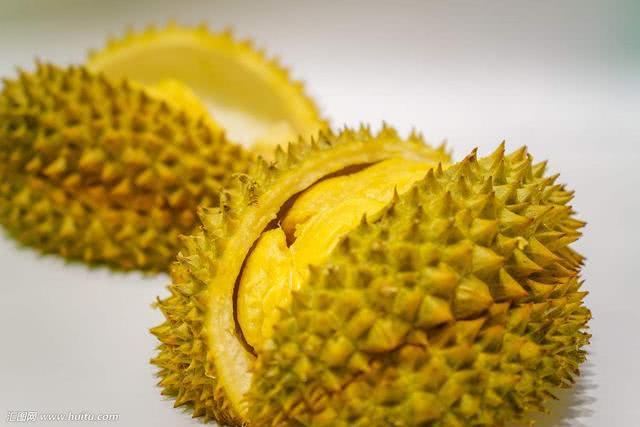
Malaysia's famous Musang King durian is smaller in size, with a strong aroma and a yellow, soft, bittersweet flesh. Thai durians are larger, pale yellow in color, and comparatively refreshing in taste. When Malaysians meet Thais, they always like to argue over whose durian tastes better.
A few years ago, after Malaysian durians were approved for export to China, they became sought after by mainland consumers, causing Musang King exports to the mainland to grow more than 6 times in 6 years, with prices soaring steadily. In recent years, tourists from China and Hong Kong, China often travel in groups to production areas to feast on durian, and together with the export of durian mooncakes and various related foods, various regions have to "compete" for high-quality durians such as Musang King; with supply falling short of demand, prices keep rising.
Malaysian Prime Minister Najib once publicly said that the ability to export Musang King to China was something he had fought for, bringing huge profits to Musang King growers.
However, there is widespread grumbling in Malaysia over the soaring price of Musang King, and it has been pointed out that in recent years mainland consortiums have bought Musang King orchards at high prices and run an integrated operation covering cultivation, harvesting, processing and export to China, to the point that Malaysians complain their own people can barely buy or afford durian.
"Musang King has long been so expensive that ordinary people like us feel the pain in our wallets when we eat it," said Johor resident Ng Ling Qiu. She still remembers that a few years ago, the most expensive Musang King was only about 20-plus Malaysian ringgit per kilogram, but now "A-grade Musang King from Labor has soared to as high as 85 Malaysian ringgit, and eating one costs more than 100 Malaysian ringgit."
As Musang King prices soar, people in neighboring Singapore are complaining bitterly too. The price of Musang King in Singapore has risen from 18 to 20 Singapore dollars per kilogram to a record high of 50 Singapore dollars. The Straits Times quoted a durian wholesaler as saying, "I've been selling fruit for 50 years and I've never seen prices this high. It's really too high."
The Thai citizen who wrote to the newspaper pointed out that the export of daily necessities should uphold the "sufficiency economy" philosophy and policy promoted throughout his life by the late King Bhumibol of Thailand, and should be done in moderation, putting domestic people's needs first.