What kind of soil is suitable for growing Guzmania?
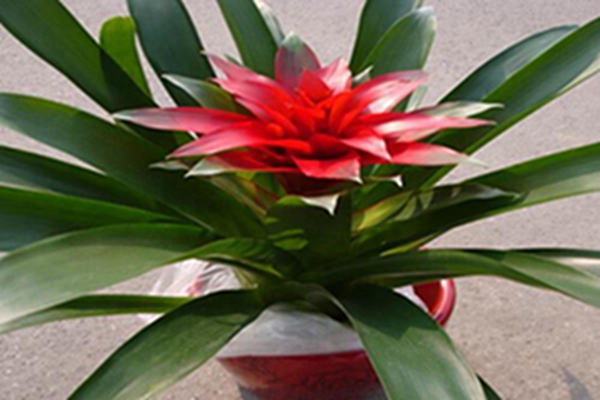
I. What kind of soil to use
1. This is a flower that can live for many years, and it was introduced from the Americas. This flower has a relatively long blooming period and very bright colors, making it very suitable for viewing in winter and spring. Its leaves are emerald green all year round, and the flower colors are very rich and very beautiful.
2. If using soil for it, it is best to use very loose and breathable soil, preferably combining peat, rotten leaves and debris. If there are not enough materials at home, you can use rotted leaves plus some ordinary garden soil, then add some peat and perlite, and it can be planted. If there are still not enough materials, use ash from burned grass plus some fine sand, and it can still grow very well.
II. How to care for it in daily life
1. Pot
As a member of the Bromeliaceae family, it was originally a parasitic plant, so its root system is not very strong, with only some very small and short roots, and some roots even grow in the air. Therefore, using a relatively small pot is actually better than using a large pot.
2. Light
It likes areas with sufficient heat and also high humidity. It is best to place it in a bright, well-ventilated area with light. In the severe winter, it can be exposed to sunlight all day long, but in summer the sun must not shine directly on it. If the light is bright enough, its leaves will be more glossy.
3. Temperature
If in the severe winter you want it to safely pass through winter, the temperature must not be lower than minus 10 degrees, but it also must not be higher than 20 degrees, otherwise it cannot enter dormancy normally, which is not very good for its growth the next year.
4. Watering
During regular watering, pay attention to also pouring some clean water into its leaf cups. During its growing period, you can water it a bit more.
5. Fertilizer
It blooms in the severe winter, and at this time it needs sufficient fertilizer, so liquid fertilizer should be applied once every half month. It only blooms once in its lifetime, and after blooming, several offsets will grow at the base.