Clever tips for getting more blooms from Cymbidium goeringii and Cymbidium sinense, and how to easily grow them into a full pot
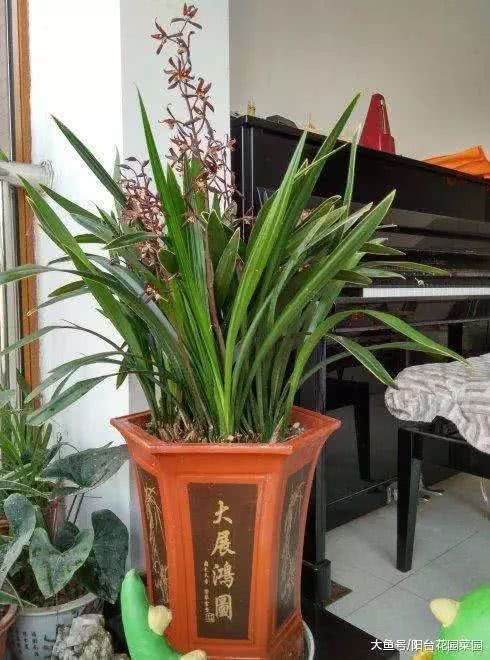
The blooming season of Cymbidium sinense usually runs from November each year to February or March of the following year. Because temperature and humidity differ between northern and southern regions, the blooming season varies accordingly. Cymbidium sinense also has different blooming seasons depending on the variety. When temperature, humidity, water and light are suitable, early-blooming varieties begin to send up their spikes in November and can open before the Spring Festival. Late-blooming varieties begin to send up their spikes around the Spring Festival and open gradually from late February to March.
Although the blooming season of Cymbidium sinense runs from November to February or March of the following year, its flower spikes have already emerged from the soil in August and September of the previous year. After emerging, they grow to two or three cm and then stop growing, and only from the end of October to November do they begin to send up spikes and grow. The minimum overwintering temperature for Cymbidium sinense is usually around 10 degrees. When the temperature is below 10 degrees with no light, the leaves and flower spikes of Cymbidium sinense are very easily damaged by cold.
The blooming season of Cymbidium goeringii varies due to differences in temperature and humidity between northern and southern regions. It is roughly from January to March; more specifically, in Fujian and Guangdong, Cymbidium goeringii can bloom from December to January. In the Jiangsu-Zhejiang area, northern East China and northern Central China, however, it blooms from February to March. In Northeast China, you may have to wait until March or April to see it bloom.
Many flower lovers grow Cymbidium goeringii and care a great deal about when its flower buds form. Less attentive growers may not have noticed that each year, when the leaf shoots of Cymbidium goeringii grow to three or four cm, they stop growing for a period (about half a month to 20 days). It is at this time that the orchid's flower buds begin to differentiate; after the flower bud differentiation is completed over ten to twenty days, the leaf shoots begin to grow again until they become mature plants, and at about September to October the flower buds form and break through the soil.
The flower buds of Cymbidium goeringii, like those of Cymbidium sinense, stop growing after emerging from the soil once they reach two or three cm. However, the overwintering temperature for Cymbidium goeringii is somewhat lower than for Cymbidium sinense (about 0-5 degrees),
The flower buds of Cymbidium goeringii need low-temperature vernalization to produce high-quality flowers. Orchid plants that have undergone vernalization have more upright flowers, purer fragrance and color, and taller flower stems. They bloom abundantly and vigorously, so although the blooming seasons of Cymbidium goeringii and Cymbidium sinense are basically similar in timing, there are slight differences in their overwintering care. Therefore, orchid growers should also distinguish as much as possible between Cymbidium goeringii and Cymbidium sinense in their overwintering care, avoiding treating them the same way. Only then can you see high-quality flowers full of charm.