What are the poisonous plants? 18 of the most common ones around you, don't eat them by mistake
Most plants said to be poisonous merely cause skin sensitivity, or numbness of the mouth and tongue after accidental ingestion; only a very few can make a person fall ill and die.
Some plants, however, can kill a person the moment they enter the mouth, so you cannot be careless. Below we introduce the more common poisonous plants.
1. Castor bean
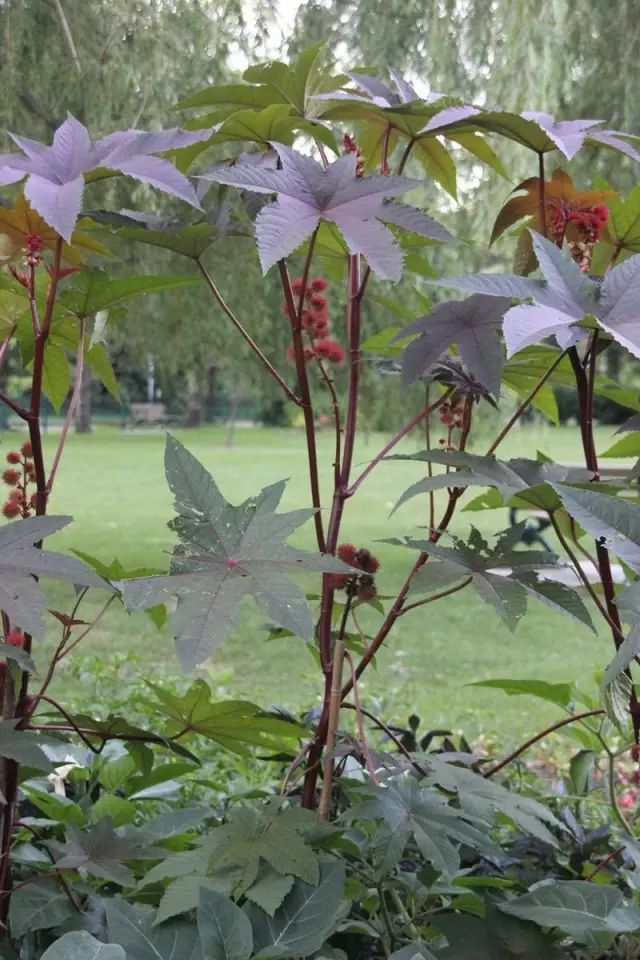
When it comes to poison, the most toxic and most well-known poisonous plant is the castor bean. The castor bean is a tropical plant, so in cold zones it is an annual; it grows very fast, and within just a few weeks it can grow to more than 1.5 m, with large leaves, so it is very popular in parks.
The stems and leaves of the castor bean are not poisonous; what is poisonous is the seed. The seed contains ricin, a famous toxin; in detective novels and films, murders committed with this toxin are too numerous to count.
It is said that just the amount of five seeds can kill an adult. (However, animals tolerate castor bean better than humans do; eleven seeds are needed to kill a dog, and 80 seeds to kill a duck.)
2. Monkshood (aconite)
Because this flower looks like a monk's hat, people in ancient times coated its sap on arrows to make poison arrows.
The whole plant of monkshood is toxic; the leaves and flowers are all poisonous, so you must wear gloves when pruning. Some people got the sap on their fingers, then put them in their mouth, and were poisoned to death.
In the past its root was even used as medicine to poison rats and similar animals. So absolutely do not grow it in a home with children or pets, and even more, do not cut the flowers for arrangements.
After poisoning, seek medical attention immediately; a delay of one hour is enough to be fatal. Symptoms include: vomiting, numbness of the mouth and face, a burning sensation in the body and skin, a burning feeling in the abdomen, followed by convulsions, confusion, and so on.
There are very many cases of death from monkshood, including a Canadian actor, Andre, who in 2004 while camping in Newfoundland accidentally ate monkshood and died on the way to the hospital.
In 2014, a British gardener, Nathan, was also sent for medical treatment after pruning monkshood, and died five days later of organ failure. In addition, quite a few people have used the toxin of monkshood as a murder tool.
3. Foxglove
When it comes to toxicity, foxglove's standing is no less impressive. The leaves, flowers and seeds of foxglove must not be eaten; the leaves especially can kill a person if eaten in quantity.
The initial symptoms of poisoning are: irregular heartbeat, slowed or accelerated heartbeat, low blood pressure, even fainting. Other symptoms that may appear later include: blurred vision, confusion, hallucinations, loss of appetite, nausea, diarrhea, depression, drowsiness, and so on.
Foxglove has long been used as traditional medicine in both East and West, but the dosage and method of use follow fixed specifications. Recently some people mistakenly believed foxglove could reduce appetite, and used it for weight loss; as a result, quite a few people were poisoned because of it.
4. Belladonna
Belladonna is also famously highly toxic; this purple-flowered plant often appears in lawns. Almost the whole plant is poisonous, and the most toxic part is the berry, which somewhat resembles a ripe cherry; just 2-3 of them are enough to kill a child. For adults, 10-20 are fatal.
Its leaves are also highly toxic; a single leaf is enough to kill an adult. In addition, the root is also highly toxic and must absolutely not be eaten.
Symptoms of poisoning include: reddening of the face, dry lips and tongue, dilated pupils, accelerated pulse, followed by rapid heartbeat, convulsions, hallucinations and unbearable pain.
Historically many ancient people used this plant to seek wealth and take lives; the ancient Romans used it as a poison on arrows, but because it has hallucinogenic effects, traditional doctors in ancient times also used it as an anesthetic.
In addition, some women took the essential oil of this plant to dilate their pupils, in order to make their eyes brighter and more charming; you could say they wanted beauty but not their lives. (In the plants you see the beautiful belladonna flower, blooming alone in the flower bed.)
5. Datura
Datura, also in the nightshade family, has beautiful flowers and spiny seeds, and is likewise famously poisonous.
The stems, leaves and seeds are all poisonous, and the seeds and flowers are the most toxic. Some even say it is the most poisonous plant, and that even touching it is dangerous.
Datura's flowers are beautiful, and its name is beautiful too; there are white, pink, yellow and other colors, and the large flowers can grow to 18 cm, truly like one hanging trumpet after another.
Its toxicity causes hallucinations; that refers to the aftereffects of touching it, and in serious cases these last many days. If eaten, it is fatal. After accidentally ingesting it, you must immediately go to the hospital for gastric lavage.
6. Tomato leaves
In fact, plants in the tomato family all belong to the nightshade group, and all have some toxins. Although tomatoes are delicious, tomato leaves are poisonous, so tomatoes rarely attract pests. You can also use tomato leaves to repel insects.
The potato, in the same family as the tomato, also belongs to the nightshade group and has similar characteristics. For these plants, you can eat only one part of the plant; the other parts must not be eaten.
For example, for the potato you can eat only the underground stem, not its flowers or leaves. For the tomato you can eat only the fruit; the leaves must not be eaten. For tobacco you can use only the leaves, and no other part at all.
(Some people think that because sweet potato and yam leaves are tasty and nutritious, potato leaves can be eaten too; that is completely wrong. Because sweet potato and potato are not in the same family.)
In addition, not all nightshade plants are poisonous; the currently very popular annual morning glory is completely non-toxic, so there is no need to worry.
7. Lupine (lupin)
Lupine is a beautiful perennial, but its leaves, pods and seeds are all poisonous.
This plant grows wild in many places; in fact it is very beautiful and grows vigorously. After planting it, it also adds nutrients to the soil.
You just need to be careful: this plant contains an alkaloid that produces reactions in humans and animals, blocking the ability to absorb enzymes.
In lupine seeds, seed pods and young leaves, more of this type of alkaloid is contained, so do not eat them. In the past there were cases of livestock being poisoned after swallowing them in the grass.
8. Golden chain tree
The golden chain tree is very beautiful, but it also contains the same alkaloid. The seed pods, which look like bean pods, must absolutely not be eaten. Experiments say that children died after eating 20 seeds.
The golden chain tree has seeds enclosed in pods; the seeds contain toxins that affect the heartbeat and central nervous system. The initial symptoms are excessive excitement, slurred speech, cramps, and in serious cases coma, even death.
The same toxin exists in the pagoda tree and the black locust.
9. English yew
The needles and seeds of the English yew are poisonous, but the outer layer of the red berry, as in the picture, is non-toxic (many people have eaten yew berries without harm, because of differences between varieties). This toxin is highly poisonous to livestock such as cattle, sheep and horses; in the past there were often incidents of livestock lying dead beside yew trees, and it is said that symptoms appear two or three hours after eating.
Humans must not eat it either, and children are especially severely affected. But deer, which often feed on evergreen trees, are completely unaffected.
The poison of the yew is called taxine; once in the body it affects the heart and causes irregular heartbeat, so families with children and with livestock should avoid it.
10. Oleander
Also a famously poisonous plant, and the whole tree from stems to leaves is poisonous. However, if you do not touch it, there is no problem; only eating a large amount can cause discomfort and illness.
Most of the oleander plant's toxin is in the sap of the stems and leaves; swallowing too much causes damage to digestion, the heartbeat and the central nervous system.
General symptoms of poisoning include: nausea, vomiting, abdominal pain, diarrhea, and blood in the stool, rapid heartbeat, followed by slowed heartbeat, convulsions, and finally even coma.
For small animals such as cats and dogs, it is especially unsuitable. Ordinary livestock (cattle, sheep, horses, etc.) are also very easily poisoned. However, birds and rodents are immune to this toxin.
11. Lily
Although lily flowers are not poisonous, the leaves are poisonous, especially the leaves of the white-flowered Easter lily; it is said that a cat ate one leaf and was poisoned to death.
Lilies can be used as medicine, but that refers to the lily bulb, not the lily flower. In fact, most parts of the lily are mildly toxic, including the stem, flowers, seeds, and even the pollen; lilies have a lot of pollen and it often gets on clothing, so be careful and take precautions.
Be even more careful with pet cats; according to veterinary statistics, the number one fatal plant for pet cats is the lily. So when giving flowers to friends, do not give them to households with cats.
12. Daffodil, hyacinth
The bulbs of daffodils and hyacinths are both poisonous; even squirrels will not touch them. When planting these types of bulbs, it is best to wear gloves, otherwise your skin will itch. The stigmas of the saffron crocus, which blooms in spring, are the source of a famous spice, but its corms are also poisonous.
The branches, leaves and flowers of these plants are very safe; only the bulbs are toxic. There are cases of pet dogs digging them up and swallowing them, causing reactions of discomfort in the mouth and throat.
Eating too much can also lead to accelerated heartbeat and difficulty breathing. Then you must see a veterinarian.
13. Dieffenbachia
Dieffenbachia resembles the Chinese evergreen in appearance and is one of the easiest plants to grow. The stems and leaves are slightly toxic, and some people feel itchy skin after touching them.
After children or pets bite them, they feel numbness in the mouth, and in serious cases even swelling, sore throat and other aftereffects; households with children and pets had best not grow them.
The leaves of dieffenbachia are the poisonous part; putting them in the mouth and chewing causes a red skin rash, and in serious cases local numbness, edema, drooling, though it rarely causes death.
14. Poinsettia
We all know poinsettia is poisonous, including the sap of the leaves and stems. But compared with some of the poisonous plants mentioned above, its toxicity counts as mild; if you touch it, it only causes slight discomfort.
If it contacts the skin, it causes itching and a rash; washing with soap and water is enough.
If it accidentally gets into the eyes, it causes redness and discomfort, and you can also rinse with clean water.
If children or pets put it in their mouths, it causes abdominal discomfort; you can immediately rinse the mouth with water.
If the person naturally has allergies, the reaction may be stronger, and then you must see a doctor immediately.
The toxicity of poinsettia has always been exaggerated in reports; in an experiment at a children's hospital, a 50-pound child would have to swallow 450 jin of poinsettia leaves and stems to be poisoned.
15. Rhubarb
The red stalks of rhubarb are an excellent dessert ingredient and have long been used as a dessert filling, very popular, but its leaves must not be eaten, nor allowed to enter the eyes or skin wounds, and so on.
Symptoms of poisoning include: difficulty breathing, eye pain, burning of the lips and throat, diarrhea, nausea and vomiting, abdominal pain, convulsions, coma, and so on.
16. Azalea
The whole azalea plant is poisonous, mainly the stems, leaves and flowers, including azalea nectar, which contains a grayanotoxin; after swallowing it causes low blood pressure, nausea, vomiting, difficulty breathing, and in serious cases coma, and in very rare cases death.
After modern people learned that azalea nectar is poisonous, they long ago stopped using azalea nectar to make honey and similar foods.
Simply eating an amount of azalea flowers and leaves equal to 0.2% of a person's body weight is enough to cause poisoning.
There are also cases of poisoning in cats, dogs and livestock; generally it is short-term discomfort, and only a few are fatal.
17. Wisteria
Wisteria seeds, seed pods and leaves contain toxins; eating them causes gastrointestinal discomfort, vomiting and diarrhea, and difficulty breathing. If a child eats 1-2 seeds, they will be poisoned, but in some places its flowers are used as food, so the flowers are non-toxic.
However, there have been no confirmed cases to date. Even so, children and pets must be kept from approaching and touching it.
18. Lily of the valley
The beautiful and fragrant lily of the valley actually has toxicity too, and in ancient times there was no shortage of stories about using lily of the valley as a poison.
Lily of the valley contains more than 30 chemical elements, and their combined effect is to cause dizziness, nausea, and in serious cases stop the heartbeat.
But do not fear these plants because of this; these are all flowers worth growing, and as long as you do not put them in your mouth, there is no problem.