16 household items that are great for growing plants, helping plants and flowers grow better
Below are some tips for growing plants with household items. They are some very unusual ways of growing plants, but they work quite well and can reduce the troubles of growing plants. Many of them are ways to reuse waste. Let's take a look at what plant-growing tips there are.
1. Aspirin
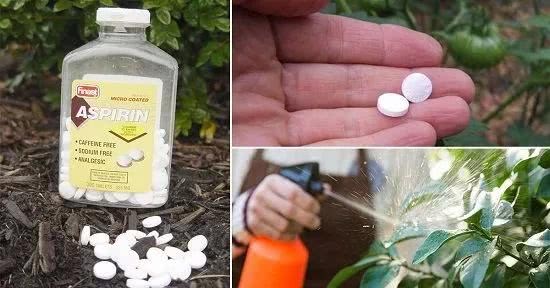
Do you have aspirin tablets at home? If you have some effervescent tablets that are about to expire, you might as well use them for growing plants. They can prevent fungal diseases and help properly clear yellow leaves. They are very effective for nightshade plants such as tomatoes, peppers and eggplants. You only need to dissolve one tablet in one liter of water and then spray it directly on the plants.
2. Aluminum foil
Aluminum foil is a common household item and is sometimes used in the kitchen. It also has good gardening uses. Its reflective quality can be used to drive away insects and birds, preventing birds from stealing fruit. Simply cut the aluminum foil into strips and tie them onto fruit trees.
It can also be used to keep warmth and moisture and avoid water loss. It has the property of reflecting light, so it is good for increasing humidity and temperature.
3. Gardening uses of spices
Some spices can be used for growing plants, such as common cinnamon powder, which can be sprinkled directly on the soil to protect plants from fungal diseases and keep ants away. It is very practical for propagating plant seedlings.
Turmeric powder has the same effect. Both can sterilize well, prevent the soil from carrying pathogens, and help promote plant growth.
4. Composting coffee grounds and tea grounds
Whether coffee grounds or tea grounds, they can all become very practical compost. You can put them directly into a durable plastic bag and seal it, add some clean water to keep it moist, and place it in a bright and warm place to let it decompose and ferment quickly. During this period, however, keep it moist and avoid drying out.
5. Eggshells
Eggshells are very good for growing plants. They can be used for composting, or mixed directly into the soil. However, they should be washed clean and preferably sun-dried for a few days, then crushed into pieces, or made into powder, so they can take effect faster.
6. Plastic bottles
Plastic bottles can be recycled and turned into very practical potting containers, and can even be made into vertical vegetable planters. They are quite good for growing some short-season vegetables.
7. Burlap sacks
Do not throw away various burlap sacks after use. They can also be used for growing plants. For example, common tomatoes and potatoes can be grown in burlap sacks. They can be rolled up, filled with soil and used to grow vegetables. Afterward, soil can be continually added, which is good for plant growth and can also control weeds well.
8. Plastic bags
Plastic bags can also be recycled and turned into practical potting containers. They can also be used to let compost decompose and ferment. This is far better than simply throwing them into the trash.
9. Vinegar
Vinegar is a very common condiment in daily life, and it also has many gardening uses. Vinegar can be used to clean stains on clay pots. Even stubborn dirt that is hard to clean can be easily removed. Vinegar can also clear weeds or drive away snails. Its uses are very wide-ranging.
10. Banana peels
Banana peels are very good composting material. Do not throw them away after eating. They are an important source of potassium and phosphorus fertilizer for the soil. You can put them directly into compost soil to add enough nutrients to the soil. Bananas will decompose quickly and can greatly improve the nutrient structure of the soil.
11. Spoons and forks
Spoons and forks can both be transformed into gardening tools. After a soup spoon is bent, it can become a hanging hook. Forks can become tools to prevent pets or birds from intruding, and can also become plant labels or some small gardening tools.
12. Baking soda
Baking soda can remove dust and grease from leaves. After cleaning the leaves, it can promote better photosynthesis in plants, thereby promoting plant growth. The method of use is very simple. Just mix one liter of water with a small pinch of baking soda, then spray it onto plant leaves. It can also be used to water tomatoes and make tomatoes grow sweeter.
13. Leftovers and kitchen scraps
If compost made from some kitchen waste is used in the yard, it can greatly improve the soil and promote plant growth. Kitchen waste includes common coffee grounds, fruit peels, vegetable leaves, eggshells and fruit shells, etc., all of which can be directly mixed into the soil. After half a year, they can become very good compost soil. Afterward, it can be properly mixed into the soil and become very good fertilizer.
14. Milk
Milk can be used as a substitute disinfectant for cleaning tools to prevent the spread of viruses. However, this is a bit too luxurious. You can mix milk with water at a 1:1 ratio and pour it at the base of plant stems and roots. It has a very good promoting effect on vegetables such as tomatoes, peppers and pumpkins. Keep the environment ventilated and well-lit.
15. Rope
Some leftover rope can be transformed into hanging baskets for gardening. It can be used directly to wrap flower pots and become very practical decorations. There are many ways to use it. You just need to use your imagination and hands-on ability.
16. Shoe boxes
Shoe boxes can be transformed into potting containers for growing some plants that do not need frequent watering. Fresh and attractive shoe boxes can be put to very good use. Shoe boxes can also be used to store vegetable seeds or flower seeds, and can be divided into many layers.