Container tomatoes never grow well? It might be this simple thing you haven't done right
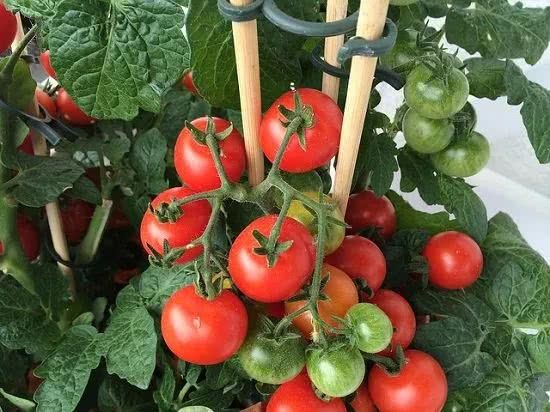
Some friends try growing tomatoes in pots, but they never seem to thrive. The plants tend to fall over and are prone to pests and diseases, let alone flowering and fruiting. Even when they finally do bloom, the flowers easily drop their buds. Actually, many people overlook one small growing trick, and it is also the trick that keeps tomatoes growing healthily.
This simple thing is setting up a support stake for the tomatoes. This is very important, as it lets the tomatoes climb and grow better, favors the growth of stems and leaves, and keeps them from dropping easily after flowering and fruiting. The benefits are very important.
The importance of setting up a support
First drive a wooden stake into the soil, then set up the support. After a tomato gets a support, there are many benefits: it gives the base of the stems and leaves enough space, keeps the air circulating at the bottom, maintains good light penetration, and also prevents water from collecting on the stems and leaves. This keeps the foliage from staying wet, making it less prone to fungal diseases, and also does a good job of reducing pests and diseases. You can imagine how important this is.
No matter what variety of tomato it is, a support should be set up. Even for some short-stemmed varieties, setting up a support is good for them and can help them grow more vigorously. As with the tomato in the picture above, after a support was set up, it could grow to over one meter tall.
Setting up a support for container tomatoes keeps the plants healthy, keeps the tomatoes growing upright, makes the environment more ventilated and better lit, makes flowering and fruiting easier, and also reduces pests and diseases. Why not do it?
After setting up a support on a container tomato, you also need to properly remove some unnecessary branches, that is, branches that will not flower or fruit. Removing them preserves more nutrients and helps produce more fruit.
Choosing the location for growing tomatoes is also very important. It must have as much sunlight as possible, with at least 6 hours of direct light every day. The environment must be well ventilated, keeping the air circulating and avoiding a humid environment, which helps reduce pests and diseases.
If you don't want to set up a support, you can also fasten the tomato's branches to the balcony railing. Of course, use soft string, and don't tie it too tightly, just let it have something to climb on.
For container tomato care, it is best to use compost soil, and you can properly add peat soil and river sand. Add cake fertilizer or decomposed organic fertilizer at the bottom of the pot as a base fertilizer, which helps promote growth.
If you want tomatoes to grow better, you need to regularly supplement fertilizer, generally fertilizing once every 1 to 2 weeks, mainly with a thin organic liquid fertilizer. After watering, avoid pouring directly on the leaves, avoid water collecting on the stems and leaves or in the potting soil, and avoid fungal infections.