Bought a box of succulents from a greenhouse, gave them a simple clean-up and planted them, and now they look plump and lovely
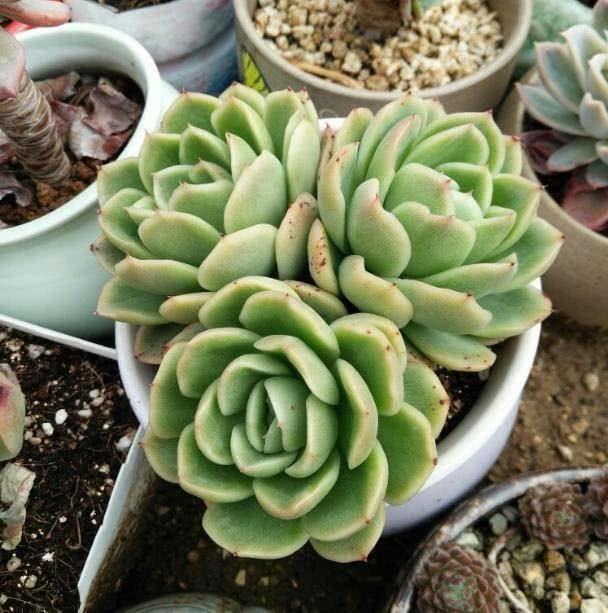
In spring, a season when all kinds of pests and diseases occur frequently, no matter where you buy succulents, it is best to trim the roots and repot them, especially succulents from greenhouses, because greenhouses have a lot of succulents and the soil used often contains insect eggs. If they are not washed clean, the succulents may suffer pest damage. Succulents bought from greenhouses need to be repotted; the old soil should be thrown away and it is best not to use it. Trim the root system a little, then replant them. If you want to use the original flowerpot, wash it clean, sterilize and disinfect it before use. This can prevent all kinds of pests and diseases and is good for the growth of succulents.
Flowerpot requirements: Clay pots absorb water very well, so even if you water too much there is not much of a problem, and they can ease the negative effects caused by overwatering, but clay pots become heavier after absorbing water, which requires the plant stand to be sturdy. The air permeability of purple clay pots falls between that of tile pots and porcelain pots, and generally purple clay pots should be used for growing succulents. With purple clay pots, special attention should be paid to the thickness of the pot walls. The thinner the walls of a purple clay pot, the stronger the air permeability; pots with very thick walls have air permeability similar to porcelain pots.
When potting, pay attention to the soil ratio. Young succulent seedlings have relatively weak roots at the beginning, so it is not suitable to use soil with a lot of granular material; granular soil will hinder root growth. The ratio of peat soil to granular soil can be one to one. Peat soil has some water retention and contains many nutrients, which allows the roots to grow rapidly.
Succulents themselves are basically made up of water. Plants that can store water themselves can survive even if they are not watered much. On the contrary, if too much water is given, they cannot store the excess water and it will cause rot, and they will slowly wither. Therefore, every time you water, pay attention to observing the state of the plant. If the plant becomes thin and shriveled, this is a sign that it needs water; if the water is already sufficient, then it looks plump. This is a simple way to tell.
Succulents you buy must be washed. Preventing insects in spring is very important. When potting, you can bury medicine in the soil, which can effectively prevent outbreaks of pests. The soil for young succulent seedlings has relatively good water retention, and after long periods of rain they are prone to turning to mush, so if you want to let them stay in the rain for a long time and wait for them to grow, it is not too late to let them stay in the rain once the granular soil content in the soil becomes higher, and they will not turn to mush either. After all, it is better to be safe than sorry; being a little careful means many fewer problems will occur.
Maintaining a certain level of air humidity during the growing season of succulents is quite important. When the plant enters the growing season, the role of air humidity at this time is obvious. Species native to tropical rainforests have even stricter requirements. Some horticultural varieties rich in color changes will have more brilliant colors if considerable air humidity can be maintained. It can be said that basically most varieties need a certain amount of humidity at this time. During the dormant period, however, air humidity must be controlled quite cautiously, and the first to be affected are some summer-dormant varieties with a higher degree of succulence.
This is a gathering place for succulent enthusiasts, sharing succulent care tips. You are welcome to follow and exchange ideas.