Succulent root rot and stunted growth? Treat it this way and it can still bloom
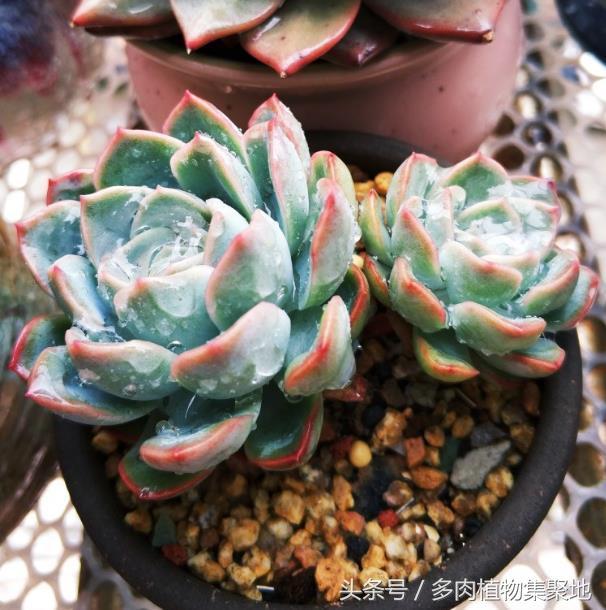
When a succulent's roots rot, it's usually from overwatering, right? Here's a tip for fellow growers: once any part of the plant loses its color and turns soft and mushy, it has rotted, and once it has rotted you must cut it off immediately; sterilize the knife and your hands before and after to avoid infecting other plants. In the case of a fungal infection, spray the plant with a fungicide, and the wound must be completely dry before it goes into the soil.
How do you tell whether a succulent's roots have rotted? Look at the leaf color. If you have several pots of the same kind of flowering plant or tree, put them together, and if you find that one of them has leaves that have lost their green and their luster and turned grayish-white, or the plant's leaves are wilted, or the lower leaves turn yellow and drop in large numbers outside the leaf-shedding season, then the plant's fine feeder roots have rotted because of waterlogging, fertilizing, or a heavy watering after extreme drought.
In summer and autumn, for a plant growing normally, water it thoroughly once a day in fine weather, then check the potting soil at the same time the next day: if the soil surface has dried and shows a slight whitish color, the root system is normal; if the soil has not dried out and turned white but is still moist, the plant's roots have already begun to rot; if after 2 to 3 days it is still just as moist, the plant's root system has mostly rotted away.
Rot shows itself in many forms, and by the time you notice it, it is often already too late. Always be on the lookout for discolored areas on the plant, and for soft, mushy stems and leaves. Some insects, such as mealybugs, can also cause rot, especially root mealybugs. The wounds these pests make when they suck the plant's sap can lead to fungal infections.
Once you have determined that the plant's roots have rotted, take the plant out of the pot, pick away the surrounding old soil, find the rotted root area, cut off the rotted roots from their base with scissors, then disinfect the wound with a 0.1% potassium permanganate solution, or apply clean plant ash to the cut, and repot it or plant it in the ground. When potting or planting in the ground, surround the wound and the severely damaged parts of the root system with clean wet sand, then cover with clean growing medium, to encourage new roots to sprout from the wound.
For treating mild succulent root rot, the first step is to quickly stop watering and give it air. Overwatering is the main cause of succulent root rot. Put the succulent pot on a well-ventilated plant stand so the moisture can drain away as quickly as possible; at the same time, you can use an electric fan to boost air circulation and blow on it nonstop for 24 hours. Once the surface of the soil in the pot has dried, use a garden trowel to loosen the soil deeply and turn the still-moist soil below up to the surface. If the sun is good at that point, you can take the succulent out to sun it; if there is no sun, you can keep using the electric fan to blow on it. Once the surface soil has dried, loosen the soil again, and after repeating this several times, the pot's moisture level will come down.
This is a gathering place for succulent lovers, sharing succulent care tips; you are welcome to follow and join the conversation.