What to Do When Chrysanthemum Leaves Develop White Spots? Causes and Control Methods
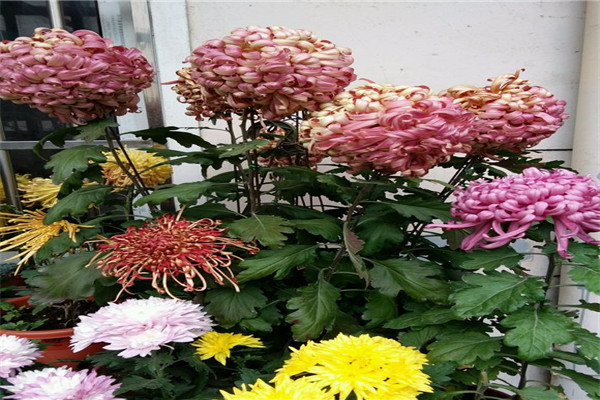
I. Powdery mildew
1. Causes
This disease is caused by powdery mildew fungi. Both open-field cultivation in the south and greenhouses in the north have a chance of this disease occurring, and the pathogen overwinters in the soil; it occurs in places with very high humidity but not strong light, and in places with poor ventilation and a large difference between day and night temperatures. If we water it too much, or if the plants are planted too densely, or if drought occurs, this disease will become more severe. In the initial stage of this disease, there will be quite a few yellow powdery mildew spots on the leaves, located on the upper side of the leaves, and its other parts are also very easily infected; in severe cases it may cause death.
2. Measures
First, we need to clear away the weeds that have overwintered, then water and fertilize it.
Second, we need to tidy up its branches and also clear away the leaves, so that all its leaves can receive light and also be reached by the wind.
Finally, we need to apply carbendazim to it; using 0.3 and 0.5 lime-sulfur mixture is also feasible. Generally once every ten days, or spray three times in a row.
II. White rust
1. Causes
In this disease, the pathogen mainly overwinters in the soil or on the plants, and will cause such damage in the next season. It is spread by rain and manual field operations, and if flower pots are placed too densely it can also spread; high-pressure water spraying can also spread it with the water. In the early stage of this disease, small spots appear on the leaves, which later slowly enlarge and then become light yellowish-brown. If it is relatively severe, the plants will also die.
2. Measures
First, fertilizer should be applied; phosphorus and potassium fertilizers should be increased, and this will make the plants more resistant to the pathogen.
Then we need to drain frequently and must not let water accumulate in the pots. We need to clear away the weeds and remove the diseased leaves.
In seasons with abundant rain, 65 percent zineb should be used, or 0.3 to 0.5 lime-sulfur mixture, with an interval of ten to fifteen days, so that the spread of this disease can be suppressed. In addition, carbendazim or thiophanate can also be used.