How to Create and Care for an Elm Stump Bonsai
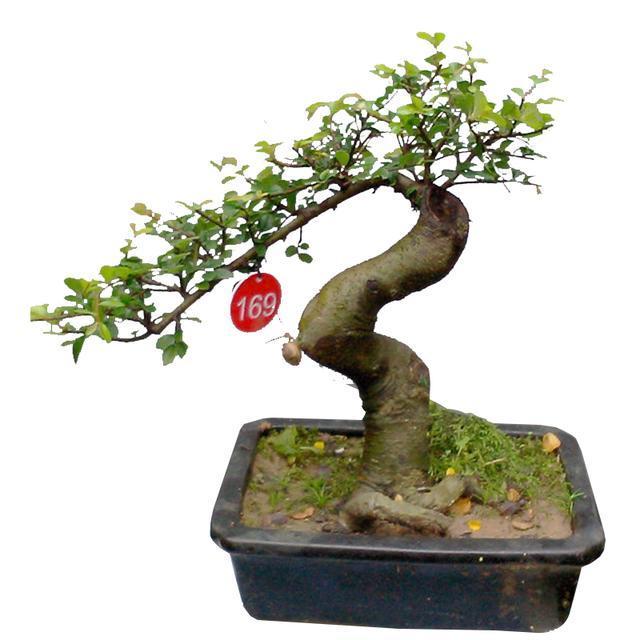
Creating and Caring for Commonly Used Elm Stump Bonsai
Elm is a deciduous tree of the genus Ulmus in the family Ulmaceae. Also known as Chinese elm, white elm, and small-leaf elm. There are many trees in the genus Ulmus, but the materials currently used for making bonsai are mainly the medium- and small-leaf varieties of Chinese elm as well as Chinese elm (Ulmus parvifolia). Because these elms have very similar habits, people now habitually use "elm" to refer to trees of the same genus. The elm has an elegant and upright posture, strong sprouting ability, and when new leaves first emerge, the whole tree is covered in tender green. The bark varies from light brown to dark brown, and the bark of old stumps peels off in irregular scales, mottled and charming. As shown in the picture, it is an elm bonsai.
1. Material Selection
Elm bonsai mostly uses old elm stumps grown in the wild. After years of artificial chopping and hacking, or wind and rain erosion, animal gnawing, and so on, they gradually form many different and peculiar postures. Some have twisted roots and gnarled branches, vigorous and ancient-looking; some have withered roots with new leaves, offering a unique scene. These are all excellent materials for making bonsai.
2. Bonsai Styling
The styling of elm should be mainly by pruning, combining pruning and wiring. According to the basic form of the old stump, various forms can be created, such as formal upright style, curved trunk style, slanting style, lying trunk style, or cascade style. Because its root system is well developed, it can also be made into a raised-root style or root-on-rock style bonsai. Elm branches are soft and can be wired into various forms of bonsai. Elm branches and leaves tolerate pruning, so they can be pruned into cloud-like forms, or cut into any desired shape according to the creator's intention. Styling can be done during the dormant period after leaf fall, or during the growing season, but it must never be done during the budding period.
3. Bonsai Care
(1) Light: Elm likes light. During the growing season, it should be placed in a sunny and well-ventilated location. In the south, in winter, bury the pot together with the elm in a sunny spot to overwinter. In the north, in winter, elm bonsai should be moved to a low-temperature indoor sunny spot to overwinter.
(2) Watering: Once an elm bonsai has taken shape, it should not be watered too much. Too much water tends to promote leggy growth of new branches. Watering should follow the principle for the potting soil of "see dry, see wet; when dry, water thoroughly." Water less in winter.
(3) Fertilizing: During the growing season, apply a decomposed organic liquid fertilizer once a month. Do not fertilize in the hot summer and cold winter. Jishan Huayao