Using this kind of fertilizer for potted chives on the balcony, you can harvest one crop every ten days, one crop after another with no end in sight
Chives are very familiar to everyone, a leafy green vegetable we eat often. They are very rich in nutrients, containing large amounts of protein, vitamin C, dietary fiber, carotene, and minerals such as calcium, phosphorus, and iron, as well as aromatic compounds. Eaten regularly, they help stimulate appetite, strengthen the stomach and aid digestion, kill bacteria and reduce inflammation, disperse blood stasis and invigorate blood circulation, and tonify qi and strengthen yang. They are a vegetable most people enjoy eating.
Chives are usually propagated in two ways: by division and by sowing. For the sowing method, sow after Qingming in spring, once daytime temperatures are above 15°C. Before sowing, level the seedbed (mat) in advance; a small amount of decomposed organic fertilizer may be used, but chemical fertilizer must absolutely not be used, lest the seeds be burned as soon as they sprout.
The seeds can be soaked beforehand, which makes them sprout a bit faster, or dry seeds can be sown. Before sowing, water the seedbed thoroughly once; after the water has seeped in, mix the seeds into an appropriate amount of fine soil, mix evenly, and scatter it over the seedbed. To make the seedlings come up evenly, sow in two passes. Then cover with a thin layer of fine soil. To make the seedlings emerge faster, cover with a layer of plastic film; they will sprout in about ten days.
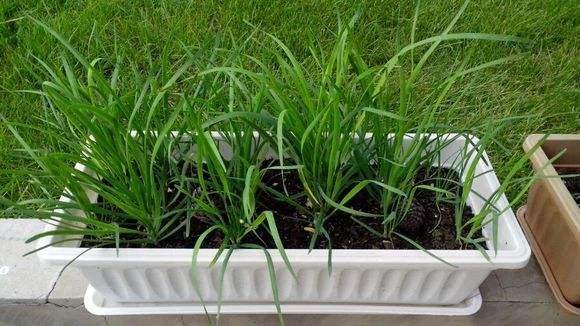
When growing them in city apartment buildings, plant them on a balcony with plenty of sunlight. You can grow them in a fairly deep foam box or wooden box (note that drainage holes must be made in the bottom of the foam box), or in a dedicated plastic seedling tray or a somewhat larger flower pot. As long as there is enough depth, they will grow very well.
The division method is of course even simpler: dig up the old clumps, divide them into several bundles, about ten seedlings per bundle, and plant each bundle about 15cm apart. When planting, cut off the upper leaves. The survival rate is one hundred percent, and about ten days after planting you can cut them. Chives grown this way are clean, hygienic, and pollution-free, an organic vegetable, and very convenient to eat. They also add a touch of charm to the balcony of an apartment building.