Orchid Research Center Jointly Decodes the Cymbidium sinense Genome, Revealing the Molecular Regulatory Mechanism of Chinese Orchid Artistry
Promoting Chinese orchid culture, spreading orchid knowledge
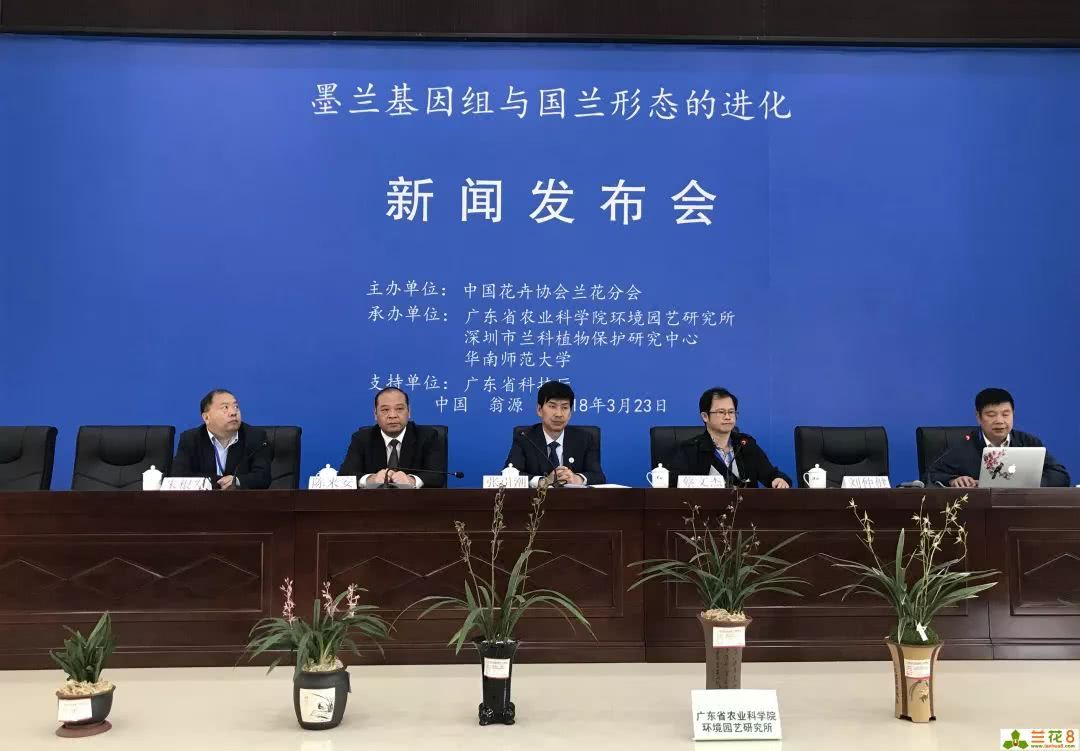
At the 28th China (Wengyuan) Orchid Expo, Professor Liu Zhongjian, Director of the Orchid Research Center, released the major scientific research achievements of the project "Genome of Cymbidium sinense and the Evolution of Chinese Orchid Morphology" - successfully mapping the physical map of the Cymbidium sinense genome, the first in the world.
Orchidaceae plants (commonly known as orchids) account for 10% of all plant species worldwide and possess extremely high scientific, ecological, ornamental, cultural and medicinal value, making them one of China's most precious wild plant resources. Cymbidium sinense, also known as "Baosui Lan" (New Year's orchid), is hailed as one of China's ten traditional famous flowers. It is the most ornamental species among Chinese orchids and one of the flower varieties most characteristic of Guangdong, with countless cultivated horticultural varieties - a phenomenon extremely rare in the floral world. In terms of the diversity of leaf color patterns and the complexity of their variation, its leaf artistry can be called the crown of all foliage plants.
In order to seize the scientific research initiative, obtain a large amount of genetic resources and genetic information, build a high-throughput molecular biology and bioinformatics research platform, and establish a large-scale information analysis system and database suited to the era of biological data, in January 2017, the Guangdong Academy of Agricultural Sciences, the Orchid Research Center, South China Normal University and other institutions jointly formed a research team and launched the Guangdong Provincial Natural Science Foundation research team project "Research on the Molecular Regulatory Mechanism of Flower Differentiation and Development in Cymbidium sinense," carrying out "Cymbidium sinense genome" research. This major research program was the first in the world to conduct whole-genome sequencing and bioinformatics analysis of Cymbidium sinense, while also sequencing and analyzing the transcriptomes of related species.
Through joint efforts and in-depth research, the scientific team successfully mapped the physical map (Hi-C) of the Cymbidium sinense genome, with chromosome-level assembly, Scaffold N50=159M, Contig N50=200K. Analysis results show that the chromosome number of Cymbidium sinense is 2N=2X=40, the genome size is 4.25G, heterozygosity is about 1.5%, and repetitive sequences account for 80%, indicating a highly heterozygous complex genome. The predicted number of protein-coding genes is 29,895.
By analyzing the Cymbidium sinense genome data, combined with cutting-edge RNA sequencing technology, proteomic sequencing technology, miRNA detection, gene function verification, protein interaction analysis and other molecular biology methods, researchers identified the key events experienced in the evolution of Chinese orchids, thereby deciphering the evolutionary history of Chinese orchid morphology and decoding the mystery of their morphological variability. The scientific team made full use of the resource advantages of Guangdong's characteristic Cymbidium sinense to carry out functional gene research on important orchid traits based on whole-genome sequencing, conducting molecular decoding of all elements of Cymbidium sinense "Chinese orchid artistry" (including line artistry, leaf artistry, flower color, flower fragrance, flower type, etc.) from genome to morphology, establishing a molecular regulatory network model of important traits in Cymbidium sinense, and revealing the molecular regulatory mechanism of ornamental traits in Chinese orchids, providing practical theoretical guidance for horticultural trait improvement, molecular breeding and gene editing of Chinese orchids.