Potted grape grafts achieve a 99% survival rate, producing so many sweet fruits you cannot finish them all
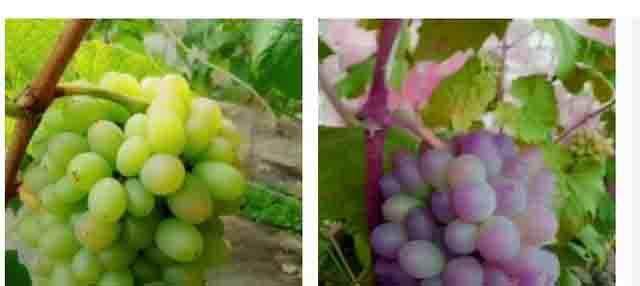
Grapes are one of the fruits everyone is very familiar with, but due to work or family living environment, many people living in big cities rarely get to see what a real grapevine looks like, and they have even fewer chances to witness the grafting techniques and operation process of grapevines with their own eyes. Well-grafted grapes bloom more and bear more fruit. Today let us take a look at the specific steps.
Grape grafting usually has two time windows. One is about half a month before spring bud break, and the other is in May and June when the branches grow to the semi-lignified stage. During these two periods, grapes are generally grafted using the cut-grafting method. The survival rates are both very high. Below we will explain the operation process of green-branch cut grafting of grapes. First, select a good plant, remove the side branches to prepare it as the rootstock, and let it accumulate nutrients in advance.
Once the scion is in hand, grafting can be carried out. The height of the rootstock is usually kept at 30 to 50 cm. At a smooth spot between the nodes of the rootstock, cut it flat with scissors, then use a grafting knife to make a vertical slit along the rootstock lengthwise, with a depth of 3 to 4 cm being suitable. Then cut the scion; the best ones are branches of the same thickness as the rootstock with plump buds, one bud node is enough, or two buds can be used. Use the grafting knife to cut both sides of the lower part of the scion into a wedge shape, with the wedge cut surface about 3 mm longer than the rootstock slit (to help it heal firmly).
Then insert it into the rootstock slit as quickly as possible, align the cambium layers of the rootstock and scion (at least on one side), let the upper end of the scion's cut surface extend slightly beyond the rootstock slit by 2 or 3 mm, then bind and seal it tightly with tape and plastic wrap, leaving the scion bud exposed.
It is worth mentioning that a few leaves should be kept on the lower part of the rootstock slit to help the plant carry out photosynthesis and produce nutrients. However, no branches should be left. After grafting, check frequently, and if any buds sprout or small branches grow, remove them promptly so that nutrients and water can be supplied to the upper scion, allowing it to survive and grow as quickly as possible.