When planting new bonsai stock, these three basic points must be mastered
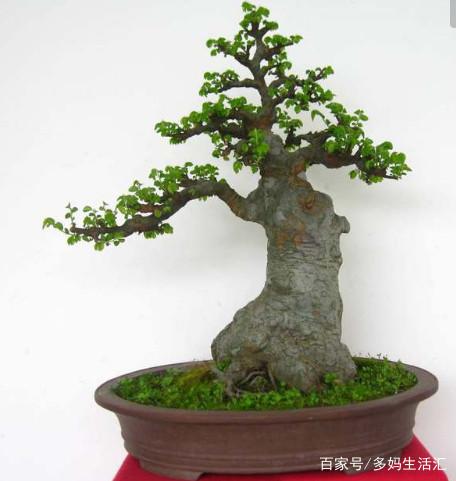
Before planting new stock, the rough shaping must be done first. The task of rough shaping is: for the finalization of complex tree stumps, the stump should be examined from multiple angles and multiple directions, and the best plan should be determined from multiple ideas. Before planting new stock, the rough shaping must be done first. The task of rough shaping is: finalize the form (determine which style), finalize the face (determine the best viewing side), finalize the posture (determine the planting angle and planting height), and finalize the support branches (determine which companion branches to keep or remove). These four are interrelated and mutually restrictive. In actual rough shaping, the determination of these factors is highly random, and each specific stump must be analyzed individually.
I. Finalizing the form 1. The steps for finalizing a tree stump's form should be: first determine the number of trunks (decide how many trunks to keep) - then determine the treetop (from which part of the retained trunk the new crown will be cultivated) - and finally determine the cutting positions. For multi-trunk trees, the order of determination should follow "large first, then small; main first, then secondary." 2. The principle for finalizing a tree stump's form is: on the major premise of conforming to bonsai beauty, attention should be paid to: (1) making full use of the material. Specifically, this means "take more and take large" (but this principle must be within the allowable height range of the bonsai tree, and it is best that the finished tree does not exceed one meter). (2) Choosing as much as possible a rough-shaping plan that will take shape quickly. The key point is "take more nodes and take a small top." (3) Emphasizing distinctive features, that is, the finalization of a special-form stump should bring out its distinctive features to the best effect. According to the principles of "take more nodes and take a small top" and the order of "main tree first, companion trees afterward," while also considering factors such as the beauty of the trunk form and the harmonious echo between the double trunks, determine the treetops of trunks A and C as b and e respectively. In this way, the "trunk bodies" of the double trunks are established, while the parts that are not trunk bodies are regarded as "side branches." Finally, side branches that are oversized in proportion, poorly positioned, poorly angled, or overly long must be cut off or shortened as appropriate (when cutting Chinese bird plum stumps, generally leave an extra section to prevent trunk shrinkage).
For the finalization of complex tree stumps, the stump should be examined from multiple angles and multiple directions, and the best plan should be determined from multiple ideas. Generally speaking, any tree stump that can be made into the cascade style and also into other styles should give priority to the cascade style, because cascade-style stump material is relatively hard to obtain. The selection of material for cascade style must meet at least three conditions: (1) there is a sharp turn near the head of the trunk; (2) at least three or more nodes are taken from the trunk; (3) there are reverse side roots. Based on the characteristic of the tree-head burl resembling a mountain rock, it is planned to create a distinctive "tree on rock" form. II. Finalizing the posture Posture finalization and form finalization are very closely related. Sometimes posture finalization determines form finalization, and sometimes form finalization determines posture finalization. When the planting angle of the tree stump is adjusted so that the stump's style undergoes a fundamental change, posture finalization and form finalization are almost the same thing (strictly speaking, posture finalization is only one factor in form finalization). The factors determining planting angle and planting height are mainly the condition of the root head, followed by trunk form and branch position. Considering the root head factor, the principles of posture finalization are: 1. Make the tree head appear as open and spreading as possible, to show an aged appearance. 2. Try to let all displayed roots be able to contact the soil.
Considering the trunk-form factor, posture finalization should pay attention to: 1. The treetop should "reflect the crown." For example, for upright-trunk and curved-trunk trees, the vertical line from the treetop should fall on the root head (the treetop should lean slightly forward). 2. It should help display the trunk form. 3. It should coordinate with the style of the tree form. Taking the slanting-trunk tree as an example, a short and sturdy type should not have too great a slant, so that it conforms to its "steady" style. A slender type may as well have a greater slant, to show "elegance." Considering branch position, posture finalization must pay attention that the position of the first support branch (the first branch from the bottom) conforms to the modeling requirements of the bonsai tree, so that the space below the first support branch does not appear oppressive or overly empty.
III. Finalizing the face An error in finalizing the face will greatly reduce the ornamental effect of the bonsai tree, and this phenomenon is not uncommon in bonsai works. To avoid regret, one must strive to finalize the face accurately when doing the rough shaping. The essentials of finalizing the face can be summarized as follows: take the side where the trunk bends with the greatest left-right swing as the best viewing side, take the side where the tree head has the greatest left-right spread as the best viewing side, take the side where the tree head has a slope foot as the best viewing side, take the side with more and thicker roots as the best viewing side, take the side with beautiful trunk texture as the best viewing side, and when the trunk rises in a spiral manner, the trunk should first go backward and then turn forward, that is, take the concave direction of the spiral bend as the best viewing side.