If your potted plant's soil has hardened like a brick, you must have done these things
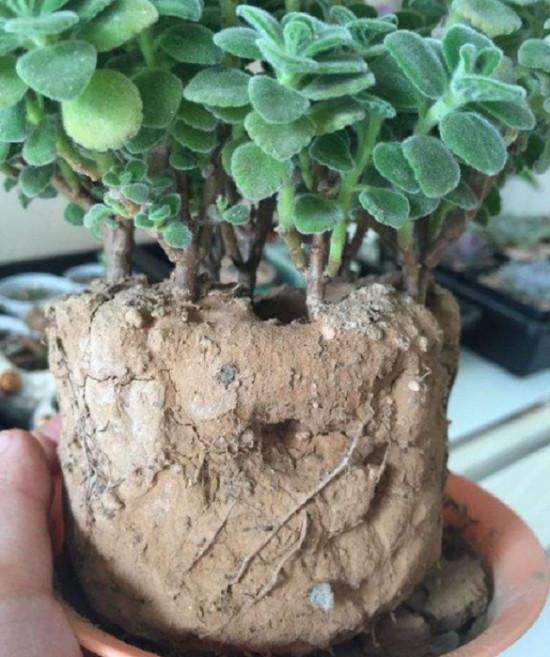
The soil we use when planting potted plants is loose and breathable, but after a few months, some people's soil is still fluffy, while others' has hardened into a brick. This hardened-into-a-brick phenomenon is called "soil compaction." This kind of soil has poor water and air permeability and can suffocate the roots. When you water, only the top layer gets wet and the water cannot seep down. For potted plants this is certainly not a good thing. To avoid this situation, you first need to know what you did to make the soil turn out this way.
Watering flowers with milk
From a nutritional standpoint, milk really is a decent fertilizer, but nutrients such as protein cannot be absorbed directly by plants, and milk will form a film on the soil that blocks the flow of water and air. Water with it a few times and it hardens into a brick. Watering directly with milk also easily breeds insects and bacteria, and the large amount of heat produced when milk ferments in the soil can burn the roots. So milk, soy milk, rice-washing water and the like must first be sealed and left to stand, and only watered onto flowers after fermentation is complete.
Watering flowers with hard water
Water hardness refers to how much soluble calcium and magnesium compounds it contains. Generally speaking, water in the north is harder and contains more of these salt-type substances. Long-term use of hard water to water flowers will make the soil alkaline and cause compaction. Adding ferrous sulfate (also known as green vitriol or black vitriol) at a concentration of 0.2%-0.5% to the water can effectively improve this problem. Since ferrous sulfate becomes unstable after dissolving in water, mix only as much as you will use.
Applying only chemical fertilizer and no organic fertilizer
Some people, to save effort, only apply chemical fertilizer to potted plants and never apply organic fertilizer. It seems like they are supplementing whatever is lacking, but the most basic organic matter is not replenished. Organic matter content drops, soil structure deteriorates, microbial activity decreases, the soil's acidity and alkalinity become unbalanced, and ultimately this leads to soil compaction.
Solving this problem is also very simple; just apply more organic fertilizer. It is recommended that potted plant fertilization be mainly organic fertilizer. Organic fertilizer can be made yourself: crush the raw materials, put them into a plastic bottle, add a small amount of water, and seal it. In summer it ferments completely in about 10 days; in winter, when temperatures are low, it takes about a month. As long as the raw materials turn black and no longer give off a foul smell, it means fermentation is complete.
The composition of organic fertilizer is complex, and it basically contains all the various nutrients plants need, with the emphasis varying depending on the raw materials. For example, organic fertilizer made from beans, melon and fruit peels, manure, or milk powder contains more nitrogen; organic fertilizer made from bones contains more phosphorus; and organic fertilizer made from rice-washing water or straw contains more potassium.