Why does aloe vera always end up dead? A full breakdown of the benefits of growing aloe vera
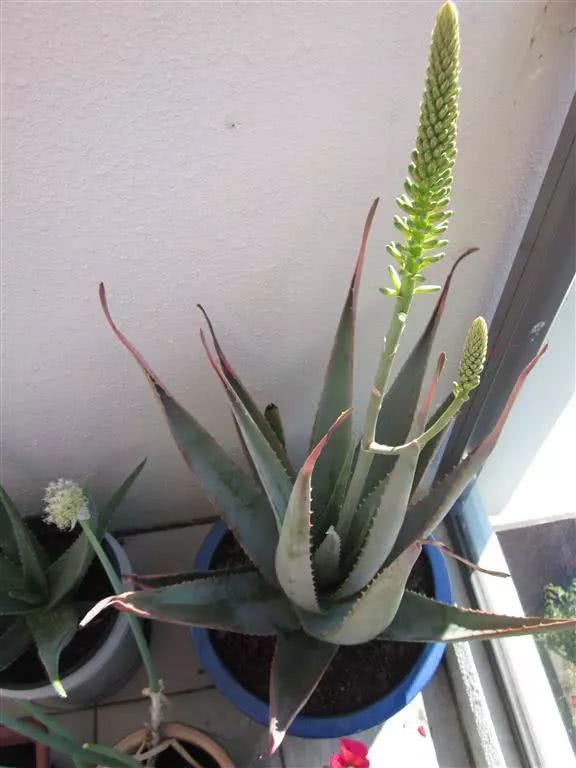
Aloe vera is a very common air-purifying green plant and a highly popular potted succulent. It can not only purify harmful gases indoors but can also be used as food. The gel inside its leaves can be used to treat minor burns and scalds, and can also be used to fade scars. Some of the skincare products on the market are made using the gel from its leaves.
Aloe vera also does not need much care to maintain good growth, and its ability to adapt to the environment is excellent. In a warm, dry environment year-round, it can grow well without much water. In areas without frost year-round, it can even be grown outdoors, or even planted directly in the ground.
Below I will share my tips for caring for aloe vera, and how to make aloe vera propagate faster.
When caring for potted aloe vera at home, the following points are all very important: placing it in a suitable spot, and suitable soil and light all play a role in promoting the growth of aloe vera.
1. The care location
Caring for aloe vera requires considering the ambient temperature, especially in winter. The minimum care temperature should be kept above 5°C to avoid freezing. If the temperature is too low, the aloe vera leaves are prone to frost damage and are then very difficult to recover. Place the aloe vera in a spot with plenty of sunlight and give it as much indirect light as possible. A south-facing or west-facing windowsill is very suitable.
2. Choosing the soil
No matter what type of soil is used, an appropriate amount of river sand or perlite needs to be added to it to increase the soil's drainage.
Cactus soil is best. To maintain good soil drainage, you can add 2 to 3 equal parts of perlite or river sand. The flower pot should also be chosen with relatively large drainage holes. A layer of granular stone or broken tiles can be spread on the bottom of the pot to prevent the drainage holes from becoming blocked.
3. Watering and fertilizing
Aloe vera's demand for water is very low. Especially when grown indoors in a spot with insufficient light, aloe vera's demand for water is even lower. If it is grown in a spot with relatively abundant sunlight, you can consider watering it thoroughly once a week. If it is grown indoors in a spot with no light, then you can water it thoroughly once every 20 to 30 days. Before each watering, make sure the soil has completely dried out. Do not give too much water, and even more importantly, do not let the soil become too moist or waterlogged.
Aloe vera's demand for fertilizer is also very low. Generally, it only needs one application of diluted organic liquid fertilizer in each of spring and autumn.
4. Tips for propagating aloe vera
Aloe vera is generally propagated by division. If you want it to grow new side shoots, you need to let the potting soil dry out appropriately and avoid overwatering the soil, otherwise it will not be able to grow side shoots. The side shoots also need to be divided at a suitable time.
Generally, you should wait until the side shoots have grown to 7 to 15 cm tall before transplanting them. The time can be chosen in spring or autumn, and it is best to transplant in the evening. You can cut off the side shoots together with their roots, then leave them in a ventilated spot to air-dry for 2 to 3 days before replanting them in new soil. Water again after 5 to 7 days, and keep them in a shaded, ventilated spot for care. Using this method for division, you can continuously propagate potted aloe vera.
5. Points to note when cutting leaves
Some friends want to cut a few aloe vera leaves to apply to wounds or for beauty purposes. When cutting, you must pay attention: be sure to use a sharp knife and scissors, and wipe them with alcohol beforehand to avoid wound infection. Choose old aloe vera leaves to cut, and the cutting position should not be close to the base of the root stem, otherwise it is prone to fungal infection. After cutting, leave the wound alone and do not let it touch water; let it heal and dry naturally. The aloe vera leaf that has been cut off should be tested on the back of your hand to see whether it causes an allergic reaction. If discomfort occurs, stop using aloe vera gel for skincare.
6. Other issues
Some friends say that their aloe vera plant grows very unevenly, with the stems and leaves growing crooked. This situation is generally caused by uneven light exposure. It can be solved by turning the pot regularly, once every two to three weeks, which can keep every side receiving light evenly, so the aloe vera plant will grow more attractively.