Peacock Calathea leaves keep curling and withering, and there is only one reason
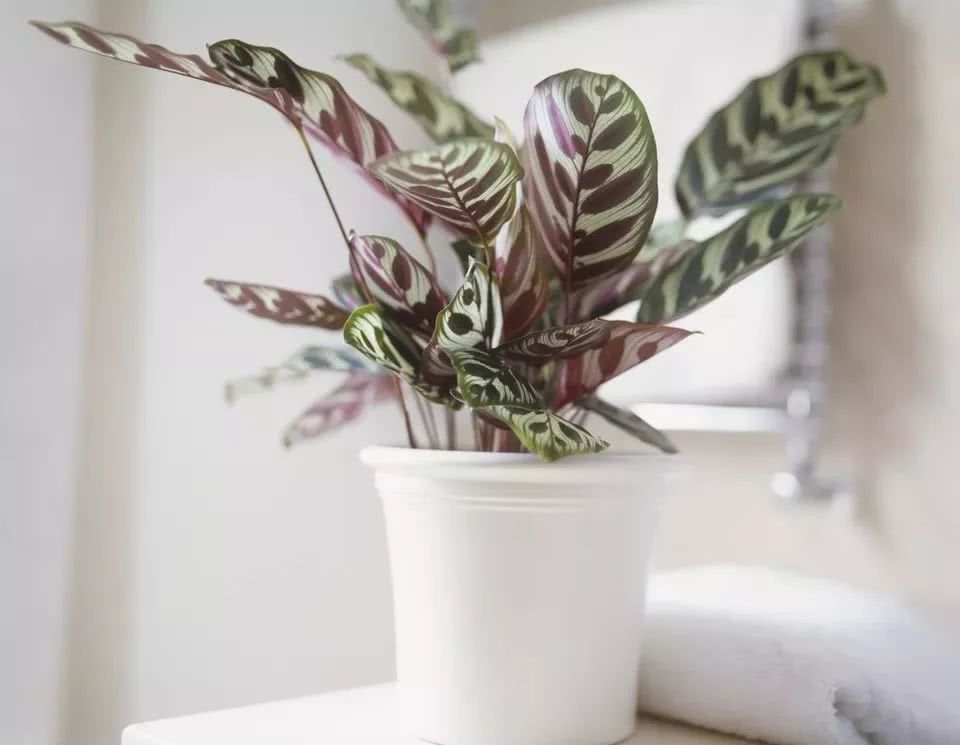
Peacock Calathea (Calathea makoyana) is a foliage plant that is very popular all over the world. It is well suited to being grown as an indoor potted plant, it has beautiful and variegated leaves, its leaves are very broad, the markings on the leaf surface are like peacock feathers, and it is very easy to care for. As long as you maintain a warm and humid environment year round, you can grow Peacock Calathea well even in a room without sunlight.
If you give Peacock Calathea appropriate sunlight, it can even produce delicate little flowers. Peacock Calathea is rather picky about its growing environment, and the most critical factor is moisture, which includes both the indoor ambient humidity and the moisture in the soil.
1. Growing environment
Peacock Calathea likes appropriate scattered light, so keep the environment bright. If you give it direct light or expose it to blazing sun, it is easy to cause sunburn on the leaves of Peacock Calathea. It is best to place it on an east-facing windowsill with appropriate scattered light, and growing it in a bright spot indoors is also fine, but avoid excessive shading.
2. Attention to moisture
Peacock Calathea needs as much moisture as possible throughout its growing period, especially when indoor conditions are dry in winter. You should frequently spray water around it to maintain air humidity, or simply turn on a humidifier to control humidity. Of course, you can also put some pebbles on a tray and add a little clean water, then place the potted Peacock Calathea on top of the pebbles, which also helps increase air humidity.
Although air humidity needs to be increased in winter, you should avoid overwatering. After the temperature drops, watering should be appropriately controlled to avoid the soil becoming excessively wet. In particular, it must not sit in water, otherwise it easily promotes fungal infection and the leaves easily develop spots.
3. Soil choice
The soil used to cultivate Peacock Calathea must have good drainage to avoid water accumulating in the soil. Peacock Calathea very much likes moisture, but it also fears waterlogged roots. The flowerpot used to cultivate Peacock Calathea should also have relatively large drainage holes, and a few pieces of broken tile can be placed at the bottom of the pot to avoid poor drainage.
4. Care temperature
As a tropical foliage plant, Peacock Calathea must be kept in a warm and humid environment year round. In addition to maintaining air humidity, you also need to pay attention to the plant's cold tolerance. Peacock Calathea has very poor cold tolerance, so be sure to avoid frost damage. The minimum care temperature is above 10 degrees, and the optimal care temperature is between 15 and 25 degrees.
5. Why do Peacock Calathea leaves develop spots?
Peacock Calathea leaves develop leaf spots usually because the soil is too wet. During the growing season, although Peacock Calathea likes the potting soil to remain moist, if it is excessively wet it easily causes fungal disease. The usual sign is spots on the leaves. At first brown or tan spots appear, and over time they slowly form blotches.
The treatment method is very simple. Dry out the soil as soon as possible and avoid water accumulating in the soil and making it excessively wet. If there is water in the tray, pour it out promptly. Seriously diseased leaves should be cut off promptly. Water appropriately with thiophanate-methyl or chlorothalonil to thoroughly eliminate the fungal disease.
6. Why do Peacock Calathea leaves droop and curl?
In complete darkness at night, the leaves of Peacock Calathea will curl up. This is the plant's dormancy, so do not worry; once light returns, its leaves will slowly unfold again. If you find that the leaves of Peacock Calathea are drooping, and some leaves even show dark gray water-soaked blotches, then it is very likely because of overwatering combined with temperatures that are too low and cold damage, causing black rot of the leaves. At this point, promptly remove the black-rotted diseased leaves and move the potted plant to a place with a temperature between 15 and 25 degrees.
Some people will find that the leaves of their Peacock Calathea turn red, and there may even be spider webs. It is very likely that it has been infested by red spider mites. Generally, red spider mite infestation is likely when the environment is enclosed or the air is dry.