5 kinds of flowers thrown into water grow big white roots in 10 days, with leaves so plump they could drip oil
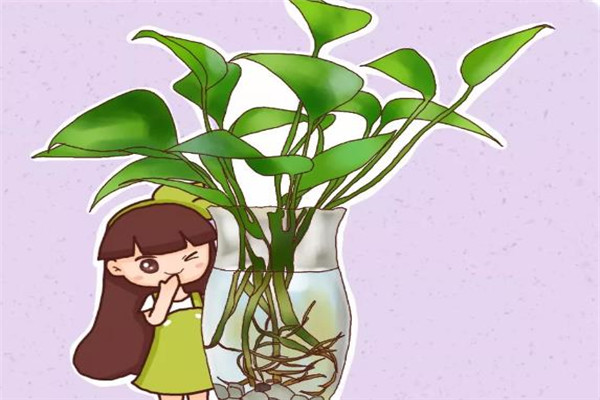
Hydroponic pothos
Friends who are renovating their homes like to place a pot of pothos indoors, as it can both absorb formaldehyde and beautify the interior. And hydroponic pothos placed in a transparent glass bottle looks even fresher and cuter~
1. Cut the branches
Choose thicker, sturdier pothos branches and cut off several sections diagonally with scissors.
2. Cut into segments
Cut the removed branches into small segments, making sure each small segment has a small protruding bud.
3. Put into the bottle
Place the trimmed pothos into a water bottle. For the first three days, use sun-exposed purified water; after three days, switch to tap water.
4. Later care
1. Change the water once every 2-3 days. After about 10 days, once the hydroponic pothos has grown small white roots, change the water once a week.
2. Place it in an environment with scattered light, such as near a balcony window. Frequently use a watering can to spray water on the leaves.
Hydroponic spider plant
Spider plant is also a little expert at absorbing formaldehyde. Placed indoors, it can both freshen the air and decorate the interior.
1. Remove from pot and wash the roots
Take the soil-cultivated spider plant out of the pot and wash the soil off the roots with clean water.
2. Trim and divide
Cut off the rotten roots and excess fibrous roots, and divide the plantlets.
3. Move into a water bottle
Place the prepared spider plant into a water bottle, and use glass beads or pebbles to secure the plant. Be careful not to let the plant topple over.
4. Later care
1. Change the water about once a week, and promptly clean out sediment at the roots. After about ten days or so, fine roots will grow.
2. Spider plant likes a semi-shaded environment. Just place the hydroponic spider plant by a window without direct sunlight.
Hydroponic asparagus fern
Most flower lovers basically choose soil cultivation for growing asparagus fern, but in fact, hydroponic asparagus fern is simpler and more convenient to care for.
1. Remove from pot and wash
Remove the soil-cultivated asparagus fern from the pot. First clean off the soil from the roots, and cut off the rotten roots.
2. Soak in medicinal solution
Place the cleaned and trimmed asparagus fern into a potassium permanganate solution and soak for about 10 minutes.
3. Move into a water bottle
Place the asparagus fern into a planting basket, add small stones to the basket to secure the plant, put the planting basket into a bottle, and add water to 0.5-1 cm from the bottom of the planting basket.
4. Later care
1. Change the water once every three days, and wash the roots before each water change, cutting off rotten roots. After half a month, change it once every four to five days.
2. Keep it in an environment with scattered light and good ventilation, such as by a window. Yellow leaves appearing is normal.
Hydroponic peperomia
Peperomia is a relatively common green plant, with thick, round leaves and a glossy color, deeply loved by flower lovers.
1. Behead
Behead a healthy, sturdy peperomia plant and cut off several branches.
2. Move into a water bottle
Place the cut peperomia branches into a water bottle filled with water.
3. Later care
1. Change the water once a day, and promptly clean off the sticky substance at the roots. After about 10 days, fibrous roots can grow.
2. Peperomia does not have high light requirements, but it likes a humid environment. Frequently spray water around the plant to keep the air moist.
Hydroponic clivia
The stems of soil-cultivated clivia often develop problems such as root rot and yellow leaves. Many flower lovers want to just throw them away but cannot bear to, so they might as well use them for hydroponics~
1. Remove from pot and wash clean
Remove the soil-cultivated clivia from the pot and wash the soil off the roots.
2. Soak in potassium permanganate
Soak the cleaned clivia in a potassium permanganate solution for about 10 minutes.
3. Move into a water bottle
Place the prepared clivia into a planting basket, secure the plant with stones or the like, and move it into a bottle filled with water.
4. Later care
1. Change the water about once every 3 days, and after 10 days white roots will grow.
2. Hydroponic clivia likes a semi-shaded environment. Place the clivia on a windowsill with bright but indirect light, and be careful to maintain ventilation.
Have you mastered the secret flower-growing method that needs no repotting?
Hydroponic green plants are also very fresh and refined!
Today Huahua will share with everyone up to here~
If you think the article is good
you can share it with friends~