Do five-headed snakes really exist? I have never seen one to this day.
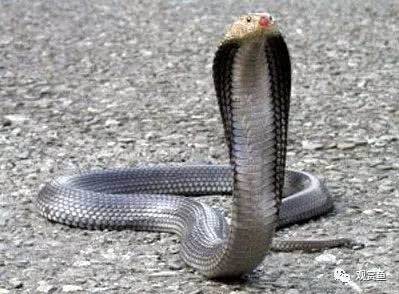
As we know, India has a mystical fascination with snakes, and many people's understanding of India begins with snakes, especially cobras, which are highly sought after for their unusual appearance. In many temples in India there are depictions of snakes, and according to Indian legend, five-headed snakes existed in ancient India. Not long ago, word spread that a five-headed snake had appeared in India, causing a worldwide sensation. But as we know, even a two-headed snake is extremely rare, let alone a five-headed snake; whether it actually exists is still unknown. So the five-headed snake that appeared this time naturally caused a worldwide sensation. Everyone is very curious about such a strange animal as the five-headed snake, and about whether there really is such a terrifying five-headed snake in the world. Moreover, the ones circulating online are all highly venomous cobras, and cobras are also fairly common in the patterns of various ethnic groups. So is the five-headed snake circulating online real? Below, let me tell everyone about it.
Is the five-headed snake real?
Research shows that the five-headed snake in the photo was actually produced after being processed with image-editing software. Although the five-headed snake does not exist, it is still a mythical creature in the minds of the Indian people, just like our country's dragon: although its existence cannot be proven, it is very important to our country.
Personally, I think the birth rate of five-headed snakes is extremely low. Generally, two-headed snakes are relatively rare, and few of them survive, let alone a snake with five heads. Judging from the five-headed snake circulating online, there are traces of Photoshop. Friends who have come into contact with cobras know that cobras only puff up their necks into an attacking posture when they are enraged or threatened. This posture is especially beautiful. Under normal circumstances, a cobra's neck is not swollen. And our well-meaning snake-loving Photoshop experts, in order to attract everyone's attention, indeed Photoshopped a neck opened into five heads, making it look even more domineering, strange, and bizarre, so it is obvious that it went viral online.
In Hinduism, the snake is a god, the pet of the great god Shiva, coiled around his neck. Many statues of Shiva have five-headed snakes and six-headed snakes, which do not exist in nature. At least so far, there is no record of a real five-headed snake.
Indians' snake culture has a long history. Even "snake charming" has a history of thousands of years. But with the progress of social civilization, the millennia-old snake-charming culture is facing disappearance. Yet even today, tourists traveling to South Asian countries such as Pakistan, Bangladesh, Nepal, and Thailand in Southeast Asia can still see Indian wandering performers and snake charmers covered in snakes every day. The snakes on their bodies can dance gracefully to the music of the flute, earning income for their owners. On the bodies of the snake charmers, there is no fear to be seen at all, only the happiness of being completely immersed in it.
India has snake temples, snake villages, snake dances, snake boat races, and a snake festival every year. Worshipping the snake god is an ancient religious ritual in India. Many Hindus will offer eggs and milk to the snake god as offerings on the day of the snake festival. In recent years, the Indian government has focused on developing tourism and made every effort to tap into the country's ancient traditional cultural projects. Because the city of Shelarai has danced with snakes for hundreds of years, it is regarded by Indians as the birthplace of the "Snake Festival", so the Indian tourism department has listed it as one of its key tourist cities. Every year at the Snake Festival in August, the citizens of Shelarai, regardless of gender or age, will invariably go to the outskirts to catch snakes once. They gather the captured snakes and place them in an ancient temple to "stockpile" them.
And in the Mahabharata, the Kunya Modata was originally a small mound with a small Buddhist shrine on it. Later, archaeological experts excavated it and found that beneath the mound was a tower. The tower was empty inside, and its outer walls had clay sculptures, some of which were Buddhist images, and there was also a five-headed snake image, with some clay pots piled around the statue. Based on these relics, experts determined that it was originally a snake temple. Now the tower is covered by a shed made of iron sheets. In front of the tower is an incense burner offered by Japanese Buddhists, and on the burner are written the two Chinese characters "Lingshan". The sincere devotion of Buddhists can be seen from this.