How do you grow ordinary succulents so they become vivid and plump? Properly controlling watering is key
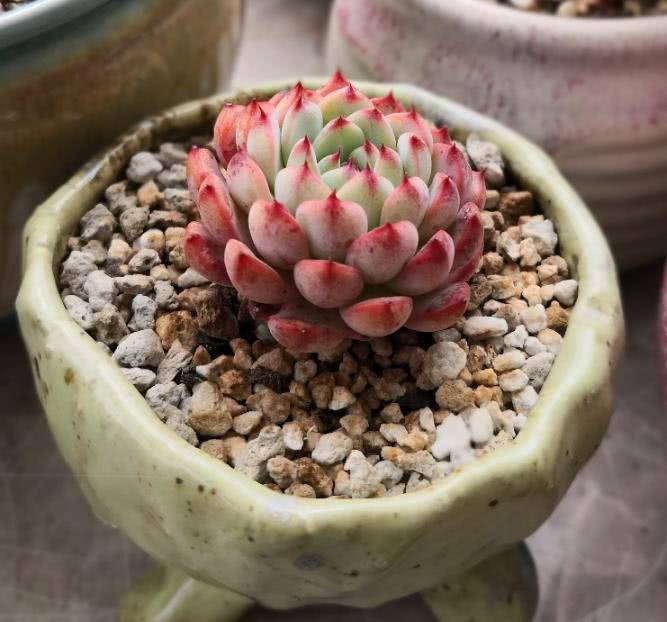
If you want your succulents to look beautiful, the first thing is to control watering and provide plenty of light. Some gardening enthusiasts wonder why, even though they have controlled watering and only water once a week, their succulents still do not show their best condition. Because controlling water does not play a decisive role in a succulent's condition; it only adds the finishing touch or provides timely help. The prerequisite for controlling water is that the succulent's root system must be good and robust.
When a succulent's root system is healthy, controlling water can make its leaves grow compact, and the succulent will also store water in its leaves. As the succulent grows, it will gradually develop a thick stem, and its leaves will still remain short and plump. For newly purchased succulents, you must first grow a good root system. During the root-growing period, do not control water; water when the soil is dry and let it dry out between waterings. However, when controlling water for succulents, do not let the soil stay wet for a long time. If the succulent's roots get used to an environment with water and have no concept of water shortage, the succulent will not work hard to absorb water, and the leaves will not be very round.
When your growing environment is good enough, that is, with good light and not too hot, controlling water can make your succulent grow smaller and smaller, because growth cannot keep up with consumption, and it may even become wrinkled from lack of water. At this time, the color is often more beautiful than usual, but that beauty is premised on inhibited growth. This counts as adding the finishing touch. When your growing environment is not good enough, with too little light, controlling water inhibits the succulent's growth and also inhibits leggy growth. When the weather is too hot, controlling water reduces the risk of stuffiness, dampness, black rot, root rot, and turning to mush. This is providing timely help.
In spring, when the air humidity is relatively high, water succulents once every two weeks. This is only a rough watering frequency for succulents; change it according to weather changes. If it rains, extend the watering interval for succulents. Autumn is also a growing season for succulents. At this time, water succulents once every 5-7 days. As for soil, too much peat retains water too well, which is not good for controlling a succulent's shape. You can grow succulents in all grit, but in order for succulents to have some nutrients for growth, you still need 10% peat. You can also add a small amount of plant ash. Plant ash is beneficial to succulent root growth and can enhance a succulent's resistance.
The water control mentioned here refers to deliberately giving less water, giving the plant less water than it needs for growth, such as waiting for the soil to dry out for a period before watering. The term "water control" is a somewhat slippery term. It may mean deliberately not giving enough water, or controlling against giving too much water, or it may just be said casually because it sounds impressive. More often, it may also be understood as giving succulents just the right amount of water. But no matter which kind of water control it is, what it does for a succulent's condition is still adding the finishing touch or providing timely help. Beyond that, it also has effects that determine life and death and growth vigor.
This is a gathering place for succulent lovers, sharing succulent care tips. Welcome to follow and exchange ideas.