How do you grow pothos so its leaves and stems turn into a big green mass? You need to learn these techniques
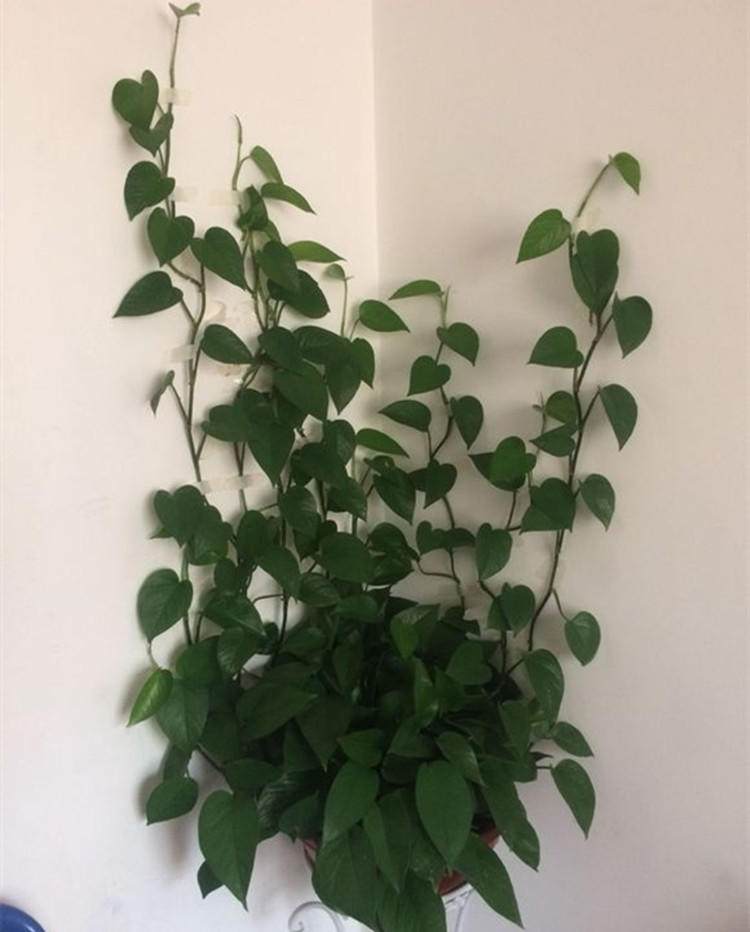
Pothos has large, glossy leaves and is especially tolerant of indoor indirect light. Against a deep green backdrop, its many green leaves create an elegant and spectacular look, making it a favorite among plant lovers.
So, plant lovers who like growing pothos should pay attention: when you see someone else's pothos always covered in glossy green leaves and growing into a big mass, don't you envy it? In fact, to achieve this effect, we need to study the care techniques carefully.
1. Planting
Pothos loves leaf mold soil. For cultivation, you can mix equal amounts of leaf mold soil and garden soil, or use sandy loam with an appropriate amount of base fertilizer. During cultivation, if the potting soil is lost and the roots are exposed, soil should be added promptly. Fertilization should mainly be nitrogen fertilizer, supplemented with phosphorus and potassium fertilizers, and should be applied lightly and frequently; every 7 days, use an organic nutrient solution specially made for pothos, dilute it with water 800 times, and spray it on the leaves, so the green leaves will become even more verdant.
Pothos likes plenty of water. In care, it should be watered more than ordinary flowers, but not allowed to become waterlogged. Be careful to sprinkle water to wash dust off the leaf surface. In summer, when it is hot and dry, pothos cultivated under a shade shed grows rapidly and needs sufficient watering, with water sprayed on the leaves every day.
2. Fertilizing
Pothos likes fertilizer. It should be topdressed once every half month, and foliar topdressing should also be applied frequently. When topdressing, plant lovers should note: if the pothos at home is cultivated on a totem pole, the brown fiber should be sprayed thoroughly, so the nutrients in the pole can be absorbed by the aerial roots that penetrate deep into the brown fiber; if it is grown as a hanging plant, it should also be topdressed in time to promote full growth of the pothos vines and branches, with leaves that are large, deep green, and glossy.
At the end of autumn, move the pothos indoors for care, maintain a suitable temperature, and keep the relative humidity at around 70%. Under lower temperature conditions, watering should be controlled, otherwise root rot easily occurs. Temperatures below 10°C will cause yellowing and shedding of leaves, affecting the ornamental effect.
3. Shaping
After long-term cultivation, the lower old leaves of pothos will gradually fall off, affecting its ornamental value. Plant lovers can cut the plant back from the base in spring, leaving only one node near the soil surface, so it can renew itself and send out new branches. You can also coil the lower leafless branches and bury them in the potting soil, which also works well.