What are the most suitable environmental conditions for rooting flower cuttings?
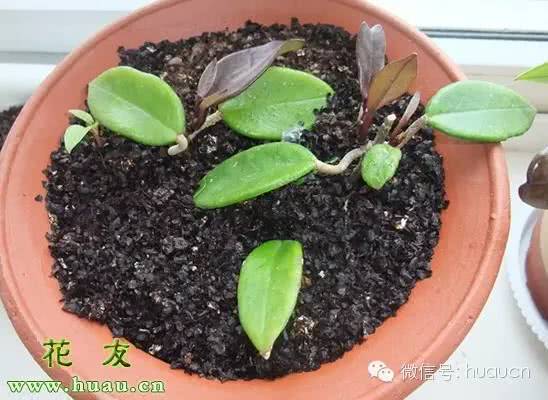
Practice has shown that even if a cutting has a strong rooting ability, poor environmental conditions in the cutting bed will affect rooting activity, weaken the cutting's resistance, and even cause it to keep withering and dying, leading to failure of the cutting propagation. The environmental conditions that affect rooting of cuttings mainly include temperature, humidity, oxygen, light and soil quality.
Cuttings: 11 methods that can make flower cuttings root quickly
1. Temperature
Different types of plants require different cutting temperatures. Generally, the temperature needed for rooting is basically the same as that needed for bud germination and growth, so plants that sprout early need a lower rooting temperature, and vice versa. Generally, at around 15°C, as long as a cutting has rooting ability, it can more or less enter a state of rooting activity. For example, softwood cuttings of most plants are best taken at 20°C-25°C; temperate ornamental flowers generally require a temperature of around 20°C; tropical plants are suitable for cutting at 25°C-30°C or above; for many tree species, rooting activity gradually increases as the temperature rises to around 25°C, but rot also intensifies.
Generally, when the soil temperature is 3°C-6°C higher than the air temperature, it can promote early rooting and prevent buds from sprouting before roots form, which would cause an imbalance in water in the cutting and lead to wilting. In spring, the air temperature is often higher than the soil temperature, so for tree species that are difficult to root, a heating wire can be buried about 15 cm deep in the ground in advance to form an electric heating bed before inserting the cuttings, which can promote rooting.
2. Humidity
Maintaining reasonable soil moisture and air humidity is also extremely important for the survival of cuttings.
With spring cuttings, many plants first sprout and unfold leaves before slowly growing roots. At this time, the soil needs sufficient water; water is first absorbed through the wound and callus tissue to maintain internal metabolism. After a period, the hormones and nutrients produced in the leaves in turn promote root growth and continuously absorb water, so that water balance within the plant can be achieved. Therefore, the soil in the cutting bed must have relatively high moisture to ensure that the leaves do not wilt before rooting, but it must not be too wet, otherwise rot is likely to occur. When taking softwood cuttings, a relatively high air humidity should be maintained even more, preferably around 80%.
The mist propagation method uses mechanical equipment to spray water into the air to increase air humidity. With this method, some plants that are difficult to root can achieve better cutting results. To maintain relatively high air humidity, wind protection and shading are generally needed; covering with transparent plastic film can also prevent excessive transpiration and achieve a good moisture-retaining effect.
3. Oxygen
The rooting process is one of vigorous respiration, and oxygen is one of the important conditions. Therefore, good aeration must be ensured on the premise of ensuring soil moisture. The cutting medium should be well aerated, easy to keep moist, and well drained. Generally, sandy loam is better for dormant branch cuttings, and ridge planting is a good working method; water can be poured between the high ridges and seep around the cuttings, rather than being poured directly onto the cuttings. For softwood cuttings, vermiculite and perlite are the best media, and river sand, sandy soil, etc. can also be used, ensuring aeration conditions to facilitate rooting and survival.
Cuttings: nine major effects of aspirin in growing flowers, including rooting cuttings, preventing pests and diseases, and keeping flowers fresh, making it a veritable all-purpose flower remedy
4. Light
Root formation and growth do not directly require light, but the aboveground parts need to assimilate nutrients under light. Softwood cuttings generally have leaves so that photosynthesis can occur under light to synthesize organic substances and promote rooting. Most experiments have shown that the more abundant the carbohydrates in the cutting, the higher its rooting rate. However, strong light easily causes the cutting to lose water and wilt, which is unfavorable for the survival of the cutting. Therefore, moderate shading should be provided in the early stage of cutting (the purpose is to prevent drought). If the moisture in the cutting bed can be ensured and excessive transpiration of the cutting does not occur, shading is generally not needed, so as not to affect carbon assimilation by the cutting or hinder the rise of the cutting bed temperature.
·END·
An interactive platform for lovers of flowers, gardening and green plants to communicate, show off and boast. An online home for sharing flower cultivation methods and household gardening tips. A fresh flower subscription platform.
Fresh flowers: hyacinth|stock|plum blossom| carnation|camellia|kalanchoe|jasmine|gardenia|peach blossom|balloon flower|osmanthus| calla lily|lily|forget-me-not|clivia|apricot blossom|honeysuckle|milan|peony|sunflower|chrysanthemum|serissa|crown of thorns|tulip|narcissus
Green plants: poinsettia|money tree|pothos|spider plant|peace lily|lucky bamboo|asparagus fern|aloe|ivy|anthurium|monstera|bougainvillea|silk tree|spathiphyllum|schefflera|boxwood|sago palm|rubber plant|maidenhair fern|snake plant|
huau.cn
……
Search the public account " " or " huaucn " to get the latest information
Business cooperation and promotion. Please contact WeChat private ID:ihuaucn