Reflections and Insights from 10 Years of Orchid Collecting
Promoting Chinese orchid culture and spreading orchid knowledge
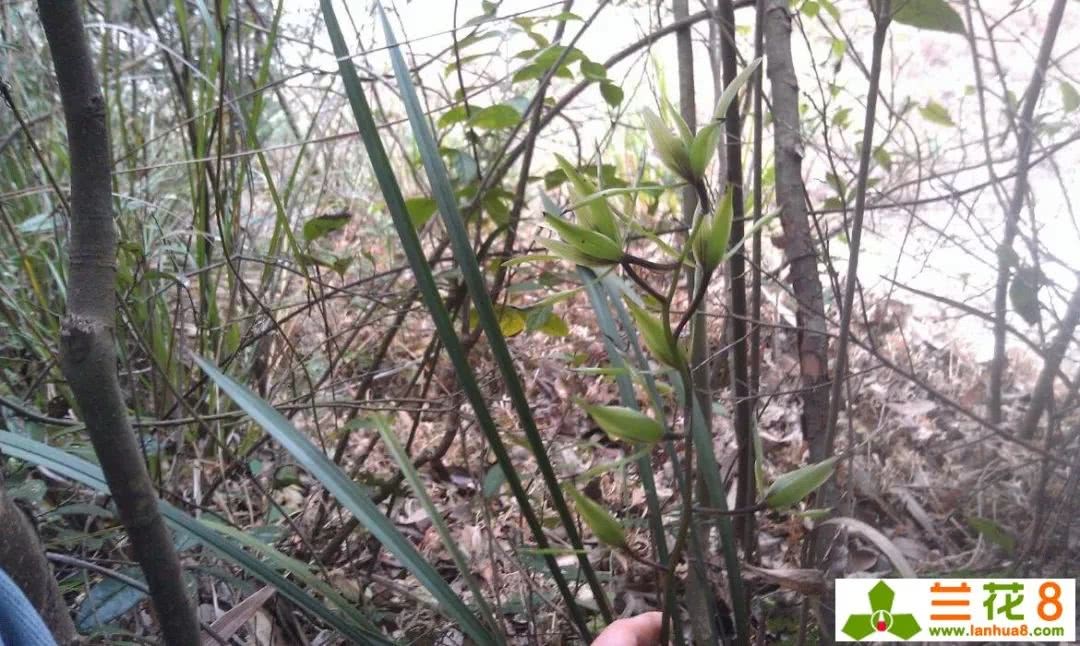
At the break of dawn, orchid enthusiasts set off on their journey, carrying enough dry rations and water, hoes over their shoulders. From the lodging to the hillside where orchids grow is about 20-plus li. After patrolling back and forth over several mountains where orchids grow, before seeing the orchids you smell their fragrance, and you follow the scent to find them. Some mountains seem from afar to be linked ridge to ridge, but each descent and ascent takes another half hour or more, leaving you drenched in sweat; yet when you see the orchids, all fatigue is forgotten. Cymbidium goeringii (spring orchid) mostly grows on earthen slopes, under oak, birch or pine forests; some mountains, though steep, are not very dangerous. Cymbidium faberi (Hui orchid) and Cymbidium goeringii var. szechuanicum (Songchun orchid) mostly grow on rocky mountains, some even on cliff faces, requiring a climb up the cliff, but getting down is difficult. Once, a fellow orchid enthusiast, Mr. S, and I could not get down the mountain, so we had to take a detour down the back of the mountain. When we were almost home, from a distant mountain we could already see the twinkling lights of the town; we heard the Central Broadcasting Station's news broadcast.
Since retirement, I have been collecting orchids every year, climbing mountains in all four seasons; sometimes under the scorching sun, sometimes drenched by heavy rain, sometimes falling into a river, sometimes collapsing under the trees. The sudden appearance of wild hares and pheasants gave me a fright, and my hands and feet were often stung red and swollen by caterpillars and wild bees. Mr. S fears snakes most, so whenever I spot a snake I clear the way in front.
Drawn by the orchids, I often forget the time to go home; before I know it, it is dark, and unable to get home, I have to spend the night at a local villager's house. Occasionally I am lucky enough to run into a student from years past, and then lodging is even less of a problem. Once, several Songchun orchid plants grew in crevices on a cliff face and could not be dug out; the second time I brought a hand hammer and drill for splitting rock to chisel the rock and collect the orchids, determined to dig them out, not stopping until the goal was achieved.
Sun-scorched and rain-soaked, crossing mountains and ridges, collecting orchids does seem truly hard, but whenever I return home and check the day's harvest, recalling the picnic amid the wind and waves of the forest sea, the birdsong and flowers' fragrance, the bees flying and butterflies dancing, the scene of following the scent to find orchids, the day's exhaustion has long since vanished like smoke. If I collect a few orchid plants to my liking, I am even happier for several days, and I invite several orchid friends to admire them together.
Speaking of orchids, I can be called infatuated. Because I grew up in an orchid-producing region, I have always loved orchids. In my youth I once applied to study horticulture, but due to "the needs of revolutionary work," I ultimately became a foreign language teacher. In the past, though I liked orchids, because teaching was busy, I only grew a few pots of local varieties such as spring orchid, Songchun orchid and Taiwan orchid. Truly realizing the dream of a orchid destiny was something that happened only after retirement. Zhijin County is rich in orchid resources, but due to historical reasons such as the economy, culture and transportation, orchids grew and died on their own in the mountains and wilds, with no one paying them any attention.