Management Methods for the Blooming Period After Orchids Have Buds
Promote Chinese orchid culture and spread orchid knowledge
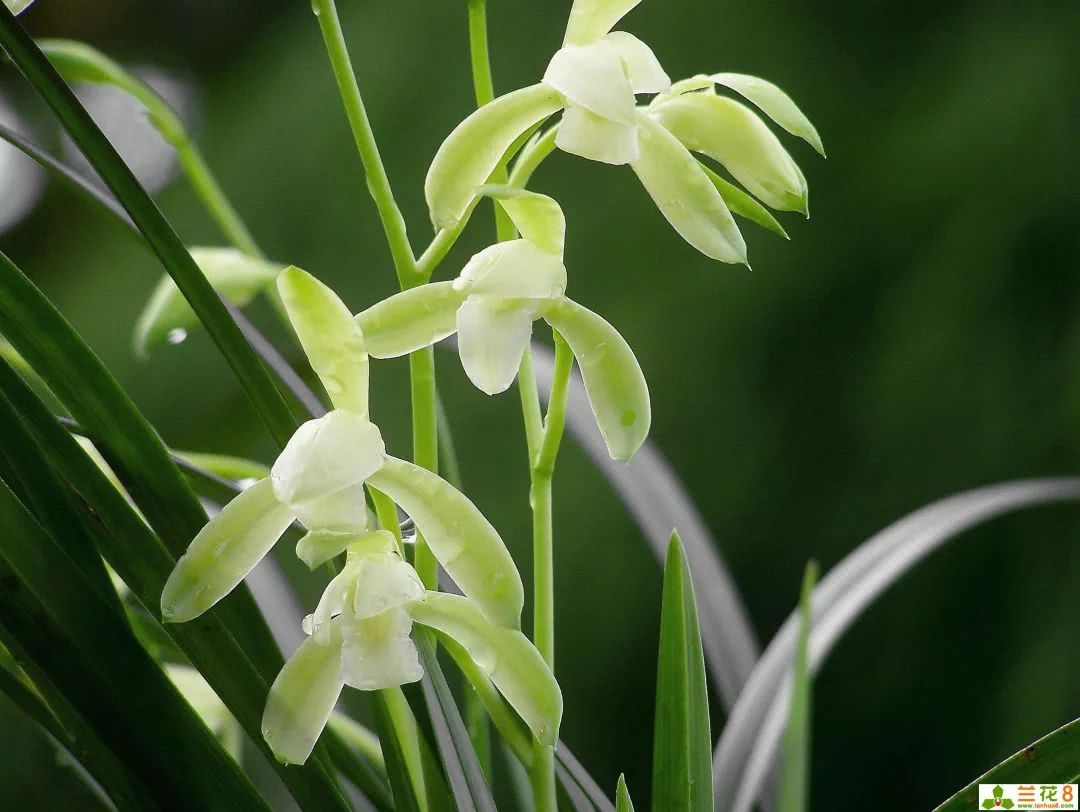
Making every one of your orchids bloom to its full potential is, I think, the dream of every orchid lover, but truly achieving this is no easy task. Especially with the warm winters of recent years, many orchid growers' orchids have bloomed early with the spring, and most blooms fail to reach their full potential, making it truly hard to bring out the spirit and charm of the orchid. To be honest, I am also a novice orchid grower, and I have no great experience with orchid bud development or bloom management, so I am just rambling on, hoping to throw out a brick to attract jade, in the hope that other expert orchid growers can offer some guidance, so that I and other novice growers can glean something from it. My thanks in advance from this new orchid grower.
For an orchid to bloom properly and to its full potential, I believe it is not something achieved overnight, and it mainly starts with the following points:
1. The orchid plant must be robust, with plump old pseudobulbs.
2. When the orchid produces flower buds, keep the good ones and remove the poor ones, thinning the buds appropriately. Also apply some light fertilizer appropriately.
3. For varieties with shorter flower stalks, such as Cuigai, after the flower bud emerges from the soil, cover the bud with a dark-colored sleeve, cut a small opening in it, and appropriately increase humidity; by making use of the plant's phototropism, the flower stalk can be made to grow taller to a certain extent.
4. For petal-type flowers, once the flower bud opens, water should be controlled, keeping it slightly drier, which can keep the petals from elongating.
5. For exotic flowers, such as butterfly-type flowers, peony-type flowers, and piaomen-type orchids, humidity should be appropriately increased, which can allow the petals to spread out and curl back, displaying the elegance that this type of flower should have.