Bonsai die easily mostly due to improper watering: a detailed explanation of common bonsai watering techniques
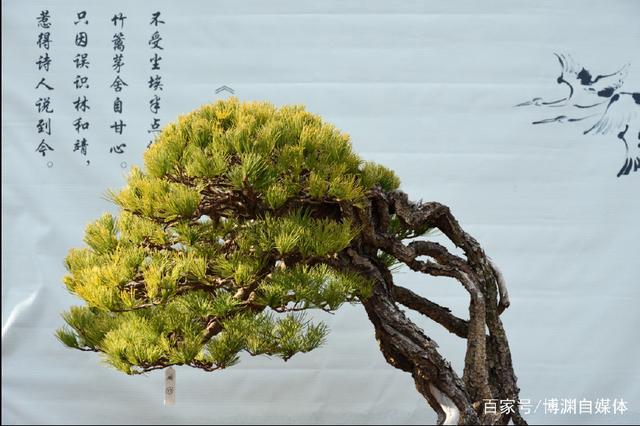
Keeping a bonsai alive depends on water; keeping a bonsai thriving depends on fertilizer. I have been working with bonsai for more than ten years, and honestly, I am still only at the stage of basically keeping them from dying and keeping most of them alive! Raising the skill of watering to the level of a matter of bonsai "life and death" shows just how important watering is for bonsai.
At first hearing, "three years of practice to master bonsai watering" sounds a bit exaggerated, but if you actually count it up, there is still a basis for it. In a year of 365 days, you cannot water every single day, so after three years it is only about a thousand times. As the saying goes, to do something well you must practice it a thousand times, and different tree species also have different demands for water, so being able to master it after a thousand times counts as quite good.
If you memorize the bonsai watering formula: water once every two or three days in spring and autumn, once in the morning and once in the evening in summer, and once a week in winter, do not give half-water, do not water when dry, and water thoroughly when you do water. In one sentence, in half a minute, you understand it. It seems even kindergarten pupils would not find it difficult, so why do so many people fail to do it well?
This is the gap between theory and practice. The principle is the principle, fixed and unchanging; but reality has its own variations and is ever-changing. The key is how to judge accurately and master it flexibly.
Take "half-water" for example: it is definitely a case of not watering enough, but if you water too much, dirty water flows everywhere, which is also not good. So each time you water, reaching a state where it is about to flow but not flowing is "just right", perfect. I used to have pots both large and small, but when watering I basically used one full plastic ladle. Later, when I had the chance to repot, I deliberately observed the difference between large and small pots after watering one ladle, and found that the large pot was still short by nearly one quarter of the water amount. Once I understood the details, when watering afterward, with a clear idea in mind and a targeted approach, I added another small ladle for the large pot in addition to one ladle.
Take "do not water when dry": what counts as "dry"? The standard for dry really cannot be expressed very accurately in words, and can only be grasped through experience in long-term practice. It is just like the "inspection, listening, questioning, and pulse-taking" of traditional Chinese medicine; an expert can even glance from afar at the color of the potting soil and know the degree of dryness or moisture; lightly flicking the flower pot with a finger and listening to whether the sound is dull or crisp can also tell the degree of dryness or moisture; without looking, merely touching the surface of the potting soil with a finger to feel whether it is soft or hard can still tell the dryness or moisture of the potting soil...
Take "water thoroughly when you do water": it is generally thought that water dripping from the bottom of the pot means "thorough". But when the potting soil is hollow, water may flow through as soon as you water without necessarily being thorough, as is often seen when the soil is loose during repotting or when water channels are formed by ants. Do not assume that water flowing under the pot means it is truly thorough. No matter how loose the potting soil is, when watering there is still a gradual process of absorption over time; unless the pot is very small, generally there will not be the phenomenon of water being poured on top and immediately flowing out below.
Sometimes watering must be based on the weather conditions: if the potting soil is indeed dry, you should water immediately, but if after five hours or more than ten hours it is going to rain heavily, not watering will kill it, while watering will make it too wet, so what should you do? Do not rigidly apply a fixed rule; compromise. At this time, giving half-water is not a mistake, but the correct choice.
In the same season and for the same tree species, a bonsai in its growth phase may be given more water to accelerate growth, while a bonsai in its mature phase may be given less water to maintain its shape. The same specimen also has increases and decreases at the early, middle, and late stages of flowering and fruiting, each different from the others.
What has been discussed above are all problems of too little water. Once "too much water" occurs due to human or natural causes, it also falls within the scope of watering. When there is too much water, use dry material to quickly absorb the excess moisture, and in severe cases, promptly tip the pot and change the soil.
Once you understand that the degree of dryness and moisture of potting soil is not unchanging, that the grasp and understanding of the degree of dryness and moisture of potting soil also vary from person to person, and add to that the differences between different seasons, weather, and tree species, as well as the principle that the same specimen differs greatly across different growth periods, then truly understand the properties of the tree species you are growing, have a clear idea in mind, water according to the symptoms, master it flexibly, and treat differences differently. Only by doing so will the problem of bonsai watering no longer be a problem.