How to grow a red sandalwood bonsai? A detailed guide to caring for the "wood of emperors"
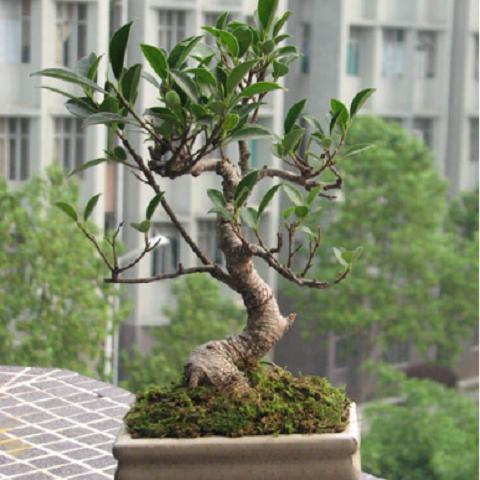
Now, with the rise of high-rise buildings, stretches of green forest are dwindling. Nowadays, whether in the office or at home, people will basically place one or two bonsai to purify the air. Compared with other bonsai, red sandalwood bonsai is particularly loved by modern people because of its appearance, symbolism and various benefits. Now we are going to explain how to care for a red sandalwood bonsai. If you do not take good care of it, even the easiest bonsai to care for will wither and look unsightly.
As for red sandalwood, it is a tropical plant. While ordinary plants like shady spots, it will slowly wither there as if it cannot get a meal. So when you buy it, be sure to pay attention to where you place it. Putting it in a spot with plenty of sunlight is just perfect for it. If you want to keep it indoors, you can put it on a balcony with good light conditions, but do not move the red sandalwood bonsai out into the blazing sun, because it cannot stand that either.
Red sandalwood actually has low requirements for soil; just be careful not to let water accumulate in the pot. Speaking of water, red sandalwood does not need our constant attention when it comes to watering either. Just water it about once every two or three days, which is super convenient. However, watering does require a little technique: pour it on slowly and let the water soak thoroughly into the soil. It is not enough to just pour the water straight on, and you must not water it at noon when the sunlight is strongest, because that can easily cause the red sandalwood to die.
The most important thing is fertilizing. Because red sandalwood itself has parasitic root nodules that fix nitrogen, you do not need to fertilize it every day. Just pour in a well-mixed plant nutrient solution about once every one or two months and water it into the soil. If it is a bonsai, it is best not to bury nutrient soil in it, because one careless mistake can damage the plant's root system.
Whether red sandalwood is placed indoors or outdoors, if sunlight, humidity, airborne dust and other factors affect the plant's growth, you can occasionally change its position, but do not change positions too frequently. Because red sandalwood is like a person: after it has adapted to an environment, frequently changing environments will also put a strain on it.
Small-leaf red sandalwood bonsai sapling
Small-leaf red sandalwood is the finest among red sandalwoods, with relatively high density and relatively small pores. It grows 8 m tall, with a trunk diameter of 50-150 cm. Young trees grow very quickly; even when growing in degraded soil, at 3 years old they are already as tall as 5 m.
Small-leaf red sandalwood tree-stump bonsai
The development of maritime transport and Zheng He's seven voyages to the Western Seas connected trade and cultural exchanges with the countries of the South Seas. In regular and irregular trade exchanges with China, various countries also often had a certain amount of precious timber, including red sandalwood.
Precious small-leaf red sandalwood tree-stump bonsai
Among all hardwoods, red sandalwood has the finest and densest texture, the heaviest wood, and inconspicuous grain. If red sandalwood wood shavings are placed in baijiu, the shavings will immediately break down into a pink color and form a rather sticky gel with the liquor, which can form a continuous thread when poured.
Small-leaf red sandalwood bonsai potted plant
Small-leaf red sandalwood rarely has large pieces; the diameter of the material is mostly within 20 cm, and anything larger will be hollow and unusable. Small-leaf red sandalwood has inconspicuous grain, with a purplish-black color; some are so black they look like lacquer, with almost no visible grain.
Small-leaf red sandalwood foliage plant
Small-leaf red sandalwood itself does not give off fragrance. However, every kind of plant has its own unique scent, and generally speaking small-leaf red sandalwood has only a very faint sandalwood fragrance.
Indoor desktop green plant small-leaf sandalwood red sandalwood tree
Small-leaf red sandalwood belongs to the Fabaceae (Papilionoideae) family and is the finest among red sandalwoods. Red sandalwood has relatively high density and relatively small pores, and is mostly produced in tropical and subtropical primeval forests. The color tone of small-leaf red sandalwood is generally purplish-black, looking deep and classic.
Green plant ceramic flower pot small-leaf red sandalwood
The faint sandalwood fragrance of small-leaf red sandalwood can stabilize emotions, calm the mind and help with sleep, which is much needed by today's young office workers whose stress grows greater by the day.