To root roses in water, just use a piece of styrofoam, and white roots come popping out
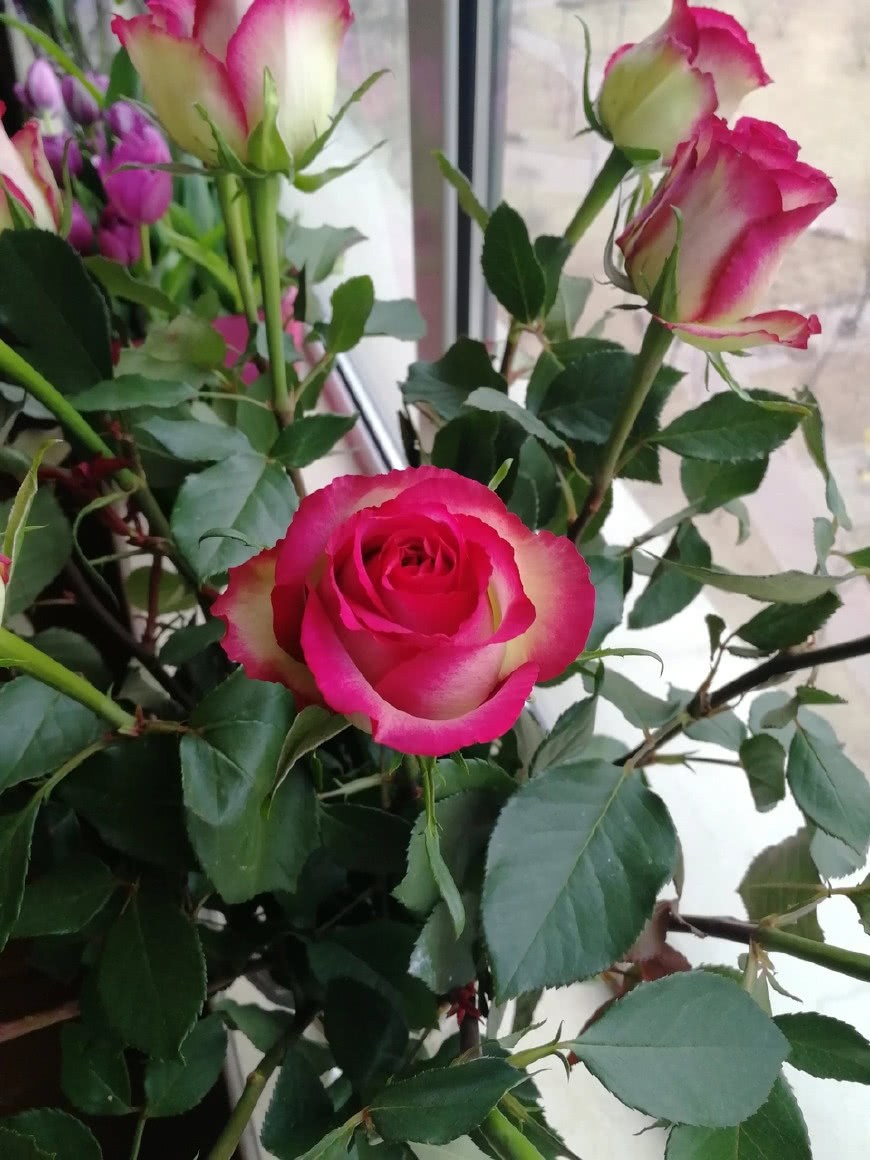
The rose is the queen of flowers, and there are so many varieties of roses; whichever the variety, they are all very gorgeous and beautiful, and placing them on a windowsill, balcony, bedroom or living room can all beautify the environment and bring infinite vitality to life. Propagating roses by rooting them in water is very simple: use a piece of styrofoam, add a little water, and white roots come popping out!
Selecting the branches
Choose healthy young shoots and cut them to about ten cm; the small knife must be sharp, and wear gloves to prevent being pricked by the rose thorns. Do not remove the thorns on the rose, and keep 2 to 3 leaves.
Prepare a styrofoam box, insert the cut branches into the styrofoam (piercing through), then place them in water so that the bottom of the branches touches the water; in about ten days they will root.
To speed up rooting, you can put some root-strengthening agent in the water. Also, do not use tap water directly; it needs to sit for 2 to 3 days. Rainwater can also be used for rooting.
Place it in a spot at home with bright indirect light and good ventilation, and every 3 to 4 days you need to change the water to prevent the water from becoming contaminated, which would cause the rose branches to rot and affect their rooting.
Moving to a pot after rooting
Many flower lovers have this doubt: roses root easily, but how to move them to a pot and have them survive smoothly is a difficult problem!
First, it is recommended to wait until the roots grow to 3 to 4 cm before moving them to a pot!
The soil needs to be sterile, loose and well aerated. If the soil contains insect eggs and bacteria, it can easily cause the rose branch roots to rot and reduce the survival rate. The lower layer can be nutrient soil, and the upper layer can be washed river sand; this can increase the survival rate.
Also, in the early stage after moving to a pot, do not fertilize. Being impatient with fertilizing will only speed up root rot and is not good for survival and growth. Place it in a cool spot at home with bright indirect light, and after it has fully recovered its growth, you can care for it normally.