Watermelon, strawberries and cherry tomatoes can be grown right on the balcony, and you won't be able to eat them all without even buying any
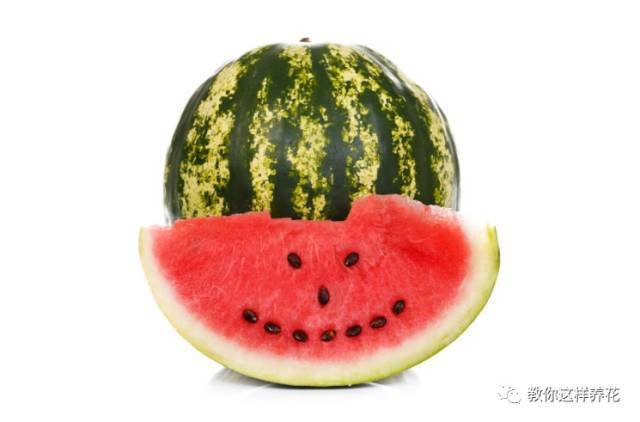
Many people don't know that quite a few everyday melons and fruits can actually be grown on the balcony. That's why plenty of gardening enthusiasts have set their sights on watermelon, strawberries and cherry tomatoes, and found they are pretty easy to grow. Let's take a look!
“
Balcony mini fruits
-Watermelon-
As a summer heat-busting weapon, watermelon is almost the best-selling fruit of summer. If you could eat a watermelon grown in your own home, that would really feel great.
Step one: First prepare some small watermelon seeds (best not the ones left over from eating), buy some outside, because the ones left over from your own eating have a relatively low survival rate, and you don't even know whether they will sprout.
Step two: Use a slightly larger flower pot, fill it with some soil (ordinary vegetable garden soil will do). The soil requirement is that it should be fairly loose; if you can add a little decomposed manure, that's best.
Step three: Then soak the seeds in water for about 3 hours, then sow them into soil that has been watered thoroughly, and cover with some dry soil. Wait until the seedlings emerge before watering normally for care (water thoroughly when dry, add a little thin fertilizer appropriately). Note that before the seedlings emerge from the soil, absolutely do not water.
Step four: After the melon seedlings grow, you can straighten out the vines, point them in one direction, or pull them up with a branch or string, so the seedlings can grow normally upward. After that, just sit back and wait for the harvest.
Gardening enthusiast cheir520 bought some watermelon seedlings directly and kept a very detailed record. I hope it can be of some reference to everyone.
The newly bought watermelon seedlings, transplanted into the planting pot.
A small stick is placed beside the watermelon seedling to secure the seedling and guide it.
The potting soil used is sheep manure plus bone meal mixed with a peat soil substrate.
The watermelon has started to vine, growing very fast
The first melon of the watermelon must not be kept, especially the one very close to the roots; at least start keeping from the second one, or keep fruit when the plant has 12 or 13 leaves. The first batch of melons, if there are no bees to pollinate, will basically wither away on their own, wasting nutrients.
For one watermelon seedling, keep at most two vines; if there are more, they need to be pruned, otherwise none of them will grow big
Under each planting box divider strip, another two shovelfuls of sheep manure fertilizer were buried, so that later there is no need to apply too much additional fertilizer. Watermelon also likes fertilizer.
It is very simple to tell male flowers from female flowers: male flowers do not carry a melon, female flowers carry a melon.
Without bees, you have to pollinate yourself. After the flowers open, around 9 in the morning, pick off the male flower and gently rub it against the female flower
(Balcony Vegetable Gardening forum, cheir520)
With this big patch of melons, I'm afraid a whole summer won't be enough to eat them all!
-Strawberry-
Strawberries are a fruit suitable for young and old alike. Generally they can be sown in spring and autumn, but sowing takes a long time and the process is relatively troublesome. Many flower markets sell seedlings directly, which you can choose. Still, let me introduce strawberry sowing.
You can pick seeds from supermarket strawberries, but the strawberries that grow may be degraded and not necessarily tasty. It is best if you can buy good hybrid strawberry seeds; if you can't, pick your own, use a bamboo skewer to detach plump strawberry seeds, and place them on a paper towel to absorb the water.
You can also directly buy ready-made seedlings. There are also many potted seedlings for sale at flower markets, no need to acclimate the pot, more suitable for beginners. Relatively ideal varieties include everbearing strawberry, European everbearing red, Hokowase, and so on.
For sowing, you can first pour the seeds into warm water at 60-70°C to soak and wash, stirring constantly, until the water temperature drops to about 25°C, then stop. Continue soaking for 2-3 hours, then scoop them out and rub with your hands until the seed coat is clean and glossy. Then rinse clean with clear water, and cover well with several layers of wet gauze. Place at 25-30°C for germination. Three times a day (morning, noon, evening) moisten the gauze with warm water to keep the seeds in a moist environment. Once 60-70% of the seeds have sprouted white, they can be sown.
After 3-4 true leaves, they can be transplanted. After transplanting, start exposing them to light 10 days later. During care, keep plenty of sunlight, apply thin liquid fertilizer 2-3 times each month, and normally just keep the potting soil moist.
The flower pot must be one with holes for ventilation. For soil, choose loose, fertile, airy soil. You can spread a layer of granules on the surface, so that when fruiting, soil is less likely to splash onto the strawberries.
When strawberries have just grown out, spread a layer of straw, tin foil or granular stone at the base of the plant, otherwise the strawberry fruit will rot very easily after touching the soil.
(Strawberry Growing forum, Xiaohongji)
Strawberry soil
The soil for strawberry growth should be neutral humus soil. You can use 4 parts garden soil, 5 parts river sand, 1 part compost, plus a small amount of decomposed cake fertilizer and chicken manure, mixed thoroughly and evenly as the growing soil. The growing soil should first be sterilized by sun exposure before use.
Watering strawberries
Strawberries like a moist environment, so watering should be sufficient. In spring and autumn, keep the soil moist; water thoroughly once the potting soil is dry. You can use the bottom-soaking method to water. During the rapid growth and ripening period of the fruit, that is, April and May, the water demand is high, so water frequently, but there must not be standing water, to prevent root rot.
Fertilizing strawberries
Everbearing strawberries bloom and fruit multiple times a year, consuming a lot of nutrients, so nutrient supplementation should be strengthened. For potted strawberries, it is best to apply enough base fertilizer before planting, then top-dress slowly later. In the initial growth stage, a general-purpose fertilizer can be applied. Before flower bud differentiation, focus on phosphorus and potassium fertilizers to promote flower bud differentiation and fruit growth and reduce the formation of ineffective flowers; after harvesting fruit, focus on nitrogen-phosphorus-potassium compound fertilizer. Under no circumstances should concentrated fertilizer or raw fertilizer be applied; follow the principle of thin fertilizer applied frequently.
Light and temperature for strawberries
The suitable growth temperature for strawberries is 15-25 degrees; above 30 degrees, both photosynthesis and growth are inhibited. Below -10°C the plant will freeze to death. So you must grasp the appropriate growing temperature. Strawberries are light-loving plants and must be planted in a place with sufficient sunlight to produce fruit with good color, aroma and taste.
Pollinating strawberries
If there is wind or small insects when strawberries bloom, then there is no need for manual pollination. For home growing, it is generally a sealed environment, so you still have to do it yourself.
Use a cotton swab or a writing brush or a small brush (the bristle part must be soft) to gently touch the bud of one flower, sweep once around the inner side of the petals and the outer side of the stamens (stamens), then sweep once over the raised part in the very center of the flower (pistil), and do this one flower after another in sequence, and that's it. All the flowers must be coated. Generally it is better to do it in the morning or afternoon. At minimum, each flower should be pollinated once in the morning and once in the evening; this way the fruit will be fuller!
(Strawberry Seedling forum, nethex)
-Cherry tomato-
Cherry tomato, also called small tomato, is a very good health and nutritional food. In summer, chill it a bit, one bite each, very satisfying to eat. It has the effects of promoting salivation and quenching thirst, strengthening the stomach and aiding digestion, clearing heat and detoxifying, cooling blood and calming the liver, nourishing blood and boosting appetite. It serves as both vegetable and fruit.
For sowing, you can soak in 1000-times potassium permanganate solution for 10 minutes, rinse with clear water, then soak in warm water for 6 hours, keep moist with a wet paper towel, germinate at about 25°C, and sow after the seeds sprout white.
Dig a small hole 1 cm deep, put the already germinated seeds in, cover with 0.5-1 cm of loose soil on top, and maintain the temperature at about 25 degrees. This soil is best watered thoroughly the day before.
After the seedlings grow 4-5 leaves, they can be transplanted. Carefully move the small seedlings into a large pot and water thoroughly. After 10-15 days from transplanting, the seedlings begin to grow. After the plant blooms and sets fruit, water and fertilize every 7-10 days.
For the balcony temperature, control it at 25-30°C during the day and 15-20°C at night. When the plant grows to about 40 cm, use a support to prop up the main stem, so it does not topple under the plant's weight.
Cherry tomatoes can self-pollinate; when flowering, gently tap the plant to promote pollination. Always prune the side branches, so the side branches do not run wild and affect flowering and fruiting. In the morning when the flowers have just opened, pick the first flower to open, then dip a writing brush in pollen and lightly touch the stigma of each flower, applying to 6 flowers per cluster according to the plant's condition, and pollination is complete.
From sowing to maturity, after about 3 months you can eat cherry tomatoes.
(Balcony Vegetable Gardening forum, Ai Han sadleave)
If you also like these sweet-and-sour tasty fruits
then give it a try!
After reading, show it to gardening enthusiasts who need it~