How to increase seed germination rate: sprouts grow twice as fast as usual
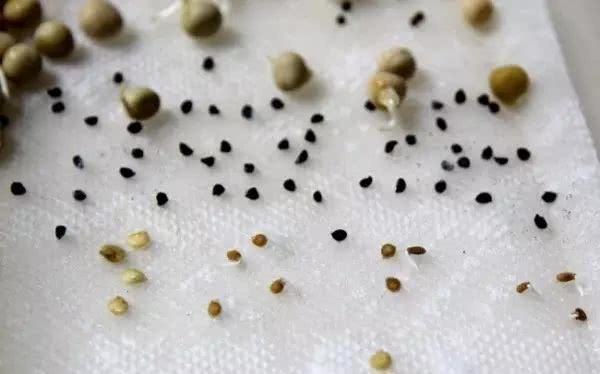
Spring and autumn are both very suitable seasons for sowing. Have you learned the technique of sowing? Below I will share how to sow quickly, simply and conveniently. This is a method I have used for several years. It can increase the seed germination rate by 70% and make the seed sprouting time 2 times faster than the usual method.
This is very different from traditional sowing methods. You can first experiment with some simple vegetable seeds. Below I will teach you all the details.
Step 1: Prepare tools
Make your own beautiful sowing calendar, recording the sowing time, germination time and germination rate of each type of plant. I like to do this. If you find it troublesome, you can ignore it.
First prepare the sowing tools: some seedling pots, seeds, a tissue box, seedling soil, etc.
Step 2: Promote root development
This method is very simple. I believe every gardening enthusiast with hands-on ability can do it.
First place a piece of tissue at the bottom of a shallow basin, add clean water until the tissue is completely wet (do not use tissue that dissolves in water too easily), evenly sprinkle the seeds onto the wet tissue, cover with a lid, and then place it in a shaded, ventilated spot.
Here I use cauliflower and kale seeds as a demonstration. Vegetable seeds sprout especially easily.
Step 3: Check the seeds
Starting from the second day, check every day. If you happen to have bought relatively fresh vegetable seeds, they can sprout in two days. Check the wet tissue every day. If it is dry, add water to keep it moist.
The cauliflower, kale, broccoli and lettuce seeds I used are all among the fastest to germinate.
For seeds like tomato, beet, pumpkin and onion, this method only needs 3 days for germination. For the hardest to germinate, such as chili, eggplant, fennel and celery, it only takes 5 days.
(A bit like a boxed meal)
Then you can prepare seedling soil and pots. As soon as you see the seeds on the wet tissue germinate, take them out and plant them immediately. If the seed roots grow a little longer, it will be very difficult to take them out of the tissue.
Step 4: Transplant the seedlings
If your fingers are relatively large, you will find it hard to pick up the seeds. At this time you need small tweezers, which will make sowing much more meticulous. I use plastic tweezers.
I plant two small seedlings in each small pot, and when they grow to a certain extent, remove the weaker one. After that, I spray the soil every day (cover the seeds with soil according to their size; the thickness of the covering soil is about 3 times the size of the seed), keeping the seedling soil slightly moist.
Within a few days, the green leaves of the seeds will emerge from the soil. At this time, give them plenty of scattered light so they become sturdy.
Fifth: What are the benefits of this method?
The success rate is very high. Have you ever sown a big handful of seeds and found that only a few germinated?
You can try this method. With this method, my seed germination rate is very high. Basically more than 90% of vegetable seeds germinate. If the seeds are fresh, germination is definitely 100%.
Sixth: Sowing old seeds
If you are preparing to sow some seeds that have been stored for a long time, you can also use this method to test them and see whether they can still germinate. Generally, seeds stored for more than 2 to 3 years are very difficult to germinate.
1. Storing seeds:
Every time you buy some flower seeds or vegetable seeds and cannot sow them all at once, how should you store the rest? Of course, put them in a cool, dry place. That can extend the fresh period of the seeds and prolong their lifespan.
2. Speed of sowing with wet tissue:
I once experimented with fresh cabbage seeds. They only needed 1 to 2 days to develop roots, and after another two days the leaves sprouted. Compared with sowing directly in soil, the time is 2 to 3 times faster.
(For small-scale sowing, you can choose my method. Use a pen to draw lines on the wet tissue to divide it into sections, record them well, and you will not mix them up later.)
Of course, some seeds grow faster when sown directly in soil. These seeds include arugula, radish and carrot. These seeds are not suitable for this method of root development.
3. Disadvantages:
This method also has one disadvantage, which is that it requires timely transplanting. It is not very suitable for gardening enthusiasts who do not have time to frequently check the seed root development.
Because if you wait until the seed roots grow a little longer, the roots will grow into the wet tissue, making them very difficult to separate. Be sure to transplant immediately when the seeds develop roots.
Seventh: Small sowing tips
Some gardening enthusiasts find that the seedlings from sowing grow easily, but they just cannot grow big and soon die. Why is that?
During the first two weeks after sowing and germination, when adding water, you must use a spray. You cannot splash water, and ordinary watering is also not okay, because these small seedlings are very fragile. Even a little bit of water droplets can easily make them fall over and prevent them from growing.
When your seedlings grow small leaves, you must start exposing them to light, otherwise the seedlings will become leggy, growing tall but not sturdy, and will soon wither.